Nâzim Hikmet – O otimista

quando criança ele nunca arrancou as asas das moscas
ele não atava latas nos rabos dos gatos
não prendia besouros em caixas de fósforos
nem esmagava formigueiros
ele cresceu
e todas estas coisas foram feitas com ele
eu estava ao lado de sua cama quando ele morreu
ele disse leia para mim um poema
sobre o sol e o oceano
sobre satélites e reatores nucleares
sobre a grandeza da humanidade

Trad.: Nelson Santander (a partir de tradução para o inglês feita por Randy Blasing e Mutlu Konuk)

Mais do que uma leitura, uma experiência. Clique, compre e contribua para manter a poesia viva em nosso blog

Optimistic Man

as a child he never plucked the wings off flies
he didn’t tie tin cans to cats’ tails
or lock beetles in matchboxes
or stomp anthills
he grew up
and all those things were done to him
I was at his bedside when he died
he said read me a poem
about the sun and the sea
about nuclear reactors and satellites
about the greatness of humanity

Andrea Cohen – O comitê avalia

Digo à minha mãe que
ganhei o Prêmio Nobel.

De novo? ela diz. Em qual
categoria desta vez?

É uma brincadeira
que fazemos: eu finjo

que sou alguém, ela
finge não estar morta.

Trad.: Nelson Santander

The Committee Weighs In

I tell my mother
I’ve won the Nobel Prize.

Again? she says. Which
discipline this time?

It’s a little game
we play: I pretend

I’m somebody, she
pretends she isn’t dead.

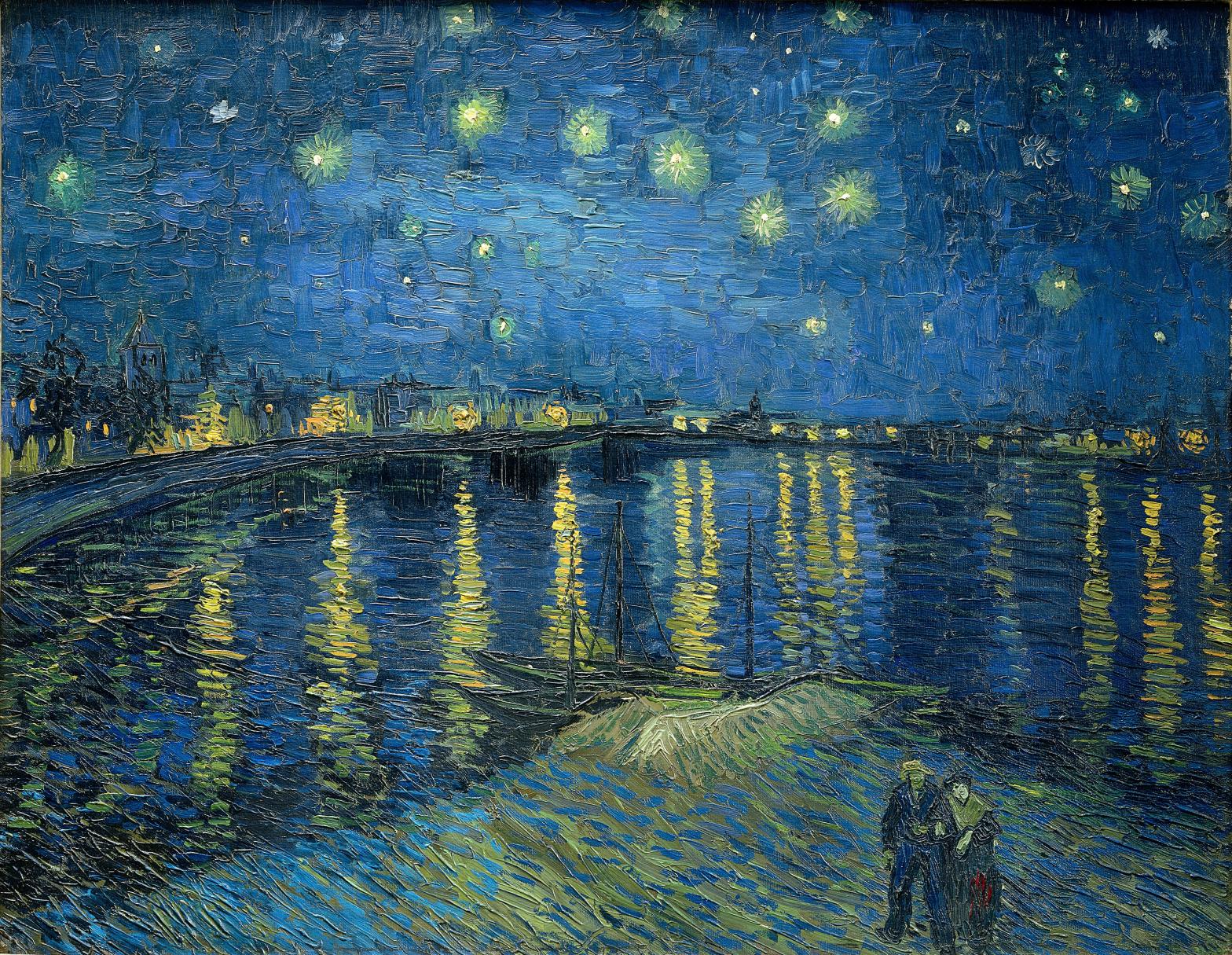
Sylvia Plath – Estrelas sobre a Dordonha

Estrelas caem densas como rochas na linha
Enfolhada de árvores cuja silhueta é mais escura
Do que o breu do céu porque não tem estrelas.
O bosque é um poço. As estrelas caem silenciosamente.
Parecem grandes, mas caem, e nenhuma lacuna é visível.
Elas tampouco emitem fogos de onde caem
Ou qualquer sinal de angústia ou ansiedade.
Elas são imediatamente devoradas pelos pinheiros.

Onde me sinto em casa, apenas as estrelas mais esparsas
Alcançam o crepúsculo, e depois de algum esforço.
E elas chegam abatidas, embotadas por muitas viagens.
As menores e mais tímidas nunca aparecem
Mas permanecem, paradas ao longe, em sua própria poeira.
Elas são órfãs. Eu não consigo vê-las. Elas estão perdidas.
Mas esta noite, elas descobriram este rio sem nenhuma dificuldade,
E estão lavadas e autoconfiantes como os grandes planetas.

A Ursa Maior é minha única conhecida.
Sinto falta das Cadeiras de Orion e Cassiopeia. Talvez elas estejam
Pairando timidamente sob o horizonte cravejado
Como um elementar problema matemático de criança.
O problema lá em cima parece ser o número infinito.
Ou então elas estão presentes e seu disfarce é tão brilhante
Que eu as estou deixando passar mesmo olhando com muita atenção.
Talvez seja a estação do ano que não está correta.

E se o céu daqui não for diferente,
E são meus olhos que estão se aguçando?
Um luxo tal de estrelas me envergonharia.
As poucas com as quais estou acostumada são comuns e duradouras;
Acho que elas não gostariam deste pano de fundo vistoso
Ou de muita companhia, ou da suavidade do sul.
Elas são muito puritanas e solitárias para tanto —
Quando uma delas cai deixa um espaço,

Uma sensação de ausência em seu antigo lugar brilhante.
E onde estou agora, de volta à minha própria estrela escura,
Vejo essas constelações em minha cabeça,
Não aquecidas pelo ar doce deste pomar de pêssegos.
Há muita tranquilidade aqui; essas estrelas me tratam muito bem.
Nesta colina, com sua vista de castelos iluminados, cada campana oscilante
é responsável por sua vaca. Eu fecho os olhos
E bebo da brisa noturna como se fosse uma notícia de casa.

Trad.: Nelson Santander

Stars Over The Dordogne

Stars are dropping thick as stones into the twiggy
Picket of trees whose silhouette is darker
Than the dark of the sky because it is quite starless.
The woods are a well. The stars drop silently.
They seem large, yet they drop, and no gap is visible.
Nor do they send up fires where they fall
Or any signal of distress or anxiousness.
They are eaten immediately by the pines.

Where I am at home, only the sparsest stars
Arrive at twilight, and then after some effort.
And they are wan, dulled by much travelling.
The smaller and more timid never arrive at all
But stay, sitting far out, in their own dust.
They are orphans. I cannot see them. They are lost.
But tonight they have discovered this river with no trouble,
They are scrubbed and self-assured as the great planets.

The Big Dipper is my only familiar.
I miss Orion and Cassiopeia’s Chair. Maybe they are
Hanging shyly under the studded horizon
Like a child’s too-simple mathematical problem.
Infinite number seems to be the issue up there.
Or else they are present, and their disguise so bright
I am overlooking them by looking too hard.
Perhaps it is the season that is not right.

And what if the sky here is no different,
And it is my eyes that have been sharpening themselves?
Such a luxury of stars would embarrass me.
The few I am used to are plain and durable;
I think they would not wish for this dressy backcloth
Or much company, or the mildness of the south.
They are too puritan and solitary for that—
When one of them falls it leaves a space,

A sense of absence in its old shining place.
And where I lie now, back to my own dark star,
I see those constellations in my head,
Unwarmed by the sweet air of this peach orchard.
There is too much ease here; these stars treat me too well.
On this hill, with its view of lit castles, each swung bell
Is accounting for its cow. I shut my eyes
And drink the small night chill like news of home.

Jack Gilbert – O vale abandonado

Consegue entender o que é estar só por tanto tempo
que você sairia no meio da noite
e colocaria um balde no poço
apenas para sentir algo lá embaixo
puxando a outra ponta da corda?

Trad.: Nelson Santander

The Abandoned Valley

Can you understand being alone so long
you would go out in the middle of the night
and put a bucket into the well
so you could feel something down there
tug at the other end of the rope?

Jane Kenyon – O pretendente

Repousamos de costas um para o outro. As cortinas
sobem e descem,
como o peito de alguém dormindo.
Os ventos movem as folhas do bordo;
elas expõem seus lados iluminados,
girando todas de uma vez
como um cardume de peixes.
Subitamente, compreendo que estou feliz.
Por meses esse sentimento
tem-se aproximado, parando
para curtas visitas, como um tímido pretendente.

Trad.: Nelson Santander

The Suitor

We lie back to back. Curtains
lift and fall,
like the chest of someone sleeping.
Wind moves the leaves of the box elder;
they show their light undersides,
turning all at once
like a school of fish.
Suddenly I understand that I am happy.
For months this feeling
has been coming closer, stopping
for short visits, like a timid suitor.

Roderick Ford – Giuseppe

Meu tio Giuseppe me contou
que na Sicília, durante a 2ª Guerra Mundial,
no pátio atrás do aquário,
onde a buganvília crescia tão bem,
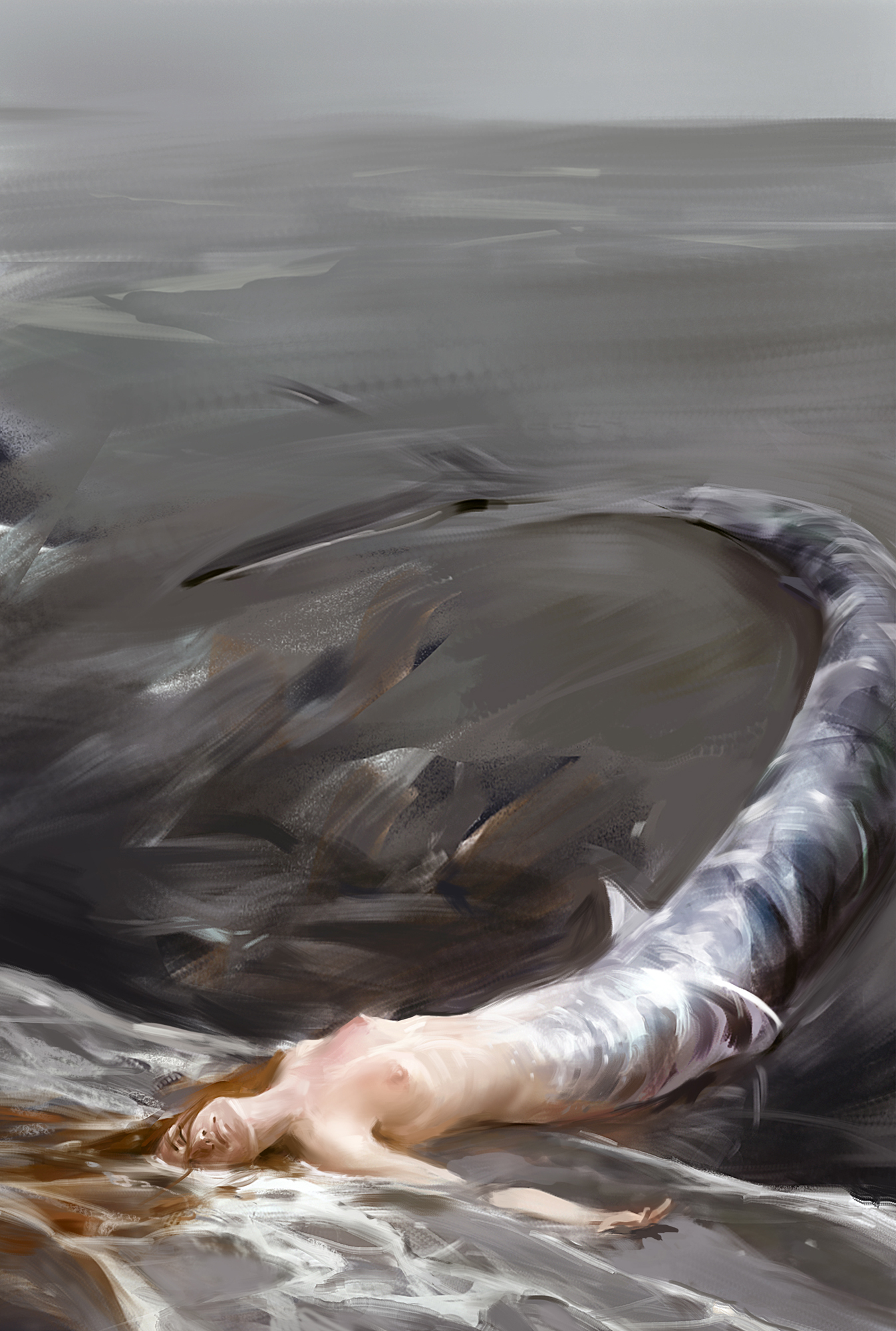
a única sereia cativa do mundo
foi esquartejada no solo seco e empoeirado
por um médico e um peixeiro, dentre outros.
Ela, aquilo, nunca aprendera a falar
porque era simplória, ou assim diziam.
Mas o padre que segurou uma de suas mãos
enquanto sua garganta era cortada
disse que ela era apenas um peixe, e peixes não podem falar.
Mas ela gritou como uma mulher aterrorizada.
E quando eles arrancaram uma ova amarela madura
por um de seus flancos, o médico disse
que aquilo era a prova de que ela era apenas um peixe
e que, de qualquer forma, um ovo não é um bebê,
mas recusou quando alguns lhe foram oferecidos.
Então eles colocaram a cabeça e as mãos
em uma caixa para o enterro
e alguém tentou tirar o seu anel de casamento,
mas os outros o impediram,
e o anel ficou onde estava.
O resto, eles cozinharam e usaram para alimentar as tropas.
Disseram que um grande peixe fora encontrado na praia.
A fome perdoa muitas coisas,
disse meu tio, o cuidador do aquário,
mas não conseguia me olhar nos olhos,
pelo que agradeço a Deus.

Trad.: Nelson Santander

Giuseppe

My Uncle Giuseppe told me
that in Sicily in World War Two,
in the courtyard behind the aquarium,
where the bougainvillea grows so well,
the only captive mermaid in the world
was butchered on the dry and dusty ground
by a doctor, a fishmonger, and certain others.
She, it, had never learned to speak
because she was simple, or so they’d said.
But the priest who held one of her hands
while her throat was cut,
said she was only a fish, and fish can’t speak.
But she screamed like a woman in terrible fear.
And when they took a ripe golden roe
from her side, the doctor said
this was proof she was just a fish
and anyway an egg is not a child,
but refused when some was offered to him.
Then they put her head and her hands
in a box for burial
and someone tried to take her wedding ring,
but the others stopped him,
and the ring stayed put.
The rest they cooked and fed to the troops.
They said a large fish had been found on the beach.
Starvation forgives men many things,
my uncle, the aquarium keeper, said,
but couldn’t look me in the eye,
for which I thank God.

R. S. Thomas – O campo brilhante

Eu vi o sol avançar até
iluminar um pequeno campo
por um momento, segui meu caminho
e o esqueci. Mas aquela era uma
pérola de grande valor, o único campo com
um tesouro dentro dele. Agora percebo
que devo dar tudo o que tenho
para possuí-lo. A vida não está em lançar-se

para um futuro que se afasta, nem ansiar por
um passado imaginado. Mas, como fez Moisés
em direção ao milagre da sarça em chamas,
em desviar-se para um brilho que parecia
tão transitório quanto sua juventude outrora,
mas que é a eternidade que o aguarda.

Trad.: Nelson Santander

The Bright Field

I have seen the sun break through
to illuminate a small field
for a while, and gone my way
and forgotten it. But that was the
pearl of great price, the one field that had
treasure in it. I realise now
that I must give all that I have
to possess it. Life is not hurrying

on to a receding future, nor hankering after
an imagined past. It is the turning
aside like Moses to the miracle
of the lit bush, to a brightness
that seemed as transitory as your youth
once, but is the eternity that awaits you.

Craig Santos Perez — Amor em tempos de mudanças climáticas

Amor em tempos de mudanças climáticas

reciclando o “Sonnet XVII”1 de Pablo Neruda

Não te amo como se fosses metais raros da terra,
diamantes de sangue ou reservas de petróleo bruto que provocam
a guerra. Eu te amo como amamos as espécies mais
vulneráveis: urgentemente, entre o habitat e a sua perda.

Eu te amo como se ama a última semente a salvo
dentro de um cofre, gestando a herança de nossas origens,
e, graças ao teu corpo, o sabor que amadurece
dos teus frutos ainda vive docemente em minha língua.

Eu te amo sem saber como ou quando este mundo
vai acabar. Eu te amo organicamente, sem pesticidas.
Eu te amo assim porque nós somente sobreviveremos

no composto rico em nitrogênio do nosso abraço,
tão perto que tuas emissões de carbono são minhas,
tão perto que teu mar se eleva com o meu calor.

Trad.: Nelson Santander

Nota:

O Soneto XVII, de Neruda, é o que segue, na tradução de Carlos Nejar:

Não te amo como se fosses rosa de sal, topázio
ou flecha de cravos que propagam o fogo:
te amo como se amam certas coisas obscuras,
secretamente, entre a sombra e a alma.

Te amo como a planta que não floresce e leva
dentro de si, oculta, a luz daquelas flores,
e graças a teu amor vive escuro em meu corpo
o apertado aroma que ascendeu da terra.

Te amo sem saber como, nem quando, nem onde,
te amo diretamente sem problemas nem orgulho:
assim te amo porque não sei amar de outra maneira,

senão assim deste modo em que não sou nem és
tão perto que tua mão sobre meu peito e minha
tão perto que se fecham teus olhos com meu sonho.

Love in a Time of Climate Change

recycling Pablo Neruda’s “Sonnet XVII”

I don’t love you as if you were rare earth metals,
conflict diamonds, or reserves of crude oil that cause
war. I love you as one loves the most vulnerable
species: urgently, between the habitat and its loss.

I love you as one loves the last seed saved
within a vault, gestating the heritage of our roots,
and thanks to your body, the taste that ripens
from its fruit still lives sweetly on my tongue.

I love you without knowing how or when this world
will end. I love you organically, without pesticides.
I love you like this because we’ll only survive

in the nitrogen rich compost of our embrace,
so close that your emissions of carbon are mine,
so close that your sea rises with my heat.

Lucille Clifton – o poema do bebê perdido

na vez em que deixei cair seu quase corpo
para encontrar as águas sob a cidade
e nelas fluir com o esgoto para o mar
o que sabia eu sobre águas correndo de volta
o que sabia eu sobre afogamento
ou sobre ser afogada

você teria nascido no inverno
no ano do gás desligado
e sem carro teríamos feito a singular
caminhada pela genesee hill sob o vento do canadá
para vê-lo escorregar como gelo para as mãos de estranhos
você teria caído nu como a neve no inverno
se você estivesse aqui eu poderia contar-lhe sobre estas
e algumas outras coisas

se eu for menos que uma montanha
para seus irmãos e irmãs definitivos
que os rios transbordem sobre minha cabeça
que as águas me levem por uma vazante
dos mares que os homens pretos me chamem de estranha
sempre para a sua causa nunca nomeada

Trad.: Nelson Santander
the lost baby poem

the time i dropped your almost body down
down to meet the waters under the city
and run one with the sewage to the sea
what did i know about waters rushing back
what did i know about drowning
or being drowned

you would have been born into winter
in the year of the disconnected gas
and no car we would have made the thin
walk over genesee hill into the canada wind
to watch you slip like ice into strangers’ hands
you would have fallen naked as snow into winter
if you were here i could tell you these
and some other things

if i am ever less than a mountain
for your definite brothers and sisters
let the rivers pour over my head
let the sea take me for a spiller
of seas let black men call me stranger
always for your never named sake

Victoria Kennefick – Monte submarino

Da areia, você aponta onde ficava a loja,
os correios, o bar;
você me conta que caminhou até o vilarejo quando menino
para ficar nas esquinas, farejar o ar salgado.

Tocos se erguem da argila na maré baixa,
alinham-se como soldados derrotados, inclinam-se ao vento.
Eles já foram árvores, agora lembram apenas ramos,
esquecidos do verde vivo das folhas na primavera.

Um vilarejo debaixo d’água, sou uma estátua ao seu lado.
Perguntas nadam em minha boca como peixes:
o mar alcançará Shanagarry? Conseguiria escalar a nossa colina?
Eu o vejo cercar os nossos leitos, afogar-nos durante o sono.

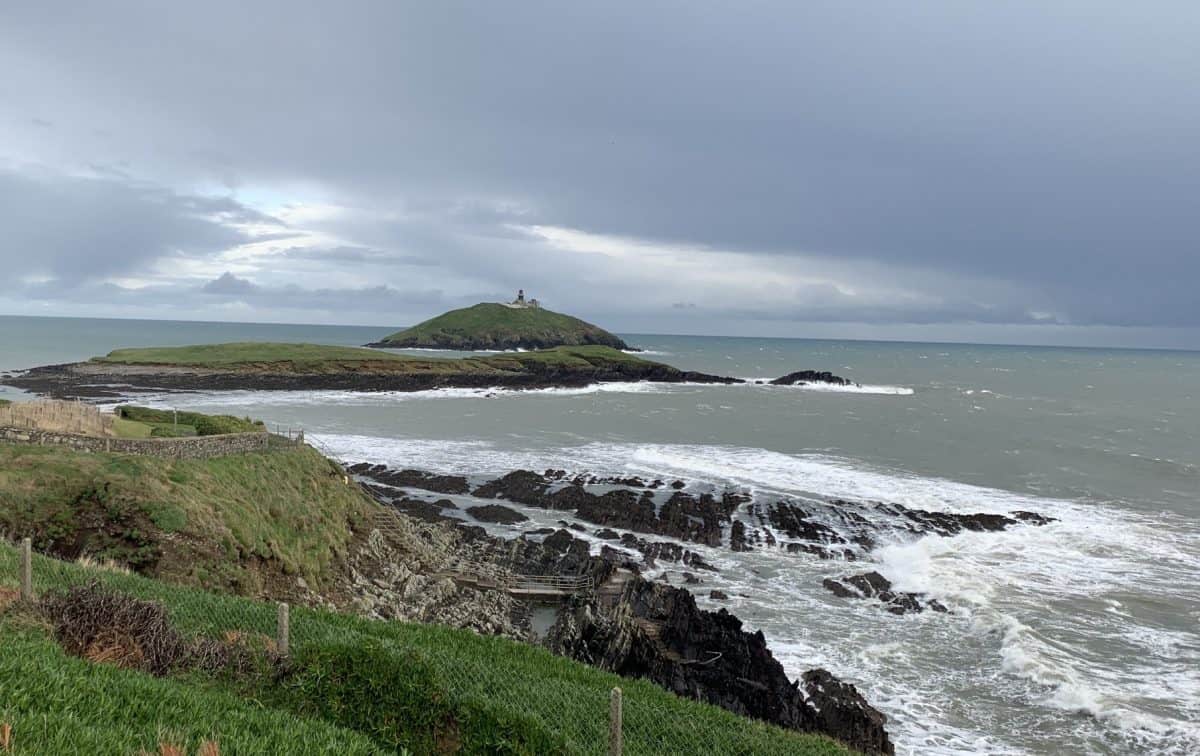
Ballycotton repousa em uma plataforma rochosa,
observa os que caíram, prende a respiração –
o olho vermelho do farol pisca ciclopicamente.
Ondas lambem os penhascos, famintas por pedra.

Você me diz que os aldeões foram realocados,
que ninguém se perdeu. O que antes eram árvores discorda;
pequenas ondas se esgueiram em torno delas.
Você segura a minha mão; imóveis, observamos a maré subir.

Trad.: Nelson Santander

Seamount

On the sand you point out where the shop was,
the post office, the pub;
you tell me you walked to the village as a boy,
to stand at corners, sniff the salty air.

Stumps rise out of clay at low tide,
line up like broken soldiers, lean on the wind.
Once they were trees, now they only remember branches,
forget the sharp green of leaves in spring.

A village underwater, I am a statue beside you.
Questions swim round my mouth like fish:
Will the sea reach Shanagarry? Could it march up our hill?
I see it surround our beds, drown us in sleep.

Ballycotton perches on a rocky-ledge, peers
down at the fallen, holds its breath –
the red eye of the lighthouse winks cycloptically.
Waves suck at cliffs, starving for stone.

You tell me villagers relocated,
no one was lost. What once were trees disagree;
tiny waves sneak around them.
You hold my hand; still we watch the tide come in.