Jack Gilbert – Infidelidade

Ela nunca está morta quando ele a encontra.
Eles comem lamen no café da manhã, como de costume.
Por onze anos, ele pensou que fosse o rio
no fundo de sua mente sonhando.
Agora sabe que ela vive dentro dele,
como o vento às vezes é visível
nas árvores. Como as rosas e o ruibarbo
estão no jardim e depois não estão.
As cinzas dela estão junto ao mar, em Kamakura.
Seu rosto e seu cabelo e seu doce corpo ainda habitam
a velha vila na montanha onde
ela viveu um verão inteiro. Eles dormiram
no chão por onze anos.
Mas agora ela vem cada vez menos.

Trad.: Nelson Santander

Mais do que uma leitura, uma experiência. Clique, compre e contribua para manter a poesia viva em nosso blog

Infidelity

She is never dead when he meets her.
They eat noodles for breakfast as usual.
For eleven years he thought it was the river
at the bottom of his mind dreaming.
Now he knows she is living inside him,
as the wind is sometimes visible
in the trees. As the roses and rhubarb
are in the garden and then not.
Her ashes are by the sea in Kamakura.
Her face and hair and sweet body still
in the old villa on a mountain where
she lived the whole summer. They slept
on the floor for eleven years.
But now she comes less and less.

Jack Gilbert – Não a felicidade, mas a consequência da felicidade

Ele desperta no silêncio dos bosques de inverno,
o silêncio dos pássaros que não cantam, sabendo que
não ouvirá a própria voz durante todo o dia. Lembra-se
do som da coruja marrom enquanto dormia.
O homem desperta na gélida manhã pensando
em mulheres. Não com desejo, mas com uma sensação
do que não existe. O silêncio de janeiro é o som
de seus passos na neve, um esquilo ralhando,
ou o áspero chamado de um solitário gaio-azul.
Algo dele dança ali, distante e gravemente mudo.
Muitos dias nos bosques, ele se pergunta o que é
que por tanto tempo ele caçou. Vamos de mãos
dadas, ele pensa, rumo ao prazer sombrio,
mas somos recompensados sozinhos, assim como somos casados
na solidão. Ele percorre os caminhos praticando a estranha
matemática do cérebro, multiplicando o espírito.
Lembra-se de acariciar os pés dela enquanto ela morria.
Por quatro horas, observando-a parar gradualmente
enquanto o hospital dormia. Lembra-se do surpreendente
frio de sua cabeça quando a beijou logo depois.
Há luz ou mais luz, escuridão e menos escuridão.
É, ele decide, uma qualidade sem definição.
Que estranho descobrir que se vive com o coração
como se vive com uma esposa. Mesmo depois de muitos anos,
ninguém sabe exatamente quem ela é. O coração tem
vida própria. Liberta-se de nós, escapa,
é ambiciosamente infiel. Morre inexplicavelmente
depois de oito anos, floresce desnecessária e tardiamente.
Como o silêncio arbitrário nos bosques brancos,
deixando rastros na neve que ele não consegue reconhecer.

Trad.: Nelson Santander

Mais do que uma leitura, uma experiência. Clique, compre e contribua para manter a poesia viva em nosso blog

Not the Happiness but the Consequence of Happiness

He wakes up in the silence of the winter woods,
the silence of birds not singing, knowing he will
not hear his voice all day. He remembers what
the brown owl sounded like while he was sleeping.
The man wakes in the frigid morning thinking
about women. Not with desire so much as with a sense
of what is not. The January silence is the sound
of his feet in the snow, a squirrel scolding,
or the scraping calls of a single blue jay.
Something of him dances there, apart and gravely mute.
Many days in the woods he wonders what it is
that he has for so long hunted down. We go hand
in hand, he thinks, into the dark pleasure,
but we are rewarded alone, just as we are married
into aloneness. He walks the paths doing the strange
mathematics of the brain, multiplying the spirit.
He thinks of caressing her feet as she kept dying.
For the last four hours, watching her gradually stop
as the hospital slept. Remembers the stunning
coldness of her head when he kissed her just after.
There is light or more light, darkness and less darkness.
It is, he decides, a quality without definition.
How strange to discover that one lives with the heart
as one lives with a wife. Even after many years,
nobody knows what she is like. The heart has
a life of its own. It gets free of us, escapes,
is ambitiously unfaithful. Dies out unaccountably
after eight years, blooms unnecessarily and too late.
Like the arbitrary silence in the white woods,
leaving tracks in the snow he cannot recognize.

Jack Gilbert – De pouco em pouco: da meia-noite às quatro da manhã

Por onze anos tenho lamentado,
lamentado por não ter feito o que
queria fazer enquanto fiquei ali sentado
aquelas quatro horas, vendo-a morrer. Eu queria
rastejar entre as máquinas
e segurá-la em meus braços, sabendo
que a elementar e remanescente porção de sua
mente vagamente reconheceria que era eu
carregando-a para onde ela estava indo.

Trad.: Nelson Santander

Mais do que uma leitura, uma experiência. Clique, compre e contribua para manter a poesia viva em nosso blog

By Small and Small: Midnight to Four A.M.

For eleven years I have regretted it,
regretted that I did not do what
I wanted to do as I sat there those
four hours watching her die. I wanted
to crawl in among the machinery
and hold her in my arms, knowing
the elementary, leftover bit of her
mind would dimly recognize it was me
carrying her to where she was going.

Jack Gilbert – Dali até aqui

De minha colina, avisto a rodovia e uma gaivota
que alça voo, negra contra o cume cinza.
Ela sobe lentamente e se dissolve no céu luminoso.
Certamente, nossa lenta e inexorável extinção nos leva a um estado
de graça. Como nomear tal perplexidade?

Aqui, confronto-me com minha irrelevância perante o amor,
com a ternura desconcertante de que
sou feito. O sol se põe e renasce.
A lua surge e se oculta. Eu vivo
com o ar matinal e as nuances do ar noturno.
Começo a envelhecer.

Os navios zarpam e se perdem.
Zarpam e se perdem.
Deixando-me com sua assombrosa estranheza
e a imperfeição dos pássaros. Enquanto o tempo todo
me esforço por compreender essa felicidade que alcancei.

O que lembro de minha queda de nove andares
através do grande abeto é a torrente de verde.
E a suavidade do meu pesar na ambulância, rumo
à morte iminente, olhando para as árvores que se afastavam.

O que lembro da espinha esmagada
é ver Linda desmaiar, repetidas vezes,
deslizando pela parede branca da sala de raios X
enquanto meu doce corpo se debatia sobre a maca de aço
incapaz de suportar tanta dor. Isso,
e esperar, nos anos seguintes, pela ardência
nas pontas dos dedos, que anunciaria,
segundo os médicos, o início da paralisia.

O que mais lembro dos quatro anos de convalescença
na Grécia, Dinamarca, Londres e Grécia, é Linda
preparando o almoço. Seu loiro e marfim emergindo
do azul do Egeu. Linda caminhando comigo diariamente
pela ilha, de Monolithos a Thíra, e voltando.
É disso que mais lembro sobre a morte:
a gentileza que compartilhamos naquele Éden grego selvagem,
a beleza enquanto o casamento fracassava lentamente.

Trad.: Nelson Santander

Mais do que uma leitura, uma experiência. Clique, compre e contribua para manter a poesia viva em nosso blog

All the way from there to here

From my hill I look down on the freeway and over
to a gull lifting black against the grey ridge.
It lifts slowly higher and enters the bright sky.
Surely our long, steady dying brings us to a state
of grace. What else can I call this bafflement?

From here I deal with my irrelevance to love.
With the bewildering tenderness of which I am
composed. The sun goes down and comes up again.
The moon comes up and goes down. I live
with the morning air and the different airs of night.
I begin to grow old.

The ships put out and are lost.
Put out and are lost.
Leaving me with their haunting awkwardness
and the imperfection of birds. While all the time
I work to understand this happiness I have come into.

What I remember of my nine-story fall
down through the great fir is the rush of green.
And the softness of my regret in the ambulance going
to my nearby death, looking out at the trees leaving me.

What I remember of my crushed spine
is seeing Linda faint again and again,
sliding down the white X-ray room wall
as my sweet body flailed on the steel table
unable to manage the bulk of pain. That
and waiting in the years after for the burning
in my fingertips, which would announce,
the doctors said, the beginning of paralysis.

What I remember best of the four years of watching
in Greece and Denmark and London and Greece is Linda
making lunch. Her blondeness and ivory coming up
out of the blue Aegean. Linda walking with me daily
across the island from Monolithos to Thíra and back.
That’s what I remember most of death:
the gentleness of us in that bare Greek Eden,
the beauty as the marriage steadily failed.


Jack Gilbert — Os grandes incêndios

O amor transcende todas as coisas.
Desejo e excitação são insignificantes perante ele.
Não é o corpo que encontra o amor.
É o corpo que nos conduz até ele.
O que não é amor o provoca.
O que não é amor o sacia.
O amor se apropria de tudo que conhecemos.
As paixões chamadas de amor
também transformam tudo em novidade
no começo. A paixão é, sem dúvida, o caminho,
mas não nos conduz ao amor.
Ela abre o castelo de nosso espírito
para que possamos encontrar o amor,
um mistério ali oculto.
O amor é um dos muitos grandes incêndios.
A paixão é um incêndio feito de muitas lenhas,
cada uma com seu odor especial
para que possamos conhecer as muitas formas
que não são amor. A paixão é o papel
e os galhos que acendem as chamas
mas não podem sustenta-las. O desejo perece
porque tenta ser amor.
O amor é consumido pelo apetite.
O amor não dura, mas é diferente
das paixões efêmeras.
O amor perdura ao não durar.
Isaias disse que cada homem caminha em seu próprio fogo
por seus pecados. O amor nos permite caminhar
na doce melodia de nosso coração particular.

Trad.: Nelson Santander

Mais do que uma leitura, uma experiência. Clique, compre e contribua para manter a poesia viva em nosso blog

The Great Fires

Love is apart from all things.
Desire and excitement are nothing beside it.
It is not the body that finds love.
What leads us there is the body.
What is not love provokes it.
What is not love quenches it.
Love lays hold of everything we know.
The passions which are called love
also change everything to a newness
at first. Passion is clearly the path
but does not bring us to love.
It opens the castle of our spirit
so that we might find the love which is
a mystery hidden there.
Love is one of many great fires.
Passion is a fire made of many woods,
each of which gives off its special odor
so we can know the many kinds
that are not love. Passion is the paper
and twigs that kindle the flames
but cannot sustain them. Desire perishes
because it tries to be love.
Love is eaten away by appetite.
Love does not last, but it is different
from the passions that do not last.
Love lasts by not lasting.
Isaiah said each man walks in his own fire
for his sins. Love allows us to walk
in the sweet music of our particular heart.

Jack Gilbert – Poemas e Elegias para Michiko Nogami: VII – Encontrando algo

Digo que a lua são cavalos na suave escuridão
porque cavalos são o que mais se parecem com o luar.
Sento-me no terraço desta velha casa que o telegrafista
do rei construiu em uma montanha que dá para
um mar azul e a pequena balsa branca
que cruza lentamente para a ilha vizinha a cada meio-dia.
Michiko está morrendo no edifício atrás de mim,
as imensas janelas abertas para que eu possa ouvir
o som fraco que ela fará quando quiser
chupar melancia ou para que eu possa leva-la,
no canto do quarto de teto alto, ao balde
que foi o melhor penico que pudemos improvisar.
Para não cair, em sua fraqueza, ela se apoiará
em minhas pernas enquanto senta.
Que estranho e maravilhoso estar tão perto disso.
Os arcos de seus pés são como vozes
de crianças chamando no bosque de limoeiros,
onde meu coração é tão impotente quanto aves esmagadas.

Trad.: Nelson Santander

Finding Something

I say moon is horses in the tempered dark,
because horse is the closest I can get to it.
I sit on the terrace of this worn villa the king’s
telegrapher built on the mountain that looks down
on a blue sea and the small white ferry
that crosses slowly to the next island each noon.
Michiko is dying in the house behind me,
the long windows open so I can hear
the faint sound she will make when she wants
watermelon to suck on or so I can take her
to a bucket in the corner of the high-ceilinged room
which is the best we can do for a chamber pot.
She will lean against my leg as she sits
so as not to fall over in her weakness.
How strange and fine to get so near to it.
The arches of her feet are like voices
of children calling in the grove of lemon trees,
where my heart is as helpless as crushed birds.

Jack Gilbert – Poemas e Elegias para Michiko Nogami: VI – Sozinho

Nunca pensei que Michiko voltaria
depois de morrer. Mas se voltasse, eu sabia
que seria como uma dama em um longo branco.
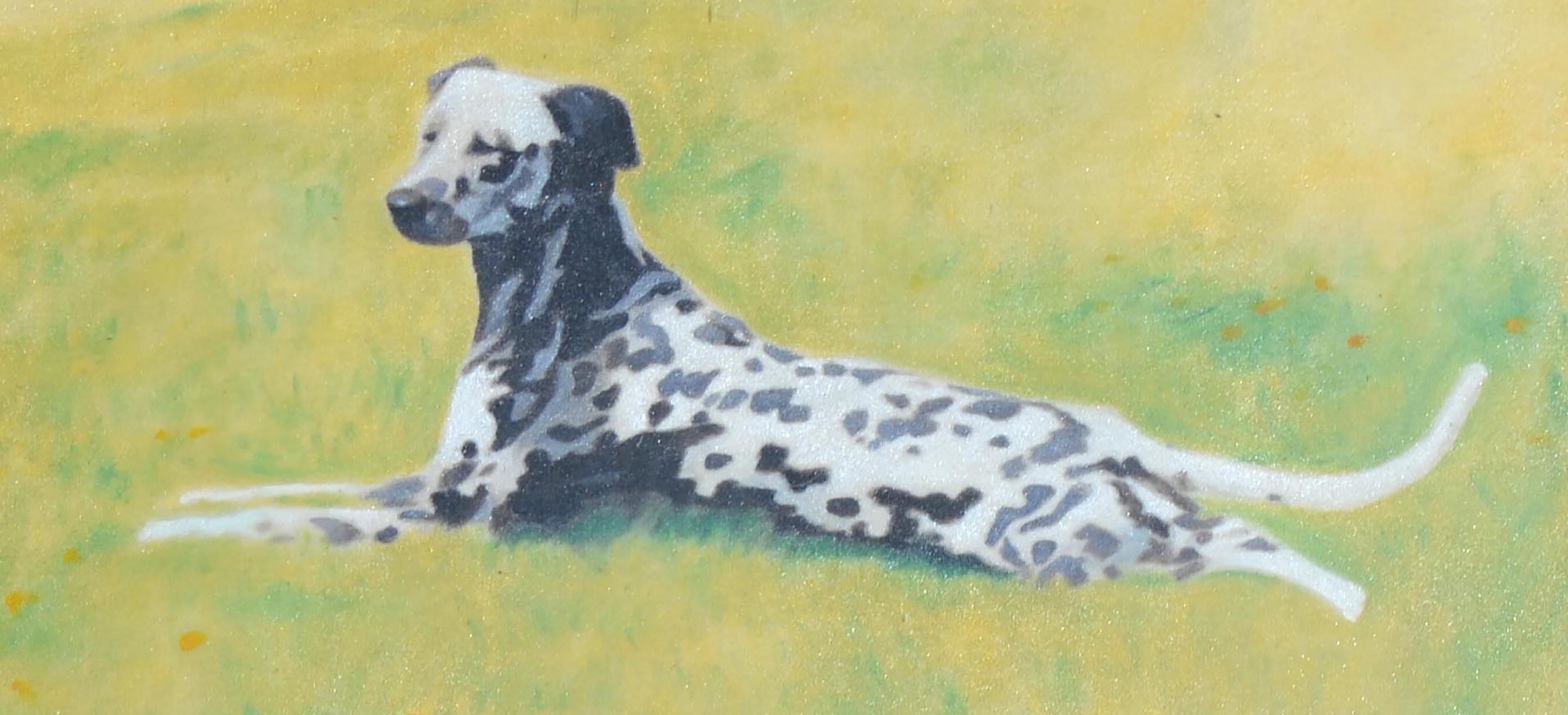
É estranho que ela tenha voltado
como a dálmata de alguém. Eu encontro
o homem que a leva para passear, de coleira,
quase toda semana. Ele diz bom dia
e me curvo para acalma-la. Ele disse uma vez
que ela nunca se comportou assim com
outras pessoas. Às vezes ela está amarrada
no gramado deles quando passo. Se ninguém
está por perto, eu me sento na grama. Quando
finalmente se acalma, ela coloca a cabeça no meu colo
e olhamos nos olhos um do outro enquanto sussurro
em suas orelhas macias. Ela não se importa com
o mistério. Ela prefere quando
eu toco sua cabeça e falo de pequenas
coisa sobre meus dias e nossos amigos.
Isso a deixa feliz como sempre deixou.

Trad.: Nelson Santander

Alone

I never thought Michiko would come back
after she died. But if she did, I knew
it would be as a lady in a long white dress.
It is strange that she has returned
as somebody’s dalmatian. I meet
the man walking her on a leash
almost every week. He says good morning
and I stoop down to calm her. He said
once that she was never like that with
other people. Sometimes she is tethered
on their lawn when I go by. If nobody
is around, I sit on the grass. When she
finally quiets, she puts her head in my lap
and we watch each other’s eyes as I whisper
in her soft ears. She cares nothing about
the mystery. She likes it best when
I touch her head and tell her small
things about my days and our friends.
That makes her happy the way it always did.

Jack Gilbert – Poemas e Elegias para Michiko Nogami: V – Michiko morta

Ele se comporta como quem carrega uma caixa
muito pesada, primeiro com os braços
por baixo. Quando suas forças se esgotam,
ele move as mãos para frente, encaixando-as
nas quinas, puxando o peso contra o
o peito. Ele move ligeiramente os polegares
quando os dedos começam a se cansar, e isso faz
com que diferentes músculos assumam o controle. Depois,
ele a carrega no ombro, até que o sangue
seja drenado do braço que se estende
para firmar a caixa, e o membro fique dormente. Mas agora
o homem pode segura-la por baixo novamente, de modo que
ele possa continuar sem nunca colocar a caixa no chão.

Trad.: Nelson Santander

Michiko Dead

He manages like somebody carrying a box
that is too heavy, first with his arms
underneath. When their strength gives out,
he moves the hands forward, hooking them
on the corners, pulling the weight against
his chest. He moves his thumbs slightly
when the fingers begin to tire, and it makes
different muscles take over. Afterward,
he carries it on his shoulder, until the blood
drains out of the arm that is stretched up
to steady the box and the arm goes numb. But now
the man can hold underneath again, so that
he can go on without ever putting the box down.

Jack Gilbert – Poemas e Elegias para Michiko Nogami: IV – Saudades de mim

Não foi pelas lamentações no tapete
nem pelas noites de saudades dela que eu
me perdi. Nem por ter sofrido tanto com
a perda de Michiko. Isso é apenas dor.
Eu sou como este relógio que funciona mal porque
a nova e grossa pulseira o separa do pulso.

Trad.: Nelson Santander

Missing Me

It is not because of groaning on the rug
nor the nights of missing her that I have
lost me. Nor from grieving so much about
Michiko’s loss of herself. That is only pain.
I am like this watch which runs wrong because
the thick new band separates it from the pulse.

Jack Gilbert – Poemas e Elegias para Michiko Nogami: II – Casados

Voltei do funeral e rastejei
pelo apartamento, chorando intensamente,
procurando pelos cabelos da minha esposa.
Por dois meses, eu os retirei do ralo,
do aspirador de pó, debaixo da geladeira,
e das roupas no closet.
Mas depois que outras mulheres japonesas vieram,
não havia como ter certeza de quais eram os
dela, e parei. Um ano depois,
ao replantar o abacate de Michiko, encontrei
um longo fio preto de cabelo enredado na terra.

Trad.: Nelson Santander

Married

I came back from the funeral and crawled
around the apartment, crying hard,
searching for my wife’s hair.
For two months got them from the drain,
from the vacuum cleaner, under the refrigerator,
and off the clothes in the closet.
But after other Japanese women came,
there was no way to be sure which were
hers, and I stopped. A year later,
repotting Michiko’s avocado, I find
a long black hair tangled in the dirt.