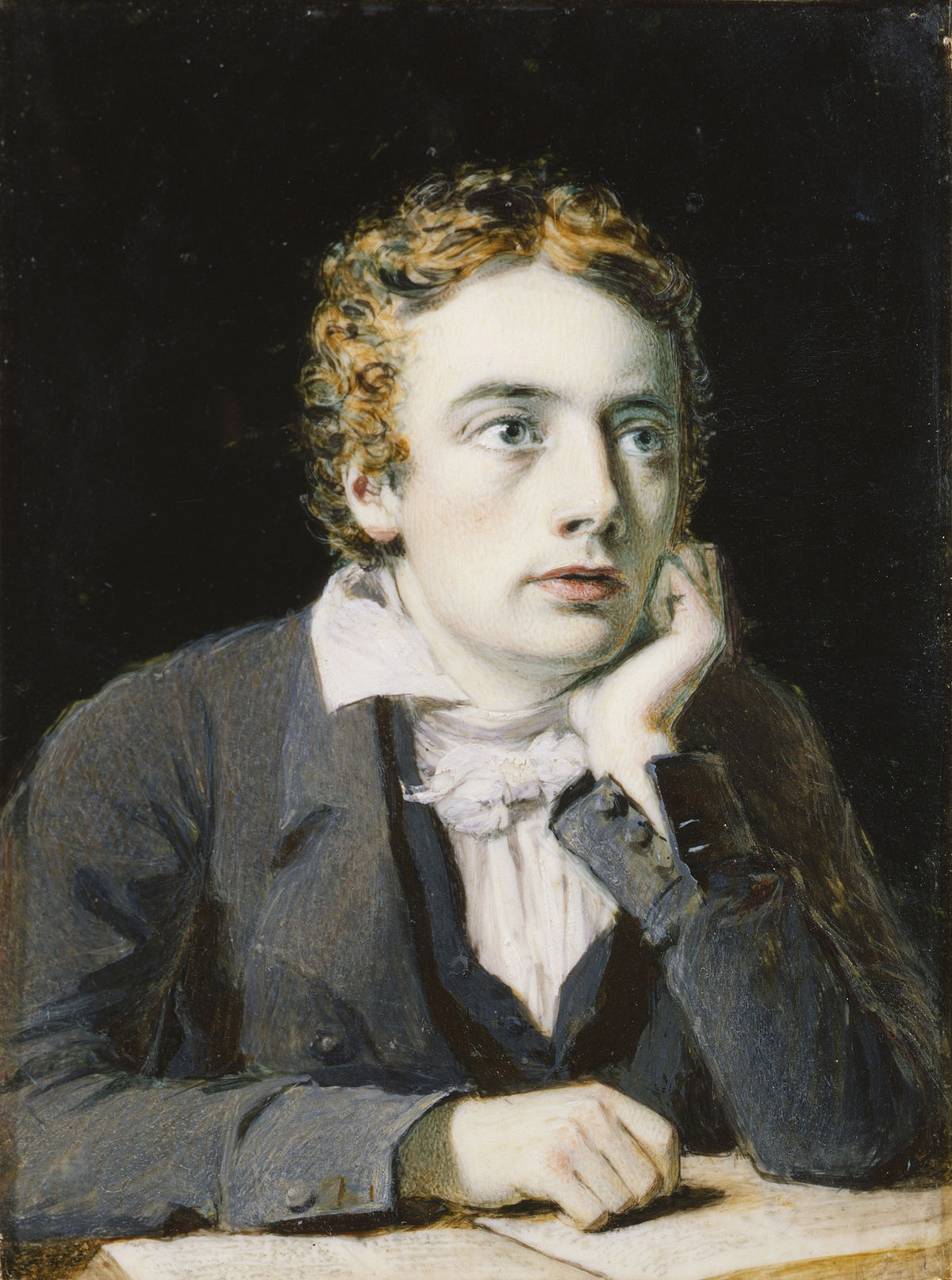
John Keats – Ode sobre a Indolência

I

Numa certa manhã eu vi as três as figuras,
   Curvadas, de perfil, mãos juntas, uma a uma,
Seguindo atrás da outra, mudas e seguras,
   Sandálias suaves, vestes alvas, pés de pluma;
Como formas de mármore em alto-relevo
  Sobre uma urna, foram-se, ao girar a face
   Do vaso; mas voltando ao ângulo anterior,
Mostraram-se mais uma vez como as descrevo,
 E eram-me tão estranhas como se as achasse
   Numa ânfora de Fídias um pesquisador.

II

Como é possível, Sombras, que eu não as conheça,
  Máscaras mudas que se movem para mim?
Que plano silencioso tinham na cabeça
  Para a minha indolência arrebatar assim?
Era a hora madura e eu já me comprazia
  Na abençoada nuvem de ócio do verão.
   Pesado o olhar, a pulsação quase parada,
Os prazeres sem cor e a vida já vazia.
  Ah! por que não desaparecem e se vão,
   E me deixam em paz, sozinho, com meu – nada?

III

Uma terceira vez romperam minha paz as
  Figuras mudas; cada qual por um momento
Me olhou de frente, e eu só queria era ter asas
  Para segui-las e saber do seu intento;
A primeira, uma bela moça, era o Amor;
  A segunda, de rosto pálido e sem viço
   E olhos cansados, a Ambição que a tudo via.
A última, a que eu mais amo, e a quem o desfavor
  Persegue, era uma jovem com ar insubmisso;
   Essa era o meu demônio – a Poesia.

IV

Foram-se as três e eu só queria asas ainda;
  Loucura! O que é o Amor? Quem sabe onde ele mora?
Quanto à Ambição! – é desprezível, porque vinda
  De um coração pequeno, a febre de uma hora;
À Poesia! – não doa uma só alegria, –
  Ao menos para mim, – de dia imersa em suas
   Cismas; à noite, no ópio do seu tédio imenso;
Pudesse eu ter uma era livre de agonia,
  Sem conhecer jamais a mutação das luas
   Nem ouvir nunca a voz penosa do bom-senso!

V

E uma vez mais vieram; – ah! por que razão?
  Meu sono se adornava de secretos sonhos,
Minha alma era uma relva, flores pelo chão,
  Com sombras sugestivas e raios risonhos;
A névoa da manhã não me trazia chuva;
  Nas pálpebras de maio, só lágrimas prestes;
   Calor, botões em flor, um tordo ia cantar,
E da janela aberta eu via a vide e a uva;
  Sombras, a hora do adeus chegou; em suas vestes
   Nenhuma lágrima desceu do meu olhar.

VI

Adeus, meus três fantasmas! Não há quem me faça
  Erguer esta cabeça da relva e das flores.
Não quero ser a ovelha-guia de uma farsa,
  Nem seguirei uma dieta de louvores.
Voltem a ser figuras-máscaras de urna.
  Adeus! deixem morrer de tedio a minha mente.
   Visões? Já tenho a minha provisão noturna,
E outras, mais tênues, para as horas matinais.
  Retirem-se, de vez, do meu ser indolente,
   Para as nuvens dos céus, e não voltem jamais.

Trad.: Augusto de Campos

REPUBLICAÇÃO: poema publicado no blog originalmente em 07/02/2017

Conheça outros livros de John Keats clicando aqui

Ode on Indolence

I

One morn before me were three figures seen,
With bowèd necks, and joinèd hands, side-faced;
And one behind the other stepp’d serene,
In placid sandals, and in white robes graced;
They pass’d, like figures on a marble urn,
When shifted round to see the other side;
They came again; as when the urn once more
Is shifted round, the first seen shades return;
And they were strange to me, as may betide
With vases, to one deep in Phidian lore.

II

How is it, Shadows! that I knew ye not?
How came ye muffled in so hush a mask?
Was it a silent deep-disguisèd plot
To steal away, and leave without a task
My idle days? Ripe was the drowsy hour;
The blissful cloud of summer-indolence
Benumb’d my eyes; my pulse grew less and less;
Pain had no sting, and pleasure’s wreath no flower:
O, why did ye not melt, and leave my sense
Unhaunted quite of all but—nothingness?

III

A third time pass’d they by, and, passing, turn’d
Each one the face a moment whiles to me;
Then faded, and to follow them I burn’d
And ached for wings, because I knew the three;
The first was a fair Maid, and Love her name;
The second was Ambition, pale of cheek,
And ever watchful with fatiguèd eye;
The last, whom I love more, the more of blame
Is heap’d upon her, maiden most unmeek,—
I knew to be my demon Poesy.

IV

They faded, and, forsooth! I wanted wings:
O folly! What is Love? and where is it?
And for that poor Ambition! it springs
From a man’s little heart’s short fever-fit;
For Poesy!—no,—she has not a joy,—
At least for me,—so sweet as drowsy noons,
And evenings steep’d in honey’d indolence;
O, for an age so shelter’d from annoy,
That I may never know how change the moons,
Or hear the voice of busy common-sense!

V

And once more came they by:—alas! wherefore?
My sleep had been embroider’d with dim dreams;
My soul had been a lawn besprinkled o’er
With flowers, and stirring shades, and baffled beams:
The morn was clouded, but no shower fell,
Tho’ in her lids hung the sweet tears of May;
The open casement press’d a new-leaved vine,
Let in the budding warmth and throstle’s lay;
O Shadows! ’twas a time to bid farewell!
Upon your skirts had fallen no tears of mine.

VI

So, ye three Ghosts, adieu! Ye cannot raise
My head cool-bedded in the flowery grass;
For I would not be dieted with praise,
A pet-lamb in a sentimental farce!
Fade softly from my eyes, and be once more
In masque-like figures on the dreamy urn;
Farewell! I yet have visions for the night,
And for the day faint visions there is store;
Vanish, ye Phantoms! from my idle spright,
Into the clouds, and never more return!
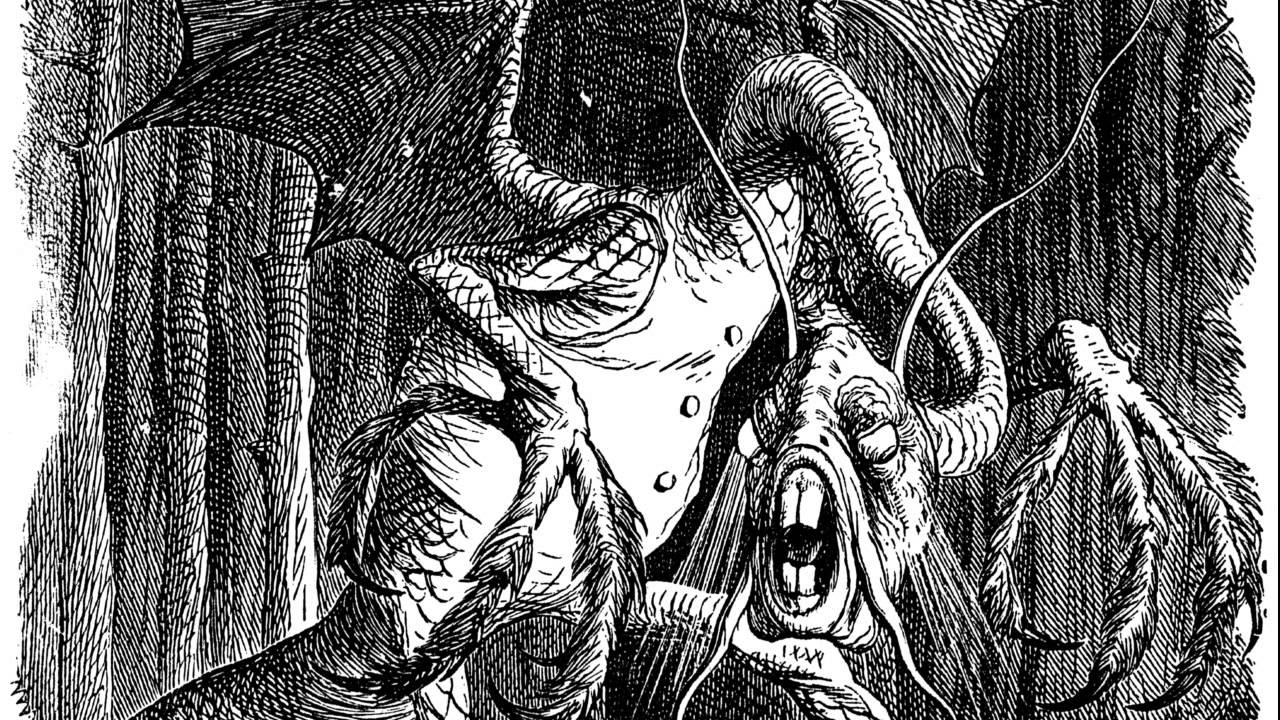
Lewis Carroll – Jaguadarte

Era briluz. As lesmolisas touvas
Roldavam e relviam nos gramilvos.
Estavam mimsicais as pintalouvas,
E os momirratos davam grilvos.

“Foge do Jaguadarte, o que não morre!
Garra que agarra, bocarra que urra!
Foge da ave Felfel, meu filho, e corre
Do frumioso Babassurra!”

Ele arrancou sua espada vorpal
E foi atrás do inimigo do Homundo.
Na árvora Tamtam ele afinal
Parou, um dia, sonilundo.

E enquanto estava em sussustada sesta,
Chegou o Jaguadarte, ôlho de fogo,
Sorrelfiflando através da floresta,
E borbulia um riso louco!

Um, dois! Um, dois! Sua espada mavorta
Vai-vem, vem-vai, para trás, para diante!
Cabeça fere, corta, e, fera morta,
Ei-lo que volta galunfante.

“Pois então tu mataste o Jaguadarte!
Vem aos meus braços, homenino meu!
Oh dia fremular! Bravooh! Bravarte!”
Êle se ria jubileu.

Era briluz. As lesmolisas touvas
Roldavam e relviam nos gramilvos.
Estavam mimsicais as pintalouvas,
E os momirratos davam grilvos.

Trad.: Augusto de Campos

REPUBLICAÇÃO: poema publicado no blog originalmente em 08/09/2016

Mais do que uma leitura, uma experiência. Clique, compre e contribua para manter a poesia viva em nosso blog

Jabberwocky

‘Twas brillig, and the slithy toves
Did gyre and gimble in the wabe:
All mimsy were the borogoves,
And the mome raths outgrabe.

“Beware the Jabberwock, my son!
The jaws that bite, the claws that catch!
Beware the Jubjub bird, and shun
The frumious Bandersnatch!”

He took his vorpal sword in hand:
Long time the manxome foe he sought—
So rested he by the Tumtum tree,
And stood awhile in thought.

And, as in uffish thought he stood,
The Jabberwock, with eyes of flame,
Came whiffling through the tulgey wood,
And burbled as it came!

One, two! One, two! And through and through
The vorpal blade went snicker-snack!
He left it dead, and with its head
He went galumphing back.

“And hast thou slain the Jabberwock?
Come to my arms, my beamish boy!
O frabjous day! Callooh! Callay!”
He chortled in his joy.

‘Twas brillig, and the slithy toves
Did gyre and gimble in the wabe:
All mimsy were the borogoves,
And the mome raths outgrabe.

Rainer Maria Rilke – Morgue

Estão prontos, ali, como a esperar
que um gesto só, ainda que tardio,
possa reconciliar com tanto frio
os corpos e um ao outro harmonizar;

como se algo faltasse para o fim.
Que nome no seu bolso já vazio
há por achar? Alguém procura, enfim,
enxugar dos seus lábios o fastio:

em vão; eles só ficam mais polidos.
A barba está mais dura, todavia
ficou mais limpa ao toque do vigia,

para não repugnar o circunstante.
Os olhos, sob a pálpebra, invertidos,
olham só para dentro, doravante.

Trad.: Augusto de Campos

REPUBLICAÇÃO: poema publicado no blog originalmente em 01/06/2016

Morgue

Da liegen sie bereit, als ob es gälte,
nachträglich eine Handlung zu erfinden,
die mit einander und mit dieser Kälte
sie zu versöhnen weiß und zu verbinden;

denn das ist alles noch wie ohne Schluß.
Was für ein Name hätte in den Taschen
sich finden sollen? An dem Überdruß
um ihren Mund hat man herumgewaschen:

er ging nicht ab; er wurde nur ganz rein.
Die Bärte stehen, noch ein wenig härter,
doch ordentlicher im Geschmack der Wärter,

nur um die Gaffenden nicht anzuwidern.
Die Augen haben hinter ihren Lidern
sich umgewandt und schauen jetzt hinein.

Dylan Thomas – Não vás tão docilmente

Não vás tão docilmente nessa noite linda;
Que a velhice arda e brade ao término do dia;
Clama, clama contra o apagar da luz que finda.

Embora o sábio entenda que a treva é bem-vinda
Quando a palavra já perdeu toda a magia,
Não vai tão docilmente nessa noite linda.

O justo, à última onda, ao entrever, ainda,
Seus débeis dons dançando ao verde da baía,
Clama, clama contra o apagar da luz que finda.

O louco que, a sorrir, sofreia o sol e brinda,
Sem saber que o feriu com a sua ousadia,
Não vai tão docilmente nessa noite linda.

O grave, quase cego, ao vislumbrar o fim da
Aurora astral que o seu olhar incendiaria,
Clama, clama contra o apagar da luz que finda.

Assim, meu pai, do alto que nos deslinda
Me abençoa ou maldiz. Rogo-te todavia:
Não vás tão docilmente nessa noite linda.
Clama, clama contra o apagar da luz que finda.

1945

Trad.: Augusto de Campos


Do not go gentle into that good night

Do not go gentle into that good night,
Old age should burn and rave at close of day;
Rage, rage against the dying of the light.

Though wise men at their end know dark is right,
Because their words had forked no lightning they
Do not go gentle into that good night.

Good men, the last wave by, crying how bright
Their frail deeds might have danced in a green bay,
Rage, rage against the dying of the light.

Wild men who caught and sang the sun in flight,
And learn, too late, they grieved it on its way,
Do not go gentle into that good night.

Grave men, near death, who see with blinding sight
Blind eyes could blaze like meteors and be gay,
Rage, rage against the dying of the light.

And you, my father, there on the sad height,
Curse, bless, me now with your fierce tears, I pray.
Do not go gentle into that good night.
Rage, rage against the dying of the light.

1945

William Butler Yeats – Viajando para Bizâncio

Aquela não é terra para velhos. Gente
jovem, de braços dados, pássaros nas ramas
gerações de mortais cantando alegremente,
salmão no salto, atum no mar, brilho de escamas,
peixe, ave ou carne glorificam ao sol quente
tudo o que nasce e morre, sêmen ou semente.
Ao som da música sensual, o mundo esquece
as obras do intelecto que nunca envelhece.

Um homem velho é apenas uma ninharia,
trapos numa bengala à espera do final,
a menos que a alma aplauda, cante e ainda ria
sobre os farrapos do seu hábito mortal;
nem há escola de canto, ali, que não estude
monumentos de sua própria magnitude.
Por isso eu vim, vencendo as ondas e a distância,
em busca da cidade santa de Bizâncio.

Ó sábios, junto a Deus, sob o fogo sagrado,
como se num mosaico de ouro a resplender,
vinde do fogo santo, em giro espiralado,
e vos tornai mestres-cantores do meu ser .
Rompei meu coração, que a febre faz doente
e, acorrentado a um mísero animal morrente,
já não sabe o que é; arrancai-me da idade
para o lavor sem fim da longa eternidade.

Livre da natureza não hei de assumir
conformação de coisa alguma natural,
mas a que o ourives grego soube urdir
de ouro forjado e esmalte de ouro em tramas,
para acordar do ócio o sono imperial;
ou cantarei aos nobres de Bizâncio e às damas,
pousado em ramo de ouro, como um pássa-
ro, o que passou e passará e sempre passa.

Trad.: Augusto de Campos

REPUBLICAÇÃO. Poema publicado originalmente no blog em 17/02/2016.

Sailing to Byzantium

I

That is no country for old men. The young
In one another’s arms, birds in the trees,
—Those dying generations—at their song,
The salmon-falls, the mackerel-crowded seas,
Fish, flesh, or fowl, commend all summer long
Whatever is begotten, born, and dies.
Caught in that sensual music all neglect
Monuments of unageing intellect.

II

An aged man is but a paltry thing,
A tattered coat upon a stick, unless
Soul clap its hands and sing, and louder sing
For every tatter in its mortal dress,
Nor is there singing school but studying
Monuments of its own magnificence;
And therefore I have sailed the seas and come
To the holy city of Byzantium.

III

O sages standing in God’s holy fire
As in the gold mosaic of a wall,
Come from the holy fire, perne in a gyre,
And be the singing-masters of my soul.
Consume my heart away; sick with desire
And fastened to a dying animal
It knows not what it is; and gather me
Into the artifice of eternity.

IV

Once out of nature I shall never take
My bodily form from any natural thing,
But such a form as Grecian goldsmiths make
Of hammered gold and gold enamelling
To keep a drowsy Emperor awake;
Or set upon a golden bough to sing
To lords and ladies of Byzantium
Of what is past, or passing, or to come.

John Keats – Ode sobre a melancolia

Não! Não vás para o Letes, nem tristes raízes
Tortures para obter o vinho que te acena;
Nem no pálido rosto os beijos cicatrizes
Da beladona, que Prosérpina envenena.
Não faças teu rosário com amoras parcas,
Nem permitas que o escaravelho ou a falena
Sejam tua Psique, nem que o mocho do abandono
Partilhe dos mistérios do teu ser que pena,
Pois logo vem, de sombra em sombra, o lento sono
Para apagar da alma insana as negras marcas.

Mas se acaso o veneno da melancolia
Cair do céu, chuva de nuvens, que se espalha
Nas flores e as reflora ao som da chuva fria,
E apaga os verdes montes no abril da mortalha,
Purga, então, o amargor numa rosa da aurora
Ou no arco-íris entre o mar e o sal e a areia.
Ou numa imperial peônia globular;
Ou se em tua amante algum ressentimento aflora,
Toma-lhe as mãos e ouve o que a incendeia
E, olhos nos olhos, colhe o seu mais belo olhar.

A Beleza é seu lar; Beleza que se esvai;
A Alegria, com mãos e lábios sempre em fuga
Dizendo adeus; e o Amor que atrai e logo trai
E é já só fel em vez do mel que a abelha suga:
Sim, pois esse amorável Templo do prazer
Tem na Melancolia o seu nublado altar,
Só visível a quem com a língua sorver
A uva da Alegria, lânguida, no céu
Da boca; o travo da tristeza o irá encontrar
E entre as névoas da dor pousar mais um troféu.

Trad.: Augusto de Campos

Ode on Melancholy

No, no! go not to Lethe, neither twist
Wolf’s-bane, tight-rooted, for its poisonous wine;
Nor suffer thy pale forehead to be kist
By nightshade, ruby grape of Proserpine;
Make not your rosary of yew-berries,
Nor let the beetle, nor the death-moth be
Your mournful Psyche, nor the downy owl
A partner in your sorrow’s mysteries;
For shade to shade will come too drowsily,
And drown the wakeful anguish of the soul.

But when the melancholy fit shall fall
Sudden from heaven like a weeping cloud,
That fosters the droop-headed flowers all,
And hides the green hill in an April shroud;
Then glut thy sorrow on a morning rose,
Or on the rainbow of the salt sand-wave,
Or on the wealth of globèd peonies;
Or if thy mistress some rich anger shows,
Emprison her soft hand, and let her rave,
And feed deep, deep upon her peerless eyes.

She dwells with Beauty—Beauty that must die;
And Joy, whose hand is ever at his lips
Bidding adieu; and aching Pleasure nigh,
Turning to poison while the bee-mouth sips:
Ay, in the very temple of Delight
Veil’d Melancholy has her sovran shrine,
Though seen of none save him whose strenuous tongue
Can burst Joy’s grape against his palate fine;
His soul shall taste the sadness of her might,
And be among her cloudy trophies hung.

Gil Jorge – Augusto 90’s

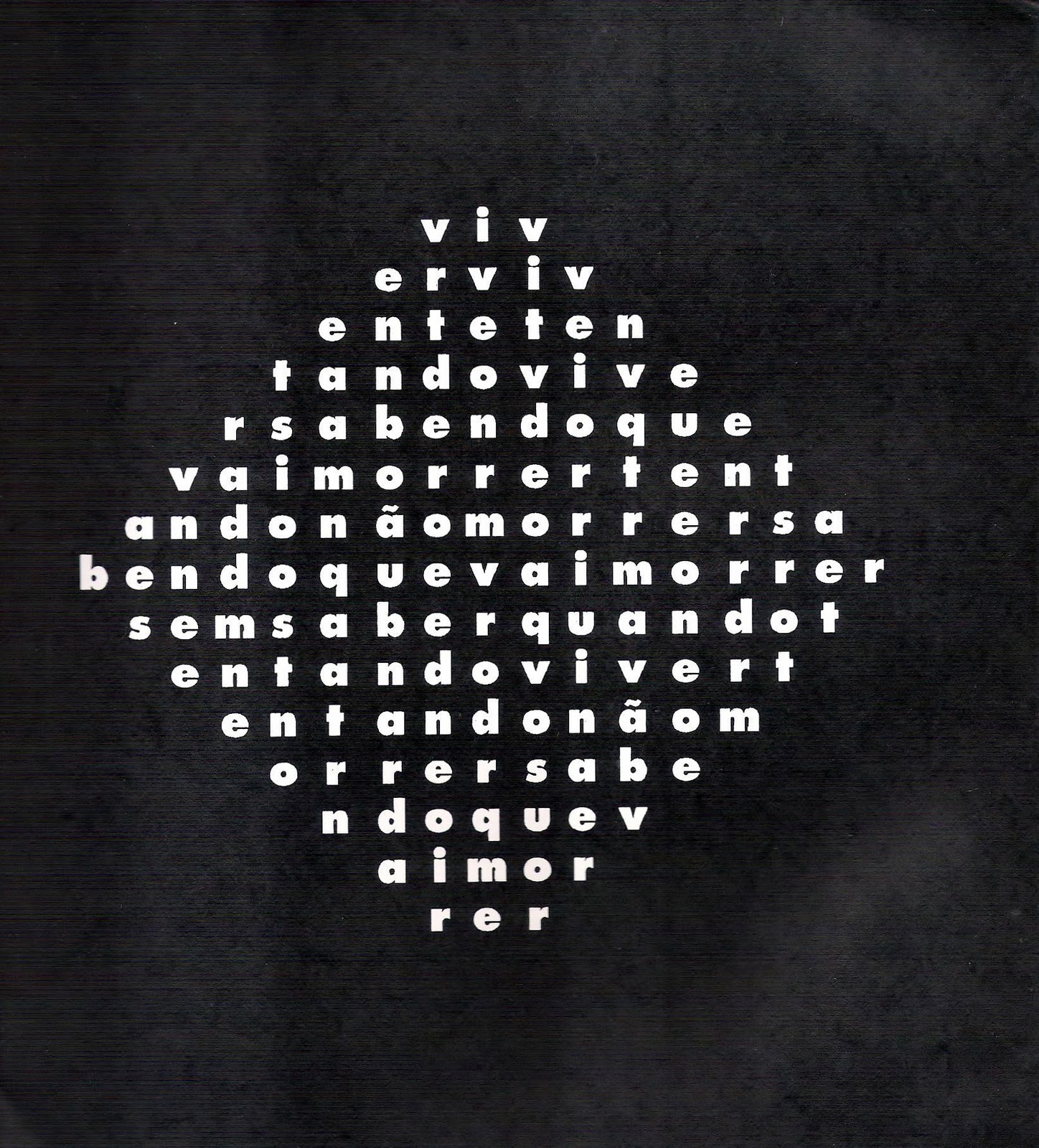
Augusto de Campos – Viv (1992)

Augusto de Campos - vivViv (1992), “viver é defender uma forma” (hoelderlin via Webern)

William Butler Yeats – A torre

1
O que farei com esta absurdidade,
Esta caricatura, coração?
Decrepitude atada à minha idade
Como à cauda de um cão?
Jamais terei sentido
Tão grande, tão apaixonada, tão incrível
A fantasia, nem houve olho e ouvido
Que mais quisessem o impossível –
Não, nem quando menino, com inseto e anzol,
Ou mais humilde verme, no alto de Ben Bulben,
Eu tinha a desfrutar todo um dia de sol.
Devo mandar às favas minha Musa,
Ter Platão ou Plotino por amigo,
Até que fantasia, olho e ouvido,
Cedam à mente e virem escalpelo
Da ideia abstrata; ou ser escarnecido
Por uma lata presa ao tornozelo.

2
Passo pelas muralhas e reconto
Os alicerces de uma casa e o ponto
Onde a árvore, como um dedo sujo, sai do chão,
E solto a imaginação.
À luz do dia declinante apelo às
Memórias e retinas
De antigas árvores ou ruínas –
Que eu gostaria de inquirir a todas elas.

Atrás do monte, Mrs. Frech viveu, e um dia –
Todos os castiçais e candeias que havia
A iluminar o mogno escuro e o vinho,
Um servidor que se fazia de adivinho
Dos caprichos da dama do condado
Com as tesouras do jardim cortou as
Orelhas de um granjeiro ousado
E as trouxe em prato recoberto, como broas.

Na juventude ouvi, mais de uma vez, a
Canção sobre uma bela camponesa
Que vivia num áspero recanto.
Louvavam sua tez e seu encanto
Lembrando que quando ela aparecia,
Ébrios da própria fantasia,
Os granjeiros juntavam-se na praça,
Tanto a canção gabava a sua graça.

Alguns, enlouquecidos com o canto
Ou com os brindes que a louvavam tanto,
Ergueram-se da mesa, decididos
A testar a miragem e os sentidos.
Mas um trocou a lua da poesia
Pela luz veraz do dia –
A música mexeu com o seu prumo,
No pântano de Cloone se foi, sem rumo.

Estranho, esta canção a fez um cego,
Mas, quanto mais eu penso, mais eu nego
Que seja estranho; a tragédia, considero,
Teve início com outro cego,
Homero, E Helena, que traiu a nós, viventes.
Ah, que da luz de sol e lua
Um único raio flua,
Pois se eu vencer, farei mentes dementes.

E eu mesmo criei Hanrahan
E o carreguei, bêbado ou não, pela manhã,
De um dos muitos chalés da vizinhança.
Às ordens de um ancião, como criança,
Trombou, tombou, tateou, pra lá, pra cá,
Joelhos rotos por compensação
E o horrível esplendor de uma paixão.
Coisas que imaginei há vinte anos já.

A turma carteava num canteiro;
E quando foi a vez do trapaceiro,
Ele tratou as cartas com tal arte
Que fez das suas um carteado à parte:
Cães de caça tomaram o lugar
Das cartas, e uma foi a lebre.
Hanrahan, em sua febre,
Seguiu-lhes o ladrido até chegar…

Até onde chegou não sei – já basta.
Devo lembrar alguém de alma tão gasta
Que nem a orelha do inimigo, exposta,
Nem a canção faria mais disposta.
Uma figura que virou legenda
E à qual não sobrou um só vizinho
Para contar-lhe as pedras do caminho –
Proprietário falido da vivenda.

Antes da perdição, por muitos anos,
Guerreiros rudes, botas couraçadas,
Mãos de ferro, subiram as escadas
Estreitas, e alguns deles que os arcanos
Da Memória preservam, imortais,
Com altos gritos, vista acesa,
Vêm-nos roubar o sono e a paz
E os seus dados ressoam sobre a mesa.

Invoco a todos, venha toda a gente:
O velho desmontado ou indigente;
O cego e errante arauto da beleza;
Hanrahan, que um jogral tomou por presa
Pelos campos sem Deus; e essa mulher
Que orelhas, mais que ouvidos, quer;
O afogado de amor por uma loa
Das Musas más na lama da lagoa.

Os velhos – ricos, pobres, homens ou mulheres -,
Que andaram por aqui, passaram esta porta,
Em público ou privado, acaso deblateram
Como eu contra a velhice, agora?
Mas encontrei uma resposta nesse clã
Tão impaciente para ir embora;
Pois vão; mas deixem-me Hanrahan,
Que eu necessito de sua múltipla memória.

Velho fauno, um amor em cada esquina
Extrai de tua mente toda a mina,
Tudo o que no sepulcro descobriste,
Pois sabes computar cada loucura,
Cada cega imersão, cada imprevisto
Sonho de ser que um suave olhar atrai,
Ou um toque ou um ai,
Ao labirinto de outra criatura.

Acaso a fantasia é compelida
À mulher ganha ou à mulher perdida?
Se à que perdeste, admite o teu esbulho:
Por mera covardia ou por orgulho,
Pseudoconsciência ou sutileza vaga,
Refugiste de um grande labirinto,
E se a memória volve o sol é extinto
Por um eclipse e o dia já se apaga.

3
É tempo do meu testamento.
Eu lego aos que ficam de pé
E vão contra a corrente até
O alto da fonte e cedo
Lançam o anzol, sem medo
Da pedra gotejante.
Lego O orgulho que carrego:
O orgulho dos que não têm fé
Na Causa ou no Estado,
Nem nos tiranos que escarravam
Nem nos escravos escarrados.
De gente como os Burke e Grattan
Que dá – recusando a recusa,
Orgulho como o da manhã
Quando a luz jorra profusa,
Ou o da cornucópia cheia
Ou da chuva que aflora
Quando o rio é só areia,
Ou o do cisne – na hora
Em que ele fixa o olhar
Num reflexo da aurora
Escolhendo um recanto
Do lago para alçar
O seu último canto.
Meu credo aqui proclamo.
Eu zombo de Plotino
E a Platão eu exclamo:
Morte e vida eram nada
Até o homem fazê-las
E lhes dar um destino
Com as armas e a carga
Da sua alma amarga.
Sim, sol e lua e estrelas.
Proclamo, sem receio,
Que, mortos, vamos retornar
Para criar o devaneio
De um Paraíso translunar.

Eu preparei a minha meta
Com a culta arte italiana,
Pedras da Grécia soberana,
Imagens de poeta,
Palavras de mulher,
Amor e desengano,
Tudo o que o homem quer
Para o seu sobre-humano
Sonho-espelho de ser.

No oco do tronco as gralhas
Gritam juntando a rama.
Galho após galho, empilham.
A ave-mãe com carinho
Ali fará sua cama
Para aquecer o ninho.

Eu lego o orgulho e a fé
Aos que ficam de pé,
Galgam o alto do monte
Para lançar o anzol
Na linha do horizonte.
Desse metal fui feito
Até ser alquebrado
Por este ofício estreito.

Preparo a alma, agora,
Votando-a ao estudo
Numa douta demora,
Até o fim de tudo.
Sangue que deteriora,
Desgaste da memória,
Estancamento mudo.
Ou, ainda pior,
A morte dos que outrora
Foram grandes, do olhar
Que fez sustar o alento –
Como as nuvens no ar
Quando o sol cai e um lento
Grito de ave ressoa
Na sombra que se escoa.

Trad.: Augusto de Campos

The Tower

I
What shall I do with this absurdity-
O heart, O troubled heart-this caricature,
Decrepit age that has been tied to me
As to a dog’s tail?
Never had I more
Excited, passionate, fantastical
Imagination, nor an ear and eye
That more expected the impossible-
No, not in boyhood when with rod and fly,
Or the humbler worm, I climbed Ben Bulben’s back
And had the livelong summer day to spend.
It seems that I must bid the Muse go pack,
Choose Plato and Plotinus for a friend
Until imagination, ear and eye,
Can be content with argument and deal
In abstract things; or be derided by
A sort of battered kettle at the heel.

II
I pace upon the battlements and stare
On the foundations of a house, or where
Tree, like a sooty finger, starts from the earth;
And send imagination forth
Under the day’s declining beam, and call
Images and memories
From ruin or from ancient trees,
For I would ask a question of them all.

Beyond that ridge lived Mrs. French, and once
When every silver candlestick or sconce
Lit up the dark mahogany and the wine,
A serving-man, that could divine
That most respected lady’s every wish,
Ran and with the garden shears
Clipped an insolent farmer’s ears
And brought them in a little covered dish.

Some few remembered still when I was young
A peasant girl commended by a song,
Who’d lived somewhere upon that rocky place,
And praised the colour of her face,
And had the greater joy in praising her,
Remembering that, if walked she there,
Farmers jostled at the fair
So great a glory did the song confer.
And certain men, being maddened by those rhymes,
Or else by toasting her a score of times,
Rose from the table and declared it right
To test their fancy by their sight;
But they mistook the brightness of the moon
For the prosaic light of day-
Music had driven their wits astray-
And one was drowned in the great bog of Cloone.

Strange, but the man who made the song was blind;
Yet, now I have considered it, I find
That nothing strange; the tragedy began
With Homer that was a blind man,
And Helen has all living hearts betrayed.
O may the moon and sunlight seem
One inextricable beam,
For if I triumph I must make men mad.

And I myself created Hanrahan
And drove him drunk or sober through the dawn
From somewhere in the neighbouring cottages.
Caught by an old man’s juggleries
He stumbled, tumbled, fumbled to and fro
And had but broken knees for hire
And horrible splendour of desire;
I thought it all out twenty years ago:

Good fellows shuffled cards in an old bawn;
And when that ancient ruffian’s turn was on
He so bewitched the cards under his thumb
That all but the one card became
A pack of hounds and not a pack of cards,
And that he changed into a hare.
Hanrahan rose in frenzy there
And followed up those baying creatures towards-

O towards I have forgotten what -enough!
I must recall a man that neither love
Nor music nor an enemy’s clipped ear
Could, he was so harried, cheer;
A figure that has grown so fabulous
There’s not a neighbour left to say
When he finished his dog’s day:
An ancient bankrupt master of this house.

Before that ruin came, for centuries,
Rough men-at-arms, cross-gartered to the knees
Or shod in iron, climbed the narrow stairs,
And certain men-at-arms there were
Whose images, in the Great Memory stored,
Come with loud cry and panting breast
To break upon a sleeper’s rest
While their great wooden dice beat on the board.

As I would question all, come all who can;
Come old, necessitous, half-mounted man;
And bring beauty’s blind rambling celebrant;
The red man the juggler sent
Through God-forsaken meadows; Mrs. French,
Gifted with so fine an ear;
The man drowned in a bog’s mire,
When mocking muses chose the country wench.

Did all old men and women, rich and poor,
Who trod upon these rocks or passed this door,
Whether in public or in secret rage
As I do now against old age?
But I have found an answer in those eyes
That are impatient to be gone;
Go therefore; but leave Hanrahan,
For I need all his mighty memories.

Old lecher with a love on every wind,
Bring up out of that deep considering mind
All that you have discovered in the grave,
For it is certain that you have
Reckoned up every unforeknown, unseeing
Plunge, lured by a softening eye,
Or by a touch or a sigh,
Into the labyrinth of another’s being;

Does the imagination dwell the most
Upon a woman won or woman lost?
If on the lost, admit you turned aside
From a great labyrinth out of pride,
Cowardice, some silly over-subtle thought
Or anything called conscience once;
An that if memory recur, the sun’s
Under eclipse and the day blotted out.

III
It is time that I wrote my will;
I choose upstanding men
That climb the streams until
The fountain leap, and at dawn
Drop their cast at the side
Of dripping stone; I declare
They shall inherit my pride,
The pride of people that were
Bound neither to Cause nor to State,
Neither to slaves that were spat on,
Nor to the tyrants that spat,
The people of Burke and of Grattan
That gave, though free to refuse-
Pride, like that of the morn,
When the headlong light is loose,
Or that of the fabulous horn,
Or that of the sudden shower
When all streams are dry,
Or that of the hour
When the swan must fix his eye
Upon a fading gleam,
Float out upon a long
Last reach of glittering stream
And there sing his last song.
And I declare my faith:
I mock Plotinus’ thought
And cry in Plato’s teeth,
Death and life were not
Till man made up the whole,
Made lock, stock and barrel
Out of his bitter soul,
Aye, sun and moon and star, all,
And further add to that
That, being dead, we rise,
Dream and so create
Translunar Paradise.
I have prepared my peace
With learned Italian things
And the proud stones of Greece,
Poet’s imaginings
And memories of love,
Memories of the words of women,
All those things whereof
Man makes a superhuman
Mirror-resembling dream.

As at the loophole there
The daws chatter and scream,
And drop twigs layer upon layer.
When they have mounted up,
The mother bird will rest
On their hollow top,
And so warm her wild nest.

I leave both faith and pride
To young upstanding men
Climbing the mountain side,
That under bursting dawn
They may drop a fly;
Being of that metal made
Till it was broken by
This sedentary trade.

Now shall I make my soul,
Compelling it to study
In a learned school
Till the wreck of body,
Slow decay of blood,
Testy delirium
Or dull decrepitude,
Or what worse evil come-
The death of friends, or death
Of every brilliant eye
That made a catch in the breath-
Seem but the clouds of the sky
When the horizon fades;
Or a bird’s sleepy cry
Among the deepening shades.

Paul Verlaine – Arte poética

Arte Poética

     A Charles Morice

Antes de tudo, a Música. Preza
Portanto o Ímpar. Só cabe usar
O que é mais vago e solúvel no ar,
Sem nada em si que pousa ou que pesa.

Pesar palavras será preciso,
Mas com algum desdém pela pinça:
Nada melhor do que a canção cinza
Onde o Indeciso se une ao Preciso.

Uns belos olhos atrás do véu,
O lusco-fusco no meio-dia,
A turba azul de estrelas que estria
O outono agônico pelo céu!

Pois a Nuance é que leva a palma,
Nada de Cor, somente a nuance!
Nuance, só, que nos afiance
O sonho ao sonho e a flauta na alma!

Foge do Chiste, a Farpa mesquinha,
Frase de espírito, Riso alvar,
Que o olho do Azul faz lacrimejar,
Alho plebeu de baixa cozinha!

A eloquência? Torce-lhe o pescoço!
E convém empregar de uma vez
A rima com certa sensatez
Ou vamos todos parar no fosso!

Quem nos dirá dos males da rima!
Que surdo absurdo ou que negro louco
Forjou em joia este toco oco
Que soa falso e vil sob a lima?

Música ainda, e eternamente!
Que teu verso seja o voo alto
Que se desprende da alma no salto
Para outros céus e para outra mente.

Que teu verso seja a aventura
Esparsa ao árdego ar da manhã
Que enchem de aroma o timo e a hortelã…
E todo o resto é literatura.

Trad.: Augusto de Campos

Art Poétique

     A Charles Morice

De la musique avant toute chose,
Et pour cela préfère l’Impair
Plus vague et plus soluble dans l’air,
Sans rien en lui qui pèse ou qui pose.

Il faut aussi que tu n’ailles point
Choisir tes mots sans quelque méprise:
Rien de plus cher que la chanson grise
Où l’Indécis au Précis se joint.

C’est des beaux yeux derrière des voiles,
C’est le grand jour tremblant de midi,
C’est, par un ciel d’automne attiédi,
Le bleu fouillis des claires étoiles!

Car nous voulons la Nuance encor,
Pas la Couleur, rien que la nuance!
Oh! la nuance seule fiance
Le rêve au rêve et la flûte au cor!

Fuis du plus loin la Pointe assassine,
L’Esprit cruel et le Rire impur,
Qui font pleurer les yeux de l’Azur,
Et tout cet ail de basse cuisine!

Prends l’éloquence et tords-lui son cou!
Tu feras bien, en train d’énergie,
De rendre un peu la Rime assagie.
Si l’on n’y veille, elle ira jusqu’où?

O qui dira les torts de la Rime?
Quel enfant sourd ou quel nègre fou
Nous a forgé ce bijou d’un sou
Qui sonne creux et faux sous la lime?

De la musique encore et toujours!
Que ton vers soit la chose envolée
Qu’on sent qui fuit d’une âme en allée
Vers d’autres cieux à d’autres amours.

Que ton vers soit la bonne aventure
Eparse au vent crispé du matin
Qui va fleurant la menthe et le thym…
Et tout le reste est littérature.