Mary Oliver – Às vezes

1.

Algo emergiu
da escuridão.
Não era nada que eu já tivesse visto antes.
Não era um animal
ou uma flor,
a menos que fosse ambos.

Algo emergiu da água,
uma cabeça do tamanho da de um gato
mas enlameada e sem orelhas.
Eu não sei o que é Deus.
Eu não sei o que é a morte.

Mas creio que eles tenham entre si
algum acordo fervoroso e necessário.

2.

Às vezes
a melancolia me corta a respiração.

3.

Mais tarde, eu estava em um campo cheio de girassóis.
Eu sentia o ápice do verão.
Eu pensava no doce e elétrico
torpor da criação,

quando tudo começou a desmoronar.

A oeste, nuvens se acumularam.
Nuvens de tempestade.
Em uma hora o céu estava cheio delas.

Em uma hora o céu se encheu
com a doçura da chuva e o clarão dos relâmpagos.
Seguido pelo profundo som dos trovões.

Água dos céus! Eletricidade da fonte!
Ambas ansiosas para criar algo!

O clarão mais luminoso do que qualquer flor.
O trovão sem um único osso sonolento no corpo.

4.

Instruções para viver uma vida:
Esteja atento.
Deixe-se surpreender.
Fale sobre isso.

5.
Duas ou três vezes em minha vida encontrei o amor.
Todas as vezes, parecia resolver tudo.
Todas as vezes, resolveu muitas coisas,
mas não tudo.
No entanto, deixou-me tão grata como se tivesse de fato – e
completamente – resolvido tudo.

6.

Deus, repouse em meu coração
e me fortaleça,
afaste de mim essa ânsia por respostas,
deixe as horas dançarem em meu corpo

como as mãos do meu amado.
Deixe que a cabeça de gato apareça novamente —
o menor de seus mistérios,
algum primo selvagem de meu próprio sangue, provavelmente —
algum primo de meu próprio sangue selvagem, provavelmente,
na escura tigela do lago.

7.

A morte me espera, eu sei, em uma
ou outra esquina.
Isso não me diverte.
Tampouco me assusta.

Depois da chuva, voltei para o campo de girassóis.
Estava frio, e eu estava longe de sentir sono.
Caminhei lentamente, e ouvi

as raízes insanas, na terra encharcada, rindo e crescendo.

Trad.: Nelson Santander

Mais do que uma leitura, uma experiência. Clique, compre e contribua para manter a poesia viva em nosso blog

Sometimes

1.

Something came up
out of the dark.
It wasn’t anything I had ever seen before.
It wasn’t an animal
or a flower,
unless it was both.

Something came up out of the water,
a head the size of a cat
but muddy and without ears.
I don’t know what God is.
I don’t know what death is.

But I believe they have between them
some fervent and necessary arrangement.

2.

Sometimes
melancholy leaves me breathless.

3.

Later I was in a field full of sunflowers.
I was feeling the head of midsummer.
I was thinking of the sweet, electric
drowse of creation,

when it began to break.

In the west, clouds gathered.
Thunderheads.
In an hour the sky was filled with them.

In an hour the sky was filled
with the sweetness of rain and the blast of lightning.
Followed by the deep bells of thunder.

Water from the heavens! Electricity from the source!
Both of them mad to create something!

The lighting brighter than any flower.
The thunder without a drowsy bone in its body.

4.

Instructions for living a life:
Pay attention.
Be astonished.
Tell about it.

5.
Two or three times in my life I discovered love.
Each time it seemed to solve everything.
Each time it solved a great many things
but not everything.
Yet left me as grateful as if it had indeed, and
thoroughly, solved everything.

6.

God, rest in my heart
and fortify me,
take away my hunger for answers,
let the hours play upon my body

like the hands of my beloved.
Let the cathead appear again—
the smallest of your mysteries,
some wild cousin of my own blood probably—
some cousin of my own wild blood probably,
in the black dinner-bowl of the pond.

7.

Death waits for me, I know it, around
one corner or another.
This doesn’t amuse me.
Neither does it frighten me.

After the rain, I went back into the field of sunflowers.
It was cool, and I was anything but drowsy.
I walked slowly, and listened

to the crazy roots, in the drenched earth, laughing and growing.

Mary Oliver – Quebra

Eu desço até a beira-mar.
Como tudo cintila na luz matutina!
A cúspide da concha,
o búzio quebrado do caracol,
os mexilhões azuis abertos,
lesmas-do-mar rosa-pálidas marcadas por cracas —
e nada totalmente inteiro ou fechado, mas esfarrapado, partido,
abandonado pelas gaivotas sobre as rochas cinzentas com toda umidade exaurida.
É como uma escola
de palavras miúdas,
milhares de palavras.
Primeiro, compreendemos o significado de cada uma por si só,
o bivalve, a pervinca, a vieira
repleta de luz lunar.

Então, aos poucos, começamos a ler toda a história.

Trad.: Nelson Santander

Mais do que uma leitura, uma experiência. Clique, compre e contribua para manter a poesia viva em nosso blog

Breakage

I go down to the edge of the sea.
How everything shines in the morning light!
The cusp of the whelk,
the broken cupboard of the clam,
the opened, blue mussels,
moon snails, pale pink and barnacle scarred—
and nothing at all whole or shut, but tattered, split,
dropped by the gulls onto the gray rocks and all the moisture gone.
It's like a schoolhouse
of little words,
thousands of words.
First you figure out what each one means by itself,
the jingle, the periwinkle, the scallop
       full of moonlight.

Then you begin, slowly, to read the whole story.

Mary Oliver – Chumbo

Eis uma história
de partir o seu coração.
Quer ouvi-la?
Neste inverno,
os mergulhões pousaram em nossa enseada
e morreram, um por um,
de nada que conseguíssemos ver.
Um amigo me contou
sobre um na costa
que ergueu a cabeça, abriu
seu elegante bico e gritou
no longo e doce deleite de sua vida,
grito que, se você já ouviu,
sabe que é uma coisa sagrada,
e pelo qual, se você ainda não ouviu,
vale a pena se apressar em direção ao local onde
os mergulhões ainda cantam.
E, vai por mim, não conte a ninguém
onde fica.
Na manhã seguinte,
este mergulhão, pintalgado
e iridescente, e com um plano
de voar para sua casa
em algum lago oculto,
estava morto na costa.
Digo-lhe isso
para partir o seu coração,
de modo que ele se abra
e nunca mais se feche
para o resto do mundo.

Trad.: Nelson Santander

Lead

Here is a story
to break your heart.
Are you willing?
This winter
the loons came to our harbor
and died, one by one,
of nothing we could see.
A friend told me
of one on the shore
that lifted its head and opened
the elegant beak and cried out
in the long, sweet savoring of its life
which, if you have heard it,
you know is a sacred thing.,
and for which, if you have not heard it,
you had better hurry to where
they still sing.
And, believe me, tell no one
just where that is.
The next morning
this loon, speckled
and iridescent and with a plan
to fly home
to some hidden lake,
was dead on the shore.
I tell you this
to break your heart,
by which I mean only
that it break open and never close again
to the rest of the world.

Mary Oliver – Não hesite

Se você, súbita e inesperadamente, sentir alegria,
não hesite. Entregue-se a ela. Há muitas
vidas e cidades inteiras destruídas ou prestes a serem.
Não somos sábios e raramente somos amáveis.
E muito nunca poderá ser redimido.
Ainda assim, a vida ainda tem alguma possibilidade.
Talvez essa seja sua forma de resistir, de mostrar que às vezes
algo melhor do que todas as riquezas ou poderes
do mundo pode acontecer. Pode ser qualquer coisa,
mas é provável que você o perceba no instante
em que o amor começa. De toda forma, frequentemente
é este o caso. De toda forma, seja como for, não tema
a fartura. A alegria não foi feita para ser migalha.

Trad.: Nelson Santander

Don’t Hesitate

If you suddenly and unexpectedly feel joy,
don’t hesitate. Give in to it. There are plenty
of lives and whole towns destroyed or about
to be. We are not wise, and not very often
kind. And much can never be redeemed.
Still, life has some possibility left. Perhaps this
is its way of fighting back, that sometimes
something happens better than all the riches
or power in the world. It could be anything,
but very likely you notice it in the instant
when love begins. Anyway, that’s often the
case. Anyway, whatever it is, don’t be afraid
of its plenty. Joy is not made to be a crumb.

Mary Oliver – Sobre viajar para lugares bonitos

Ainda procuro Deus todos os dias
e ainda o encontro por toda parte,
no pó, nas floreiras.
Seguramente, nos oceanos,
nas ilhas distantes,
continentes de gelo, países de areia,
cada um com seu próprio conjunto de seres
e um Deus, qualquer que seja seu nome.
Que perfeito estar a bordo de um navio
talvez ainda com cem anos pela frente.
Mas é tarde, para todos nós,
e, na verdade, o único navio que há
é aquele em que todos estamos,
incendiando o mundo à medida que avançamos.

Trad. Nelson Santander

On Traveling To Beautiful Places

Every day I’m still looking for God
and I’m still finding him everywhere,
in the dust, in the flowerbeds.
Certainly in the oceans,
in the islands that lay in the distance
continents of ice, countries of sand
each with its own set of creatures
and God, by whatever name.
How perfect to be aboard a ship with
maybe a hundred years still in my pocket.
But it’s late, for all of us,
and in truth the only ship there is
is the ship we are all on
burning the world as we go.

Mary Oliver – Garças

Onde o caminho
    se encerrava,
        por entre folhas matizadas,
            galhos caídos,
através de nodosas salsaparrilhas,
    eu continuei. Por fim,
        não pude
            salvar meus braços
                dos espinhos; logo
os mosquitos
    sentiram meu cheiro, quente
        e ferido, e vieram
            girando e gemendo.
                E foi assim que cheguei
na beira do lago:
    escuro e vazio
        exceto por um fuso
            de juncos esbranquiçados
na margem oposta
    que, quando olhei,
        se enrugou subitamente
            em três garças —
uma ducha
    de fogo branco!
        Mesmo meio adormecidas, elas tinham
            tanta fé no mundo
que as tinha feito —
    que se inclinavam sobre a água,
        serenas, sem dúvida,
            pelas leis
de suas fés, não pela lógica,
    elas abriram suas asas
        suavemente e passaram
            por cima de todas as coisas escuras.

Trad.: Nelson Santander
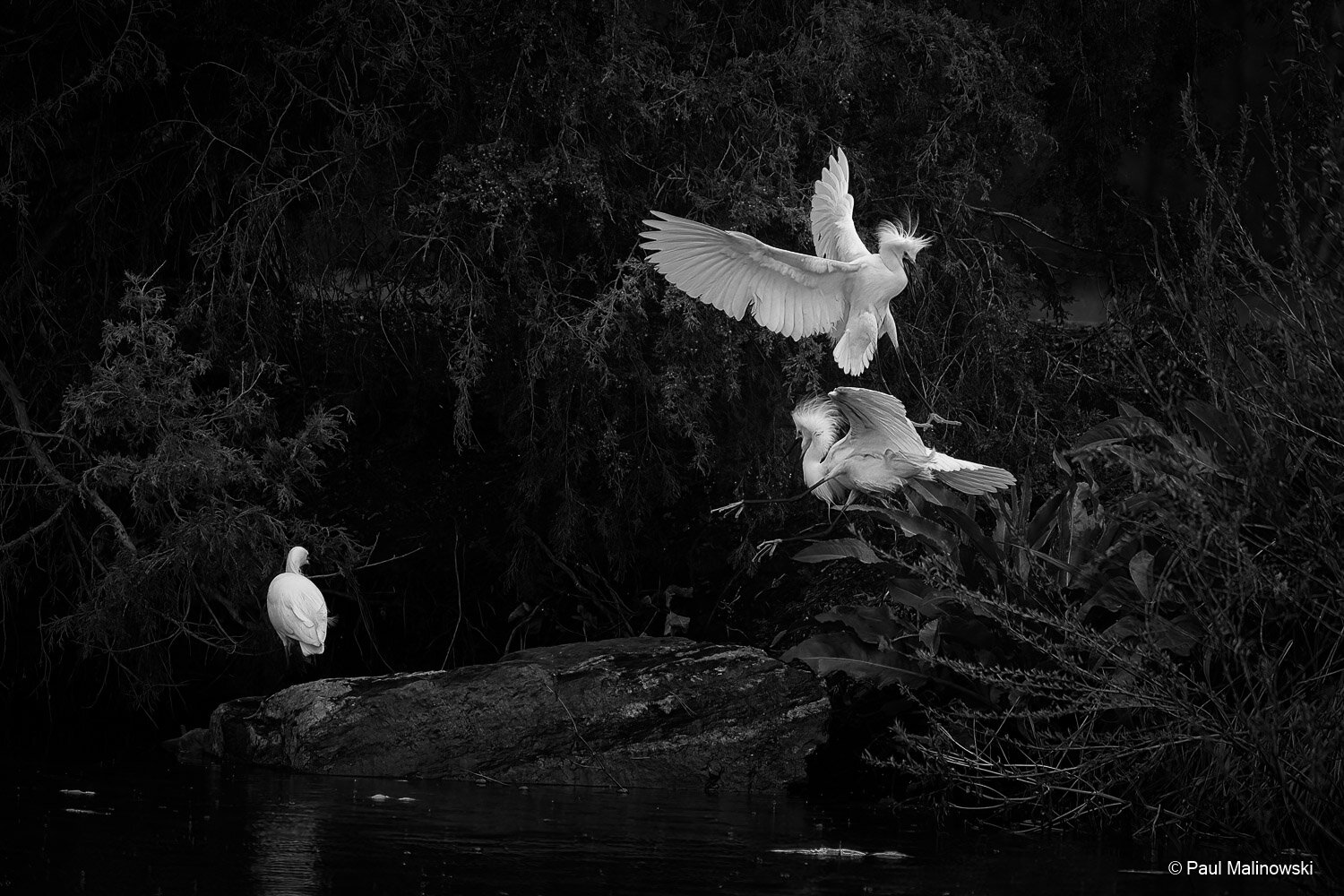
Egrets

Where the path closed
    down and over,
        through the scumbled leaves,
            fallen branches,
through the knotted catbrier,
    I kept going. Finally
        I could not
            save my arms
                from thorns; soon
the mosquitoes
    smelled me, hot
        and wounded, and came
            wheeling and whining.
                And that's how I came
to the edge of the pond:
    black and empty
        except for a spindle
            of bleached reeds
at the far shore
    which, as I looked,
        wrinkled suddenly
            into three egrets —
a shower
    of white fire!
        Even half-asleep they had
            such faith in the world
that had made them —
    tilting through the water,
        unruffled, sure,
            by the laws
of their faith not logic,
    they opened their wings
        softly and stepped
            over every dark thing.

Mary Oliver – Flores brancas

Ontem à noite
no campo
eu me deitei no escuro
para pensar na morte,
mas em vez disso adormeci,
como se estivesse em um quarto vasto e inclinado
repleto daquelas flores brancas
que se abrem todo verão,
viscosas e desordenadas,
nos tépidos campos.
Quando despertei
a luz da manhã deslizava
perante as estrelas,
e eu estava coberta
de flores.
Não sei
como aconteceu —
não sei
se meu corpo mergulhou
para baixo das adocicadas videiras
em algum tipo de afinidade sonoafiada
com as profundezas, ou se
aquela energia verde
ergueu-se como uma onda
e se enroscou em mim, reivindicando-me
em seus braços rudes.
Eu a afastei, mas não me levantei.
Nunca em minha vida me sentira tão suave,
ou tão escorregadia,
ou tão resplandecentemente vazia.
Nunca em minha vida
me sentira tão perto
daquela linha porosa
onde meu próprio corpo terminava
e as raízes e os caules e as flores
começavam.

Trad.: Nelson Santander

White Flowers

Last night
in the fields
I lay down in the darkness
to think about death,
but instead I fell asleep,
as if in a vast and sloping room
filled with those white flowers
that open all summer,
sticky and untidy,
in the warm fields.
When I woke
the morning light was just slipping
in front of the stars,
and I was covered
with blossoms.
I don’t know
how it happened—
I don’t know
if my body went diving down
under the sugary vines
in some sleep-sharpened affinity
with the depths, or whether
that green energy
rose like a wave
and curled over me, claiming me
in its husky arms.
I pushed them away, but I didn’t rise.
Never in my life had I felt so plush,
or so slippery,
or so resplendently empty.
Never in my life
had I felt myself so near
that porous line
where my own body was done with
and the roots and the stems and the flowers
began.

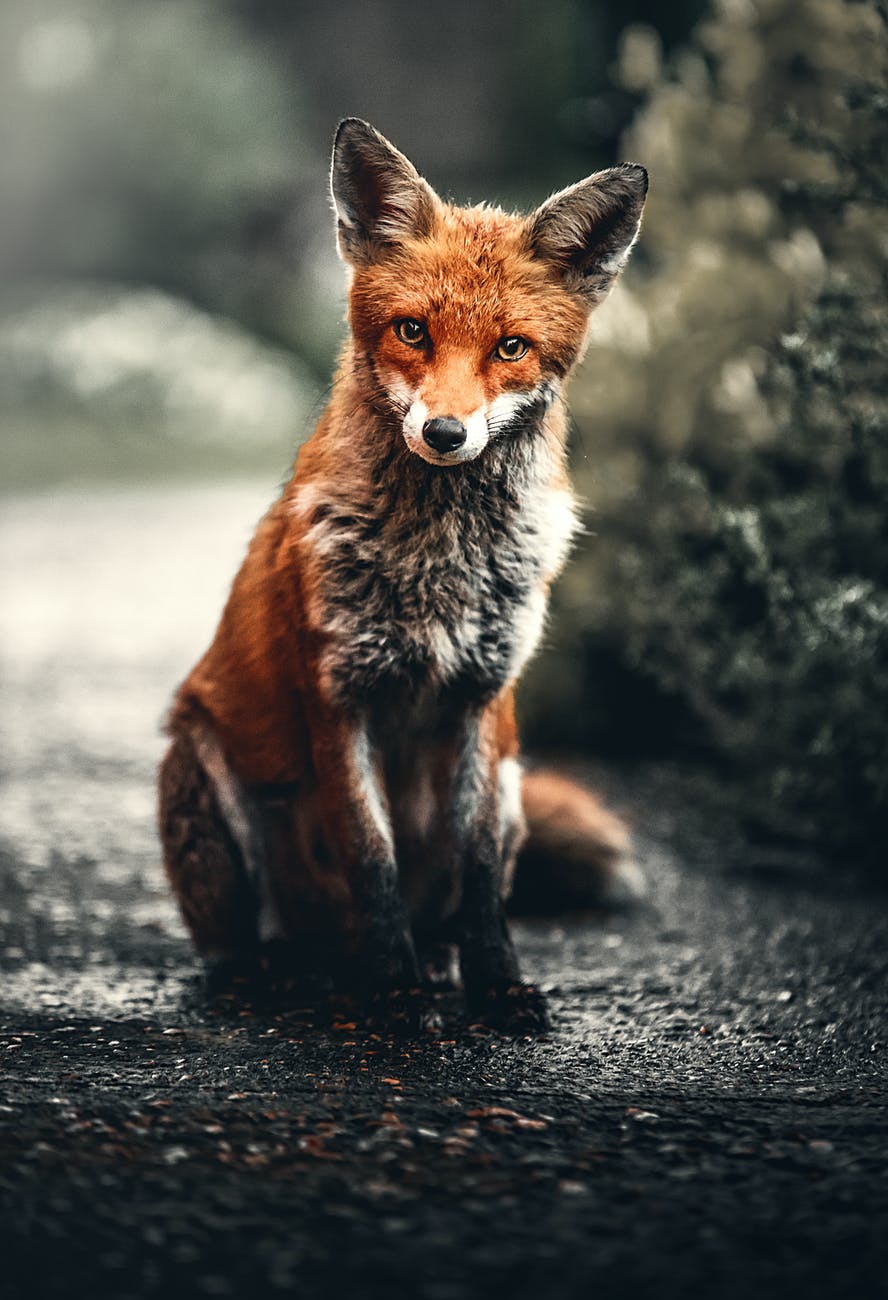
Mary Oliver – Encontrando a raposa

Quando encontrei a raposa hoje – um ouro
tão vivo em seus olhos –
nenhuma de nós
se moveu, embora apenas

uma de nós tenha sido imediatamente tomada
de admiração. Suas patas estavam
apoiadas em seu movimento
de brusca parada,

suas orelhas, para frente apontadas,
a fim de ouvir como minha língua poderia ser,
mas eu não disse
nada, não havia palavra para a

esperança que eu tinha de que
pudéssemos ser amigas. Atrás dela,
a encosta, depois, a floresta,
e, além, todo o universo.

Fiquei imóvel como uma rocha.
Eu não sabia o que fazer.
Então eu pensei, bem,
por que não tentar?
, e

estendi minhas mãos em sinal
de amizade, e instantaneamente,
com um cortante latido, uma negativa
muito decisiva,

em suas patas pequenas e elegantes,
ela voltou a subir a encosta
e voou para aquele outro
mundo.

Trad.: Nelson Santander

Meeting the Fox

When I met the fox today – such living
gold in its eyes –
neither of us
moved though only

one of us was instantly taken up with
admiration. Its legs were
braced in their motion
of sudden stop,

its ears were pricked forward
to hear what my language might be,
but I said
nothing, there was no word for the

hope I had that we
could be friends. Behind it
the hillside, then the woods,
then the entire universe.

I stood as still as a rock.
I didn’t know what to do.
Then I thought, oh well,
why not try, and I

held out my hands
in friendship, and instantly,
with a sharp bark, a very
decisive negative,

on its narrow and elegant feet,
back up the hillside
and into that other world
it flew.

Mary Oliver – Pesado

Naquela época
Eu pensei que não poderia
me aproximar mais da dor
sem morrer

eu me aproximei
e não morri.
Certamente teve
a mão de Deus nisso,

assim como as dos amigos.
Ainda assim, eu estava curvada,
e meu riso,
como disse o poeta,

havia desaparecido.
Então disse o meu amigo Daniel
(valente mesmo entre os leões):
“Não é o peso que você carrega

mas como você o carrega –
livros, luto, ladrilhos –
tudo está na maneira
como você o abraça, equilibra, carrega-o

quando não pode, e não quer,
abandoná-lo.”
Então eu fui praticar.
Já reparou?

Já ouviu
o riso
que sai, vez ou outra,
de minha boca assustadas?

Como eu me demoro
admirando, admirando, admirando
as coisas deste mundo
que são gentis, e talvez

também turbulentas –
rosas ao vento,
os gansos-do-mar nas ondas íngremes,
um amor
para o qual não há resposta?

Trad.: Nelson Santander

Heavy

That time
I thought I could not
go any closer to grief
without dying

I went closer,
and I did not die.
Surely God
had his hand in this,

as well as friends.
Still, I was bent,
and my laughter,
as the poet said,

was nowhere to be found.
Then said my friend Daniel,
(brave even among lions),
“It’s not the weight you carry

but how you carry it –
books, bricks, grief –
it’s all in the way
you embrace it, balance it, carry it

when you cannot, and would not,
put it down.”
So I went practicing.
Have you noticed?

Have you heard
the laughter
that comes, now and again,
out of my startled mouth?

How I linger
to admire, admire, admire
the things of this world
that are kind, and maybe

also troubled –
roses in the wind,
the sea geese on the steep waves,
a love
to which there is no reply?

Mary Oliver – A serpente negra

Foi quando a serpente negra
apareceu na estrada de manhã,
e o caminhão não conseguiu desviar –
morte, é assim que acontece.

Agora ela jaz enrolada e inútil
como um velho pneu de bicicleta.
Eu paro o carro
e a levo para o mato.

Ela é fria e reluzente
como um chicote trançado, bela e tranquila
como um irmão que morreu.
Eu a deixo sob as folhas

e sigo em frente, refletindo
sobre a morte: sua subitaneidade,
seu peso terrível,
a certeza de sua vinda. Contudo, sob

a razão, arde um fogo mais brilhante, que os ossos
sempre preferiram.
É a narrativa da sorte sem fim.
Ela diz para o oblívio: não comigo!

Ela é a luz no núcleo de cada célula.
Foi o que fez a cobra enrolar-se e fluir para frente
feliz durante toda a primavera através das folhas verdes antes
de chegar à estrada.

Trad.: Nelson Santander

The Black Snake

When the black snake
flashed onto the morning road,
and the truck could not swerve–
death, that is how it happens.

Now he lies looped and useless
as an old bicycle tire.
I stop the car
and carry him into the bushes.

He is as cool and gleaming
as a braided whip, he is as beautiful and quiet
as a dead brother.
I leave him under the leaves

and drive on, thinking
about death: its suddenness,
its terrible weight,
its certain coming. Yet under

reason burns a brighter fire, which the bones
have always preferred.
It is the story of endless good fortune.
It says to oblivion: not me!

It is the light at the center of every cell.
It is what sent the snake coiling and flowing forward
happily all spring through the green leaves before
he came to the road.