Jennifer Maier – Uma história verdadeira

Um homem idoso estava morrendo em um hospital,
contou-me um amigo médico.

Estava com oitenta e nove anos, e a vida toda fora um alfaiate em uma loja
embaixo do quarto onde nasceu.

Ele não tinha ninguém, então uma bondosa enfermeira de Gana
sentou-se com ele, uma mão sobre a

sua, segurando um sanduíche. As ondas
no monitor desaceleraram. Seu coração

era um pequeno barco vermelho na imensa maré
vazante. No fim, ele abriu

os olhos. Ar fresco, Ar fresco, ele disse, e porque
estavam no décimo segundo andar, as janelas fechadas,

a enfermeira se inclinou e exalou suavemente no topo de
sua cabeça, despenteando-lhe um pouco o cabelo,

e eles permaneceram assim por alguns minutos até
ele morrer, seu rosto voltado para a brisa.

Isso foi há muito tempo. Meu amigo se foi;
o hospital se tornou um terreno baldio.

Algumas noites desperto com essas palavras no ouvido,
incerto se são a súplica do velho judeu

ou a aragem de resposta da mulher africana,
ou a bela mentira que os uniu,

como um vinco e uma costura; a fria transparência do vidro
e a vasta corrente de ar azul além.

Trad.: Nelson Santander

A true story

An old man was dying in the hospital,
my friend the doctor told me.

He was eighty-nine, his whole life a tailor in a shop
below the room where he was born.

He had no one, so a kind aide from Ghana
sat with him, one hand in his

the other holding her sandwich. The waves
on the monitor slowed. His heart

was a small red boat on the long tide
going out. At the end he opened

his eyes. Cool air, Cool air, he said, and because it
was the twelfth floor, the windows sealed,

the aide leans over and exhales softly on the top of
his head, to ruffle his hair a bit,

and they stay like that for a few minutes until
he dies, his face turned to the breeze.

That was a long time ago. My friend is gone;
the hospital’s become a vacant lot.

Some nights I wake with those words in my ear,
unsure if they’re the plea of the old Jew

or the answering breath of the African woman,
or the beautiful lie that binds them,

like a dart and a seam; the cold clarity of glass
and the wide blue draft beyond.
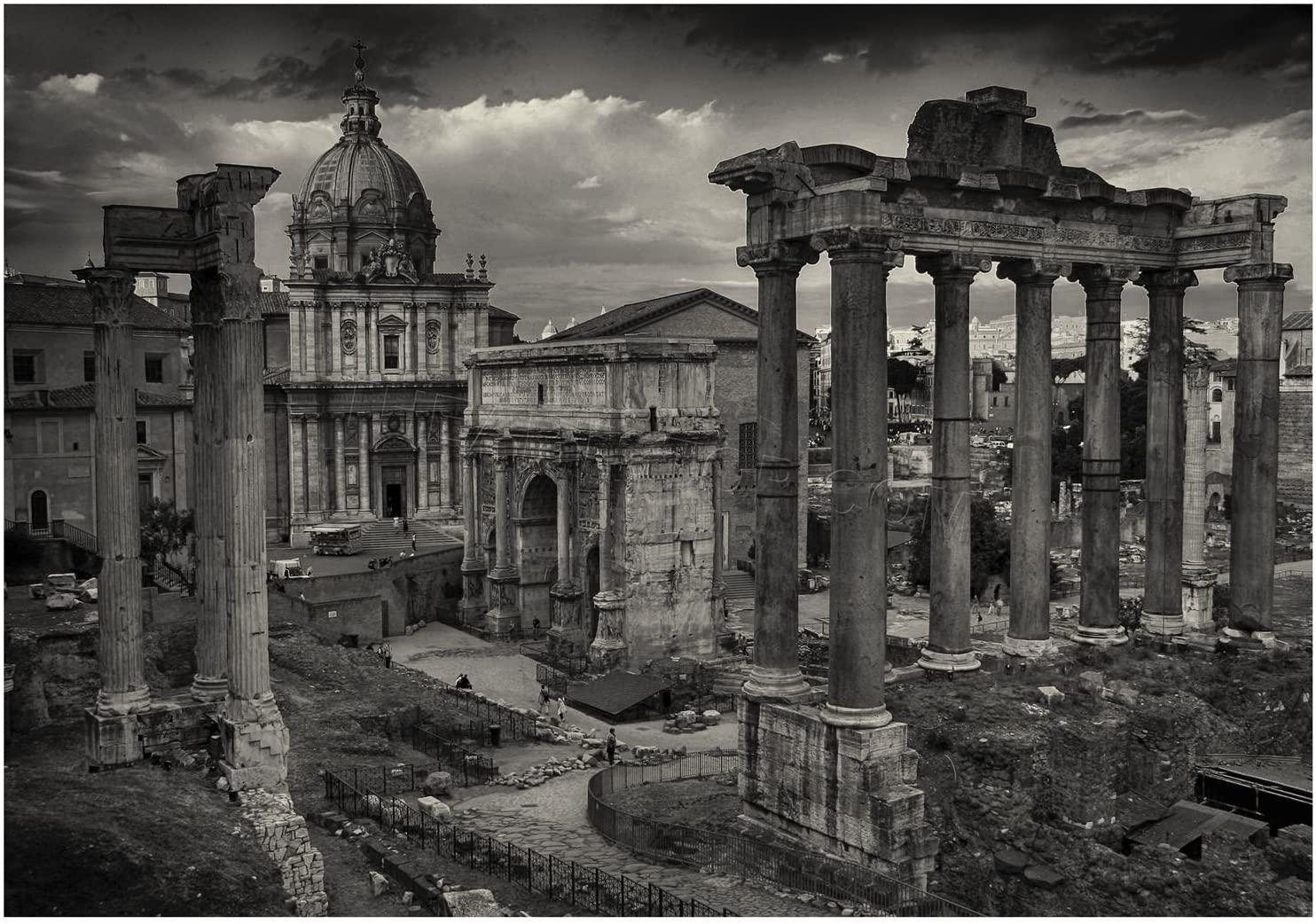
Daniel Jonas – Roma

Roma
é como as ruínas

de uma relação amorosa

restos de
beleza

a céu aberto

Karl Shapiro – Inverno na Califórnia

É inverno na Califórnia, e no exterior
É como o interior de uma floricultura:
Uma fresca e úmida cultura
De camélias rosas delimita a vertente;
E que raras rosas para um banquete ou um amor,
Tão numerosas que semelham uma enchente!

Uma fileira de lesmas cruza o verde gramado
Das roseiras ao canteiro de heras;
Um composto arsênico é distribuído para elas;
O jardineiro varrerá as cascas
E deixará em um canto do adro
O montinho de valvas vazias, como cabeças.

Antes do meio-dia a névoa é dissipada pelo sol
E o céu mais imenso do mundo uma página inaugura
Para o exercício de uma era futura;
Agora, os aviões a jato desenham parábolas, linhas,
E x’s, que o vento, antes que se desfaçam,
Lentamente elimina e e arrasta e desalinha.

É inverno no vale da vinha.
Insinuam as videiras em estacas crucificadas
Cemitérios de guerra, mas a fruta é prensada,
Os tonéis de carvalho no galpão transbordam,
E nos acessos, carros-tanques cheios de Moscatel de Alexandria,
Pelo qual os sucos de bilhões de uvas sangram.

E os esquiadores da linha de neve voltando para suas casas
Descem entre fazendas de olivais, pomares de Sete Copas.
Figueira e palmeira – tudo que conforta
A imaginação da época de inverno.
Pensaríamos em Roma se as paredes fossem mais anosas:
Pensaríamos na Espanha se o terreno fosse mais pedregoso.

Mas nesta terra crescem criaturas vivas ancestrais,
Árvores que eram jovens quando a terra era pelos faraós governada,
Árvores cujas novas folhas só agora estão sendo desfraldadas.
Bonitas não são; elas oprimem o coração
Com gigantismo e com asas imortais;
E ainda assim se sente a suntuosidade deste chão.

Está chovendo na Califórnia, uma chuva pura
Limpando as pesadas laranjas nos laranjais,
Enchendo os quintais até que escoem os quintais,
Reluzindo as azeitonas, ladrilhando com brilhante ladrilho,
Polindo as folhas mais verdes da camélia escura,
Inundando os vales o dia inteiro como o Nilo.

Trad.: Nelson Santander

California Winter

It is winter in California, and outside
Is like the interior of a florist shop:
A chilled and moisture-laden crop
Of pink camellias lines the path; and what
Rare roses for a banquet or a bride,
So multitudinous that they seem a glut!

A line of snails crosses the golf-green lawn
From the rosebushes to the ivy bed;
An arsenic compound is distributed
For them. The gardener will rake up the shells
And leave in a corner of the patio
The little mound of empty shells, like skulls.

By noon the fog is burnt off by the sun
And the world’s immensest sky opens a page
For the exercise of a future age;
Now jet planes draw straight lines, parabolas,
And x’s, which the wind, before they’re done,
Erases leisurely or pulls to fuzz.

It is winter in the valley of the vine.
The vineyards crucified on stakes suggest
War cemeteries, but the fruit is pressed,
The redwood vats are brimming in the shed,
And on the sidings stand tank cars of wine,
For which bright juice a billion grapes have bled.

And skiers from the snow line driving home
Descend through almond orchards, olive farms.
Fig tree and palm tree – everything that warms
The imagination of the wintertime.
If the walls were older one would think of Rome:
If the land were stonier one would think of Spain.

But this land grows the oldest living things,
Trees that were young when Pharoahs ruled the world,
Trees whose new leaves are only just unfurled.
Beautiful they are not; they oppress the heart
With gigantism and with immortal wings;
And yet one feels the sumptuousness of this dirt.

It is raining in California, a straight rain
Cleaning the heavy oranges on the bough,
Filling the gardens till the gardens flow,
Shining the olives, tiling the gleaming tile,
Waxing the dark camellia leaves more green,
Flooding the daylong valleys like the Nile.

Philip Larkin – O cortador

O cortador parou, duas vezes; ajoelhado, descubro 
Um ouriço preso entre as lâminas,
Morto. Estava na grama crescida.

Já o havia visto antes, e até o alimentara uma vez.   
Agora eu havia maltratado seu discreto mundo de forma 
Irremediável. O enterro não ajudou:

Na manhã seguinte eu me levantei e ele não.
No primeiro dia após a morte, a nova ausência
É sempre a mesma; devemos ter cuidado

Uns com os outros, devemos ser gentis
Enquanto ainda há tempo.

Trad.: Nelson Santander

The mower

The mower stalled, twice; kneeling, I found
A hedgehog jammed up against the blades,
Killed. It had been in the long grass.

I had seen it before, and even fed it, once.
Now I had mauled its unobtrusive world
Unmendably. Burial was no help:

Next morning I got up and it did not.
The first day after a death, the new absence
Is always the same; we should be careful

Of each other, we should be kind
While there is still time.

Donizete Galvão – Não sabe

O amor que não sabe morrer
persiste no olhar do cão
abandonado que,
ao menor gesto,
abana o rabo
na espera do afago.
Está no vaso de planta
esquecido no sobrado
sem moradores.

O amor que não sabe morrer
não pretende tocar o céu.
Quer ficar aqui mesmo –
pedestre, incauto e reles.
Não ouve a ladainha dos mortos.
Nem quer a extrema-unção.

Maya Angelou – Quando as grandes árvores caem

Quando as grandes árvores caem,
rochas de colinas distantes estremecem,
leões se escondem
na relva alta,
e até os elefantes
arrastam-se em busca de segurança.

Quando as grandes árvores caem
na floresta,
pequenas coisas recolhem-se ao silêncio,
seus sentidos
erodidos para além do medo.

Quando grandes almas morrem,
o ar ao nosso redor se torna
leve, raro, estéril.
Nós respiramos, brevemente.
Nossos olhos, brevemente,
enxergam com
uma dolorosa nitidez.
Nossa memória, subitamente aguçada,
examina,
rumina amáveis palavras
não pronunciadas,
passeios prometidos
nunca realizados.

Grandes almas morrem e
nossa realidade, a elas
vinculada, se despede de nós.
Nossas almas,
que dependem de seu
nutrimento,
agora encolhem, murchas.
Nossas mentes, formadas
e informadas por seu
resplendor, se dispersam.
Não estamos tão enlouquecidos
quanto reduzidos à indizível ignorância de
escuras, frias
cavernas.

E quando grandes almas morrem,
depois de um tempo a paz prolifera,
lenta e sempre
irregularmente. Os espaços se enchem
de uma espécie de
vibração elétrica relaxante.
Nossos sentidos, restaurados, para nunca
mais serem os mesmos, sussurram para nós.
Elas existiram. Elas existiram.
Nós podemos ser. Ser e ser
melhor. Pois elas existiram.

Trad.: Nelson Santander

When Great Trees Fall

When great trees fall,
rocks on distant hills shudder,
lions hunker down
in tall grasses,
and even elephants
lumber after safety.

When great trees fall
in forests,
small things recoil into silence,
their senses
eroded beyond fear.

When great souls die,
the air around us becomes
light, rare, sterile.
We breathe, briefly.
Our eyes, briefly,
see with
a hurtful clarity.
Our memory, suddenly sharpened,
examines,
gnaws on kind words
unsaid,
promised walks
never taken.

Great souls die and
our reality, bound to
them, takes leave of us.
Our souls,
dependent upon their
nurture,
now shrink, wizened.
Our minds, formed
and informed by their
radiance, fall away.
We are not so much maddened
as reduced to the unutterable ignorance of
dark, cold
caves.

And when great souls die,
after a period peace blooms,
slowly and always
irregularly. Spaces fill
with a kind of
soothing electric vibration.
Our senses, restored, never
to be the same, whisper to us.
They existed. They existed.
We can be. Be and be
better. For they existed.