Stanley Plumly – Jesus chorou

A frase mais curta, creio, no Novo Testamento.
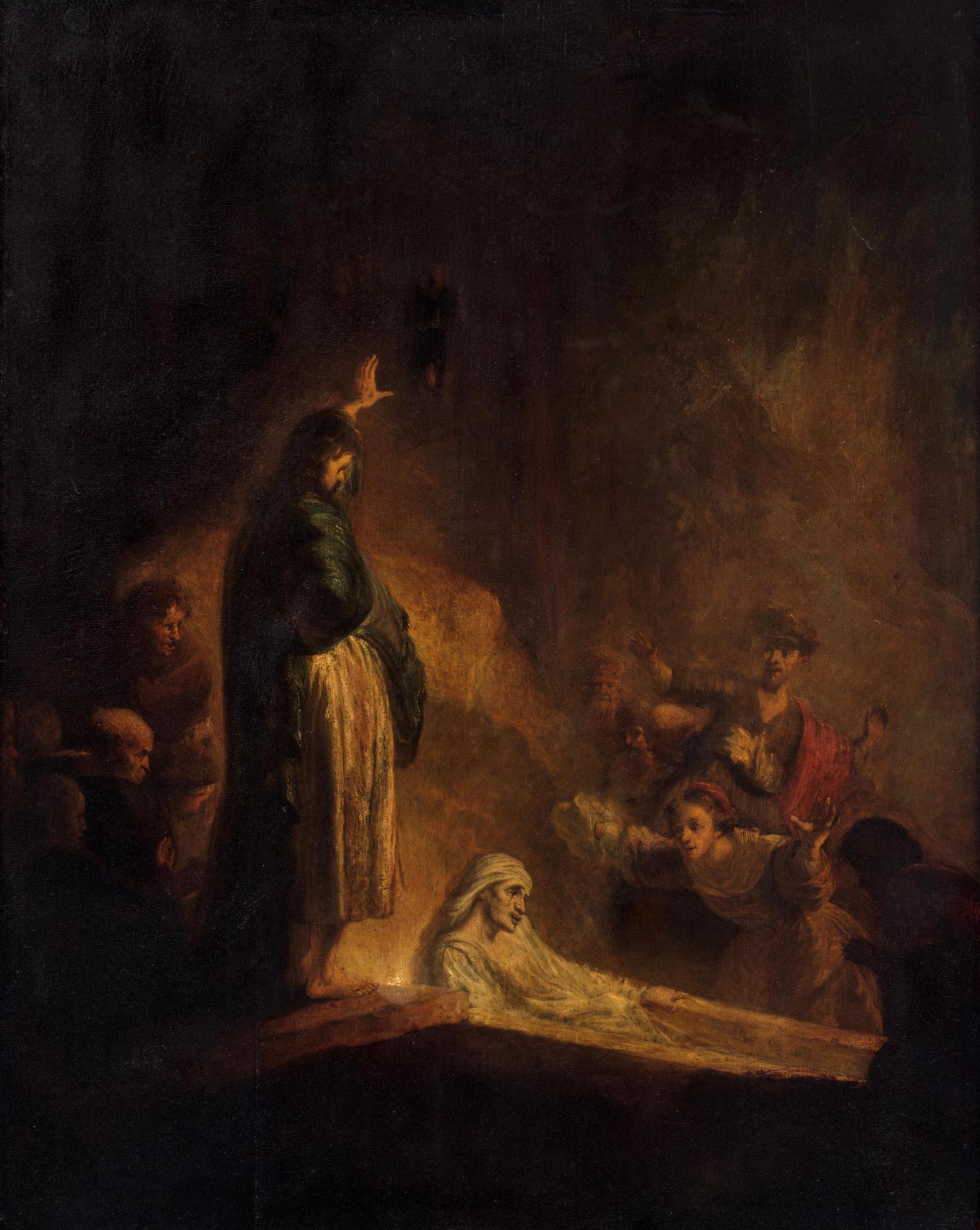
Fala da ressurreição de Lázaro, e não menos,
da crucificação do próprio Jesus, quando os fariseus
compreendem o poder de uma voz que podia invocar os mortos.
Jesus parece ter-se identificado com esse irmão de Marta
e Maria, com toda comunidade em pranto.
Tirai a pedra. Lázaro, vem para fora. E aquele que estava
morto saiu, mãos e os pés atados por faixas;
o rosto envolto num sudário. Desatai-o
e deixai-o ir.


Então por que choro agora sem cessar, eu
que não quero ser chamado para fora, muito menos envolto
em branco? Creio na morte, creio na última árvore que verei,
talvez com vento nela justo no instante em que muda de cor.
Creio no pranto dos meus amigos e na terrível tristeza
de minha mulher – mas por que, deste lado das coisas, com a morte ainda
apenas um pequeno segredo movendo-se dentro de mim, estou tão ferido
de autopiedade, como se, um por um, tudo o que eu tocasse desaparecesse,
como se tudo o que olho com profundidade se tornasse, de repente, invisível?

Será a solidão, o corpo ausente, a mesa, a cadeira
e a tigela onde flutuavam flores indiferentes?
De modo que tudo o que resta seja o que a alma é – uma substituta?
Quando estava vivo, lembro de me sentir às vezes fora
de mim, como se já houvesse partido para outro lugar e,
por um instante, estivesse em dois lugares ao mesmo tempo, lugar nenhum
e um lugar sem mim: um momento, suponho, tão solitário que bastaria
para fazê-lo chorar – não tanto na hora, mas depois,
quando a ausência permaneceu em você e se tornou você.

Trad.: Nelson Santander

Jesus Wept

The shortest sentence, I believe, in the New Testament.
Having to do with the raising of  Lazarus, and no less
the crucifixion of  Jesus himself once the Pharisees
realize the power of a voice that can call forth the dead.
Jesus seems to be identifying with this brother of Martha
and Mary, with in fact the whole weeping community.
Take away the stone, Lazarus come forth, and he that was
dead came forth, bound hand and foot with graveclothes;
and his face was bound about with a napkin. Loose him
and let him go.


Then why am I now weeping all the time,
who does not want to be called forth, let alone wrapped
in white? I believe in death, I believe in the last tree I will
ever see, perhaps with wind in it just as it’s turning color.
I believe in my friends’ weeping and in the terrible sorrow
of my wife, but why, on this side of things, with death still
only a small secret moving inside me, am I so hurt with pity
for myself, as if, one by one, anything I touch will disappear,
whatever I see deeply will suddenly become invisible to me?

Is it the loneliness, the body gone, the table and the chair
and the bowl that had the heartless flowers floating in it?
So that all that is left is whatever a soul is as your stand-in?
When I was alive I remember feeling myself  beside myself
sometimes, as if I’d already passed to somewhere else and
for that moment was in two places at once, no place and
a place without me: a moment, I suppose, so lonely it was
enough to make you weep, though not so much then but
later when the absence stayed with you and became you.

Stanley Plumly – Lázaro ao amanhecer

Toda a vida somos dois – e um nos é tirado.
O ar e o fogo insuficientes,
a alegria insuficiente, as trevas
do quarto se acumulam na janela
até voarem, asa sobre asa sobre asa aberta
contra a vidraça, abrindo e fechando,
osso, sangue, punho. Mas nada acontece
além da exaustão e do testemunho do olhar,
o romper do dia em nuvens rubro-dourada

com os objetos que flutuavam no escuro
escoando de volta à origem, flutuando de volta
à tensão superficial das coisas, esses objetos
atingidos como a luz que, de súbito, irrompe
– depois desliza em relevo pela sala,
o jardim de sombras da janela regressando uma
última vez, mais uma, das folhas. Despertando agora,
a porta entreaberta, aberta, a cegueira
no vão, um silêncio a ser preenchido.

Um homem adoeceu de uma doença fatal.
Tudo o que queria era deitar-se,
deixar que a luz o desfizesse em poeira.
Envolveu-se, em pensamento, em sua própria
ausência. Não queria ouvir a chuva,
com seu significado, nem o instante após
a chuva, nem o som de Jesus chorando, nem
o sonho, que é memória, ainda que
jazesse há muito, frio, com a cabeça contra a pedra.

Vemos o vento passar de árvore em árvore,
milhares de folhas verdes individuais,
prateadas e fluidas nas superfícies,
a longa narrativa vazia do vento.
O vento é o vazio e a plenitude
num só sopro, e a suspensão desse sopro,
inquietude e quietude do espírito.
Vemos nosso rosto morto no vidro cinzento ao lado,
e vemos que já é tarde demais,

que a nudez ensanguentada da morte, vestida de branco, é fumaça,
o pai parado no vão da porta, branco,
a quem vemos em parte, como a manhã
que se forma, aos poucos, nos degraus
de retidão, um tipo de amanhecer crepuscular.
Nada é dito, embora ele saiba que o amamos.
Nada é dito, embora saibamos que ele nos ama.
O anseio – essa doença do coração – é
invisível, incurável, interminável.

Trad.: Nelson Santander

Lazarus at Dawn

Your whole life you are two with one taken
away. The inadequate air and fire,
the inadequate joy, the darknesses
of the room so gathered at the window
as to fly, wing on wing on wing open
against the glass, opening and closing,
bone, blood and wrist. But nothing happens
but exhaustion and evidence of the eyes,
the red-gold cloud-break morning beginning

with the objects that floated in the dark
draining back to the source, floating back to
the surface tension of things, those objects
struck the way the first light starts suddenly,
then slowly in relief across the room,
the window’s shadow garden come back one
last time once more from the leaves. Waking now,
the door half-open, open, the doorway’s
blindness or blackness silence to be filled.

A man was sick, a sickness unto death.
All he wanted to do was to lie down,
let the light pick him apart like the dust.
He wrapped himself, in his mind, in his own
absence. He did not want to hear the rain,
with its meaning, nor the moment after
rain, nor the sound of Jesus weeping, nor
the dreaming, which is memory, though he
lay a long time cold, head against the stone.

You see the wind passing from tree to tree,
thousands of green individual leaves
silver and fluid at the surfaces,
the long nothing narrative of the wind.
The wind is the emptiness and fullness
in one breath, and the holding of that breath,
restlessness and stillness of the spirit.
You see your dead face in the gray glass close,
and see that it is already too late,

that death’s blood nakedness clothed white is smoke,
the father standing in the doorway white,
whom you see in part, the way the morning
gathering is part in the slow degrees
of rectitude, a kind of twilight dawn.
Nothing is said, though he knows you love him.
Nothing is said, though you know he loves you.
Longing, as a sickness of the heart, is
invisible, incurable, endless.

Stanley Plumly – Rinoceronte branco

O último da minha espécie, um dos últimos apreciadores das flores
e da grama das pastagens do norte, e certamente
um dos poucos habilitados a esfregar as costas no baobá
e no carvalho centenário que ainda sobrevive no quintal.

O truque está na pedra, parecer algo que se soltou
de uma montanha, algo tão sobrante a ponto de não
estar vivo, ainda que se assemelhe, no comportamento, a um sonho raivoso,
do tipo que faz você despertar ofegante falando pra si mesmo

naquele idioma que começa no estômago e no intestino.
A velhice é um disfarce, rija por fora, suave por dentro.
Até minha armadura está virando pó, logo uma pata,
depois a outra, a neuropatia, minha circunspecção, a pegada

ficando maior, mais profunda. Eu mal me reconheço, exceto na
minha memória, exceto quando a mente se sobrepõe ao corpo
solitário. Então eu me arrasto, em parte vazio, em parte
cheio de saudade — Estou meio cego, mas vejo o que vejo,

o meio sol na colina. O tempo de uma vida é longo demais,
então carrego meu tempo daqui para lá, pelos únicos
percursos secos do mundo, o nariz, o chifre, minha grande cabeça pendida,
a tonelagem do meu coração quase mais do que posso carregar.

Trad.: Nelson Santander

White Rhino

The last of my kind, one of the last lovers of flowers
and the lawns of the northern grasses, and certainly
one of the few able to rub backsides with the baobab
and the century-nearing oak still surviving in the yard.

The trick is stone, to look like something broken
from a mountain, something so leftover so as not
to be alive, yet resemble in demeanor dream anger,
the kind that wakes you out of breath talking to yourself

in that language that starts in the belly and the bowel.
Old age is a disguise, the hard outside, the soft inside.
Even the plated armor is turning dust, then one foot
after the other, neuropathy my gravity, the footprint

larger, deeper. I hardly recognize myself except in
memory, except when the mind overwhelms the lonely
body. So I lumber on, part of me empty, part of me
filled with longing—I’m half-blind but see what I see,

the half sun on the hill. How long a life is too long,
as I take my time from here to there, the one world
dried-out distances, nose, horn, my great head lifted down,
the tonnage of my heart almost more than I can carry.