A frase mais curta, creio, no Novo Testamento.
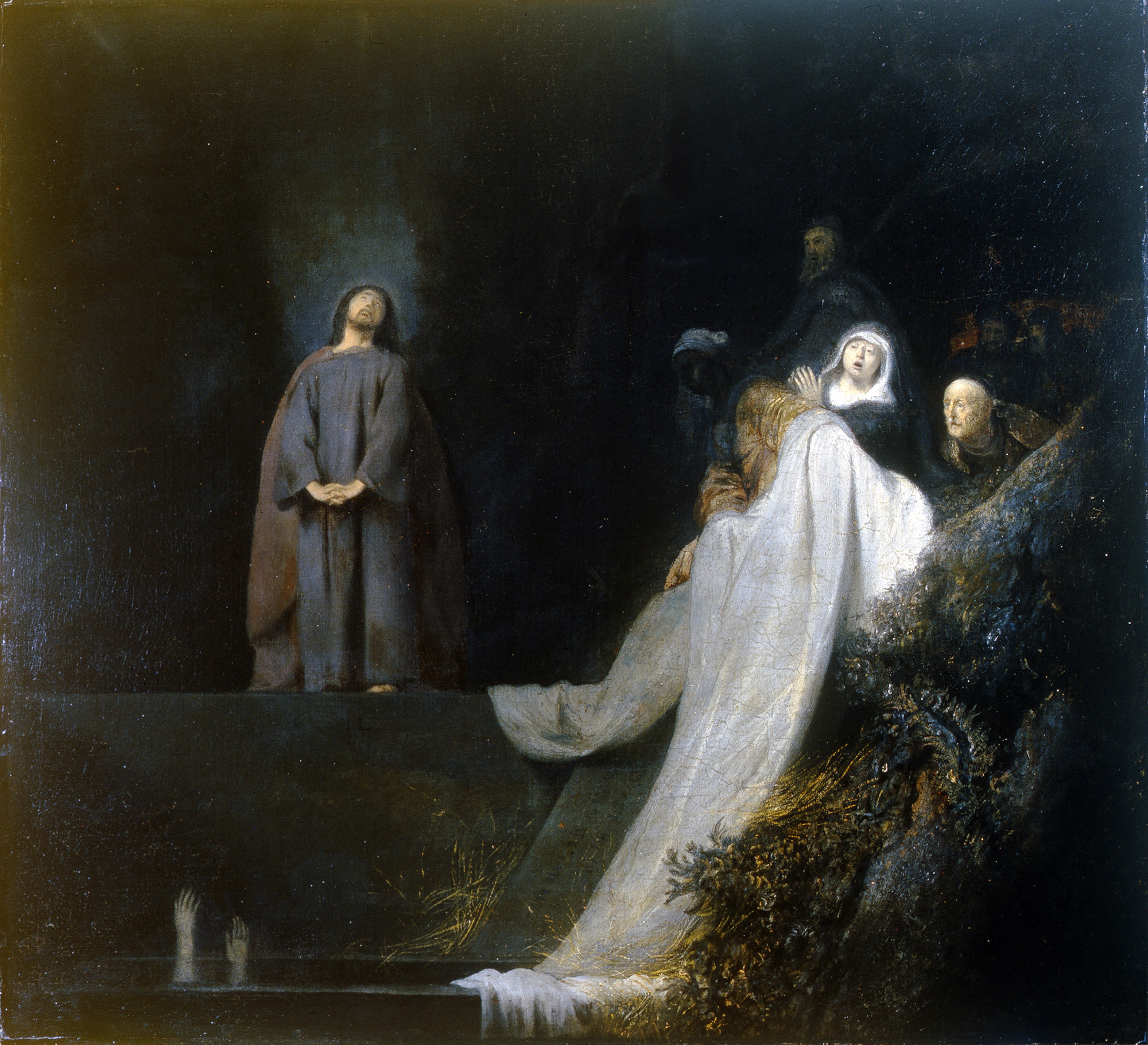
Tem a ver com a ressurreição de Lázaro, e não menos
com a crucificação do próprio Jesus, quando os fariseus
compreendem o poder de uma voz capaz de chamar os mortos para fora.
Jesus parece se identificar com esse irmão de Marta
e Maria, com, na verdade, toda a comunidade em pranto.
Tirai a pedra. Lázaro, vem para fora. E aquele que estava
morto saiu, mãos e os pés atados por faixas;
o rosto envolto num sudário. Desatai-o
e deixai-o ir.

                        Então por que choro agora sem cessar, eu
que não quero ser chamado para fora, muito menos envolto
em branco? Creio na morte, creio na última árvore que verei,
talvez com vento nela, justo quando começa a mudar de cor.
Creio no pranto dos meus amigos e na terrível tristeza
de minha mulher – mas por que, deste lado das coisas, com a morte ainda
apenas um pequeno segredo movendo-se dentro de mim, estou tão ferido de pena
de mim mesmo, como se, um por um, tudo o que eu tocasse desaparecesse,
como se tudo o que vejo profundamente se tornasse, de repente, invisível?

Será a solidão, o corpo ausente, a mesa, a cadeira
e a tigela onde flutuavam flores indiferentes?
De modo que tudo o que resta seja o que quer que seja uma alma, em seu lugar?
Quando estava vivo, lembro de às vezes me sentir ao lado
de mim mesmo, como se já houvesse partido para outro lugar e,
por um instante, estivesse em dois lugares ao mesmo tempo, lugar nenhum
e um lugar sem mim: um momento, suponho, tão solitário que bastava
para fazer você chorar – não tanto na hora, mas depois,
quando a ausência permaneceu em você e se tornou você.

Trad.: Nelson Santander
Jesus Wept

The shortest sentence, I believe, in the New Testament.
Having to do with the raising of  Lazarus, and no less
the crucifixion of  Jesus himself once the Pharisees
realize the power of a voice that can call forth the dead.
Jesus seems to be identifying with this brother of Martha
and Mary, with in fact the whole weeping community.
Take away the stone, Lazarus come forth, and he that was
dead came forth, bound hand and foot with graveclothes;
and his face was bound about with a napkin. Loose him
and let him go.

                        Then why am I now weeping all the time,
who does not want to be called forth, let alone wrapped
in white? I believe in death, I believe in the last tree I will
ever see, perhaps with wind in it just as it’s turning color.
I believe in my friends’ weeping and in the terrible sorrow
of my wife, but why, on this side of things, with death still
only a small secret moving inside me, am I so hurt with pity
for myself, as if, one by one, anything I touch will disappear,
whatever I see deeply will suddenly become invisible to me?

Is it the loneliness, the body gone, the table and the chair
and the bowl that had the heartless flowers floating in it?
So that all that is left is whatever a soul is as your stand-in?
When I was alive I remember feeling myself  beside myself
sometimes, as if I’d already passed to somewhere else and
for that moment was in two places at once, no place and
a place without me: a moment, I suppose, so lonely it was
enough to make you weep, though not so much then but
later when the absence stayed with you and became you.
Visualizações: 61
Deixe um comentário