Sharon Olds – Minha mão

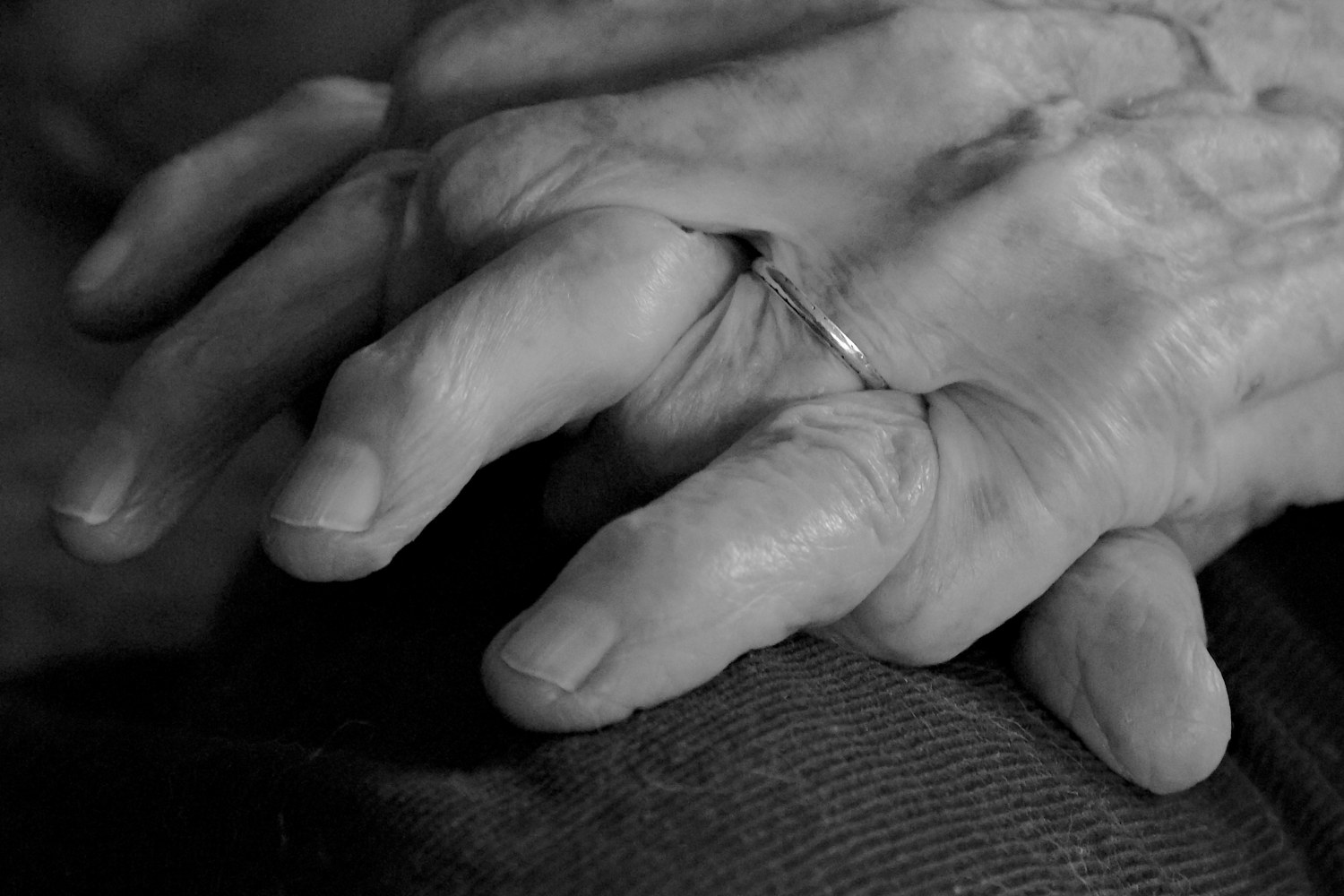
Quando olho para a minha mão, e para o dorso do meu pulso,
brilhando com o petrolato que
esfreguei em suas fissuras — óleo mineral,
ceresina, lanolina, pantenol, glicerina,
bisabolol, vejo as rugas
finas, muitas formando losangos,
algumas delas longas cicatrizes vacilantes —
isso me parece comovente e afortunado. E eu gosto
das veias salientes do dorso da minha mão.
Faço parte de um casal. Meu parceiro está em
um traje de linho, numa caixa de pinho,
em New Hampshire — em uma terra consagrada no cemitério
judeu. Eu lhe digo, Carl1,
meu querido, está tudo bem, seu tecido
se dissolverá na terra quando chegar a primavera,
está tudo bem, você não pode mudar a forma
chocante do seu corpo que amo, você é inocente
na morte, você é bom.
Nós somos um casal. Lembra quando eu subi em sua cama
estreita de hospital, quando você mal conseguia se mexer,
e assim que me encaixei ao
seu lado, como a última peça de um quebra-cabeça,
nós dois desmaiamos de sono? Quando dirigi para o norte,
para fora de uma cidade de peste1, meu carro —
o seu carro, que você me vendeu pelo preço de tabela —
estava cheio de cadernos nos quais nossas histórias
são mantidas, equilibradas em sua lenta dança
para cima e para baixo. Minha epiderme
parece bonita, para mim, esta noite, frágil
e tangível, como córregos na areia onde a água
ondeia. Gostei de conversar com você sobre a
coroa de ouro que o rabino da internet
disse que você usaria depois de morto,
no banquete. E agora amo ver que
na teia da pele brilhante do meu pulso, eu já
faço parte de ti, suave e
permanente é a noite.

Trad.: Nelson Santander

  1. Carl Wallman, companheiro de longa data de Sharon Olds que morreu em fevereiro de 2020, poucas semanas antes da pandemia de Covid-19 explodir.
  2. Balladz, o livro mais recente da poeta, publicado no ano passado, e do qual foi extraído este poema, foi escrito em grande parte durante a quarentena de Covid-19 . Essa é a “peste” à qual ela se refere. 

My hand

When I look at my hand, and at the back of my wrist,
gleaming with the petrolatum which I’ve
rubbed into its chap—mineral oil,
ceresin, lanolin, panthenol, glycerin,
bisabolol, I see the fine
wrinkles, many making diamond shapes,
some of them long cicatrice wobbles—
it looks touching to me, and lucky. And I like
the veins which bulge up from the back of my hand.
I’m a member of a couple. My partner is in
a linen shift, a pine box,
a New Hampshire earth—sacred in the Jewish
cemetery. I say to you, Carl,
my darling, it’s O.K. your tissue
will melt with the dirt when spring comes,
it’s O.K. you cannot change the shock-
shape of your body I love, you are innocent
of death, you are good.
We are a couple. Remember when I climbed into your narrow
hospice bed, when you could hardly move,
and as soon as I fitted myself in
along you, like the last piece of a puzzle,
we both passed out into sleep. When I drove north,
out of a city of plague, my car—
your car which you sold me for the list price—
was packed with notebooks in which our stories
are held, balanced in their slow dance
up and down and up. My epidermis
looks pretty, to me, tonight, frail
and real, like rills in sand which water
rippled. I liked to talk with you about the
golden crown the internet rabbi
said you would be wearing, after death,
at the feast. And I love, now, seeing
in the web of my glistening wrist-skin that I am
already part with thee, tender and
permanent is the night.
Sharon Olds – A corrida

Quando cheguei no aeroporto, corri até o guichê,
comprei uma passagem, dez minutos depois
me disseram que o voo tinha sido cancelado, os médicos
tinham dito que meu pai não sobreviveria àquela noite
e o voo fora cancelado. Um jovem
de bigode castanho-escuro me disse
que de outra companhia aérea partiria um voo
sem escalas em sete minutos. Pegue
aquele elevador, desça até
o primeiro andar, vire à direita, você
verá um ônibus amarelo, desça no
segundo terminal da Pan Am, eu
corri, eu que não tenho senso de direção
corri exatamente para onde ele havia indicado, um peixe
deslizando rio acima habilmente contra
a corrente. Saltei daquele ônibus com as
malas nas quais tinha jogado tudo
em cinco minutos e corri, as malas
sacudindo-me de um lado para o outro como que
para provar que eu estava sob as leis da matéria,
corri até um homem que levava uma flor na lapela,
eu, que sempre pego o fim da fila, pedi
Ajude-me. Ele olhou para o meu bilhete e disse
Vire à esquerda e à direita, suba as escadas e depois
corra. Subi pesadamente as escadas rolantes,
e no topo vi o corredor,
então respirei fundo, e disse
adeus ao meu corpo, adeus ao conforto,
usei minhas pernas e meu coração como se
fosse usa-los de bom grado só para isso,
para toca-lo novamente nesta vida. Corri, e as
malas bateram contra mim, rodaram e viajaram
em órbitas irregulares, eu, que já vi fotos de
mulheres correndo, seus pertences amarrados
em lenços presos em seus punhos, abençoei as
longas pernas que ele me deu, o meu forte
coração, que abandonei à sua própria sorte,
e corri para o Portão 17 e eles já estavam
levantando o compacto losango
branco da porta para encaixa-lo na
junção do avião. Como os que não são
muito ricos, virei-me de lado e
esgueirei-me pelo buraco da agulha, e depois
caminhei pelo corredor em direção ao meu pai. O jato
estava cheio e os cabelos das pessoas brilhavam, elas
sorriam, o interior do avião estava cheio de uma
névoa de luz dourada de endorfina,
chorei como choram as pessoas ao entrar no céu,
com grande alívio. Decolamos
mansamente de uma ponta do continente
e não paramos até pousarmos suavemente na
outra ponta, entrei em seu quarto
e assisti seu peito subir lentamente
e afundar novamente, a noite toda
o observei respirar.

Trad.: Nelson Santander

The Race

When I got to the airport I rushed up to the desk,
bought a ticket, ten minutes later
they told me the flight was cancelled, the doctors
had said my father would not live through the night
and the flight was cancelled. A young man
with a dark brown moustache told me
another airline had a nonstop
leaving in seven minutes. See that
elevator over there, well go
down to the first floor, make a right, you’ll
see a yellow bus, get off at the
second Pan Am terminal, I
ran, I who have no sense of direction
raced exactly where he’d told me, a fish
slipping upstream deftly against
the flow of the river. I jumped off that bus with those
bags I had thrown everything into
in five minutes, and ran, the bags
wagged me from side to side as if
to prove I was under the claims of the material,
I ran up to a man with a flower on his breast,
I who always go to the end of the line, I said
Help me. He looked at my ticket, he said
Make a left and then a right, go up the moving stairs and then
run. I lumbered up the moving stairs,
at the top I saw the corridor,
and then I took a deep breath, I said
goodbye to my body, goodbye to comfort,
I used my legs and heart as if I would
gladly use them up for this,
to touch him again in this life. I ran, and the
bags banged against me, wheeled and coursed
in skewed orbits, I have seen pictures of
women running, their belongings tied
in scarves grasped in their fists, I blessed my
long legs he gave me, my strong
heart I abandoned to its own purpose,
I ran to Gate 17 and they were
just lifting the thick white
lozenge of the door to fit it into
the socket of the plane. Like the one who is not
too rich, I turned sideways and
slipped through the needle’s eye, and then
I walked down the aisle toward my father. The jet
was full, and people’s hair was shining, they were
smiling, the interior of the plane was filled with a
mist of gold endorphin light,
I wept as people weep when they enter heaven,
in massive relief. We lifted up
gently from one tip of the continent
and did not stop until we set down lightly on the
other edge, I walked into his room
and watched his chest rise slowly
and sink again, all night
I watched him breathe.

Sharon Olds – Uma semana depois

Uma semana depois, eu disse a um amigo: acho que
nunca poderia escrever sobre isso.
Talvez daqui a um ano eu consiga escrever alguma coisa.
Há algo em mim que talvez algum
dia possa ser escrito; por ora está dobrado, e redobrado,
como um bilhete da escola. E em meu sonho
alguém jogava jacks1, e no ar havia um
jack arremessado, enorme, pairando
em chamas. E quando acordei, dei por mim
contando os dias desde a última vez que vira
meu marido – apenas dois anos, e algumas semanas
e horas. Tínhamos assinado os papéis e descido até o
térreo do Edifício Chrysler,
a beleza intacta de seu saguão ao nosso redor
como a tumba de um rei, no teto o pequeno
aeroplano pintado, no mural, voando. E
entrou em meu contrito coração, esta manhã,
suave e timidamente, de forma cautelosa,
indomável, uma visão mais ampla da doçura
e vastidão de sua vida que prossegue,
desconhecida e invisível para mim,
inaudível, intocada – mas conhecida, visível,
audível, palpável. E ocorreu-me,
por um momento, momento a momento,
ficar feliz por ele estar com aquela
que ele acredita ter sido feita para ele. E pensei em minha
mãe, a minutos de sua morte, oitenta e cinco
anos desde o nascimento, os ossos
de passarinho de seus ombros sob minha mão, a
casca de ovo da nuca, enquanto ela jazia em paz
nos lençóis limpos, e eu podia lhe falar com o melhor
do meu pobre e parcial amor, podia cantar para ela,
e percebia a sorte
e o privilégio daquela hora.

Trad.: Nelson Santander

  1. A autora se refere a um jogo infantil tradicional nos Estados Unidos, conhecido no Brasil como “jogo das cinco marias” ou “pedrinhas”. O jogo é composto por pequenas peças de metal ou plástico (chamadas jacks) e uma bolinha, e o objetivo é jogar a bolinha para o alto enquanto se recolhem os jacks do chão em sequência. ↩︎

Mais do que uma leitura, uma experiência. Clique, compre e contribua para manter a poesia viva em nosso blog

A week later

A week later, I said to a friend: I don’t
think I could ever write about it.
Maybe in a year I could write something.
There is something in me maybe someday
to be written; now it is folded, and folded,
and folded, like a note in school. And in my dream
someone was playing jacks, and in the air there was a
huge, thrown, tilted jack
on fire. And when I woke up, I found myself
counting the days since I had last seen
my husband – only two years, and some weeks,
and hours. We had signed the papers and come down to the
ground floor of the Chrysler Building,
the intact beauty of its lobby around us
like a king’s tomb, on the ceiling the little
painted plane, in the mural, flying. And it
entered my strictured heart, this morning,
slightly, shyly as if warily,
untamed, a greater sense of the sweetness
and plenty of his ongoing life,
unknown to me, unseen by me,
unheard, untouched-but known, seen,
heard, touched. And it came to me,
for moments at a time, moment after moment,
to be glad for him that he is with the one
he feels was meant for him. And I thought of my
mother, minutes from her death, eighty-five
years from her birth, the almost warbler
bones of her shoulder under my hand, the
eggshell skull, as she lay in some peace
in the clean sheets, and I could tell her the best
of my poor, partial love, I could sing her
out with it, I saw the luck
and luxury of that hour.