Philip Larkin – Este Seja o Poema

Teu pai e mãe fodem contigo.
Que não o queiram, tanto faz.
Passam-te cada podre antigo,
além de uns novos, especiais.

Mas de cartola e fraque, outrora,
fodera-os já do mesmo modo,
gente ora austero-piegas, ora
se engalfinhando cega de ódio.

Miséria é o que legamos: fossas
num mar que só fica mais fundo.
Dá o fora, pois, tão logo possas
sem pôr nenhum filho no mundo.

Trad.: de Nelson Ascher

REPUBLICAÇÃO: poema originalmente publicado na página em 19/02/2016

This be the Verse

They fuck you up, your mum and dad.
They may not mean to, but they do.
They fill you with the faults they had
And add some extra, just for you.

But they were fucked up in their turn
By fools in old-style hats and coats,
Who half the time were soppy-stern
And half at one another’s throats.

Man hands on misery to man.
It deepens like a coastal shelf.
Get out as early as you can,
And don’t have any kids yourself.

Philip Larkin – Continuar a viver

Continuar a viver – isto é, repetir
Um hábito formado para obter o necessário –
Quase sempre significa perder, ou passar sem.
  É variável.

Essa perda de interesse, cabelos e ambição –
Ah, se o fosse pôquer, sim,
Você poderia descartá-los, fazer um full house!
  Mas é xadrez.

E uma vez que tenha percorrido toda a extensão da mente,
O que você comanda é claro como uma lista de carga.
Nada mais deve, para você, ser considerado
  Como existente.

E qual é o lucro? Apenas que, com o tempo,
Meio que identificamos a marca cega
Que todos os nossos comportamentos carregam, podemos rastreá-la.
  Mas confessar,

Naquele serena tarde em que nossa morte começa,
O que foi, não é totalmente satisfatório,
Já que se aplicou apenas a um homem uma vez,
  E a um agonizante.

Trad.: Nelson Santander

Philip Larkin – Continuing to live

Continuing to live — that is, repeat
A habit formed to get necessaries —
Is nearly always losing, or going without.
It varies.

This loss of interest, hair, and enterprise —
Ah, if the game were poker, yes,
You might discard them, draw a full house!
But it’s chess.

And once you have walked the length of your mind, what
You command is clear as a lading-list.
Anything else must not, for you, be thought
To exist.

And what’s the profit? Only that, in time,
We half-identify the blind impress
All our behavings bear, may trace it home.
But to confess,

On that green evening when our death begins,
Just what it was, is hardly satisfying,
Since it applied only to one man once,
And that one dying.

Philip Larkin – A casa está tão triste

A casa está tão triste. Ficou como foi deixada,
Moldada para o conforto dos últimos saintes
Querendo reconquista-los. Ao invés, despojada
De alguém para agradar, ela definha assim, carente
De um coração para esquecer que foi roubada

E voltar novamente às origens – um retrato
Alegre de como as coisas deveriam ser –
Há muito perdidas. Veja como era de fato:
Observe as fotografias e o talher.
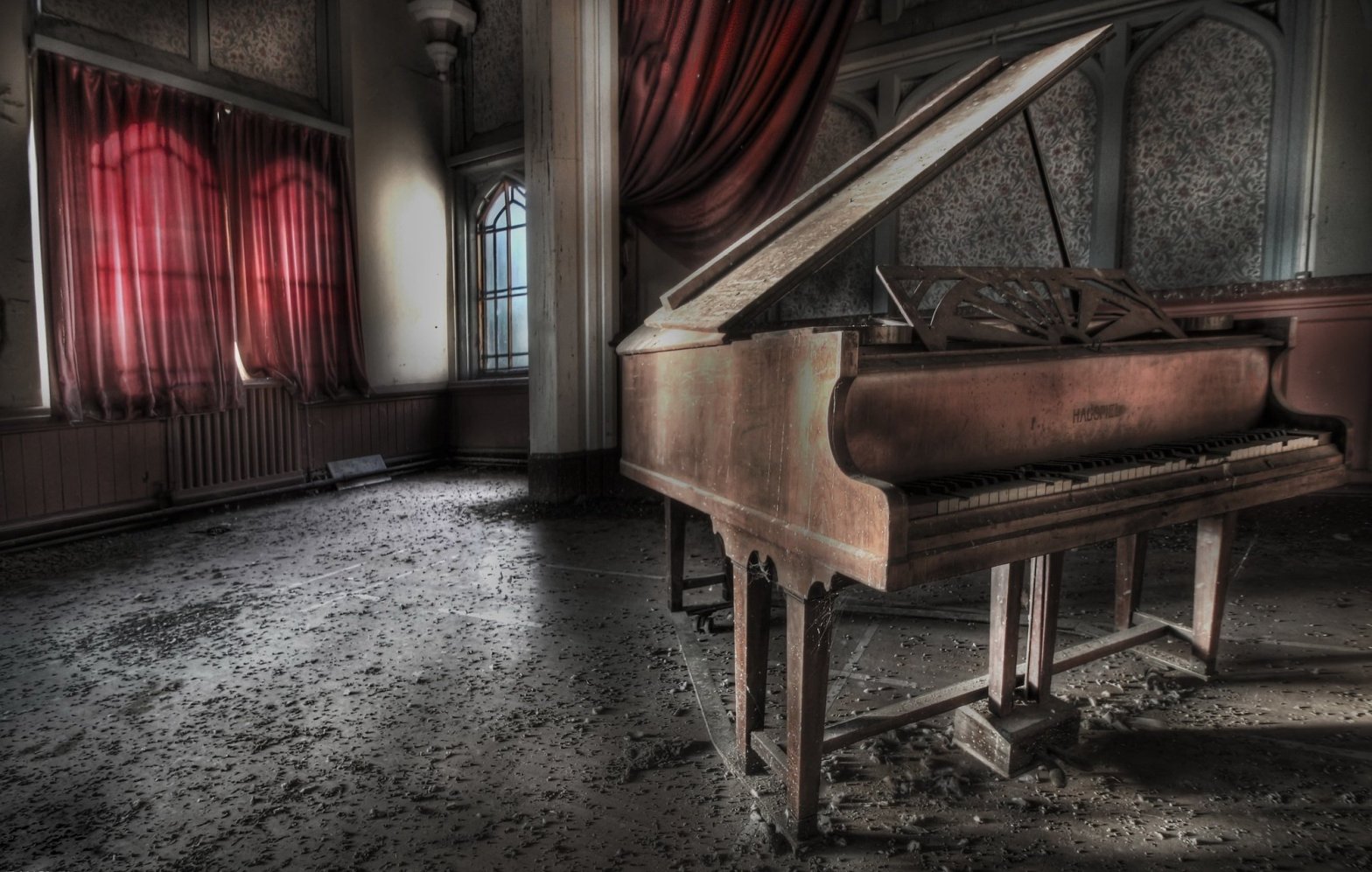
A partitura no assento do piano. Esse prato.

Trad.: Nelson Santander

Home is so Sad

Home is so sad. It stays as it was left,
Shaped to the comfort of the last to go
As if to win them back. Instead, bereft
Of anyone to please, it withers so,
Having no heart to put aside the theft

And turn again to what it started as,
A joyous shot at how things ought to be,
Long fallen wide. You can see how it was:
Look at the pictures and the cutlery.
The music in the piano stool. That vase.

Philip Larkin – A Igreja Indo-se…

Quando estou certo de que nada está ocorrendo,
Eu entro, e se ouve um baque quando eu solto a porta.
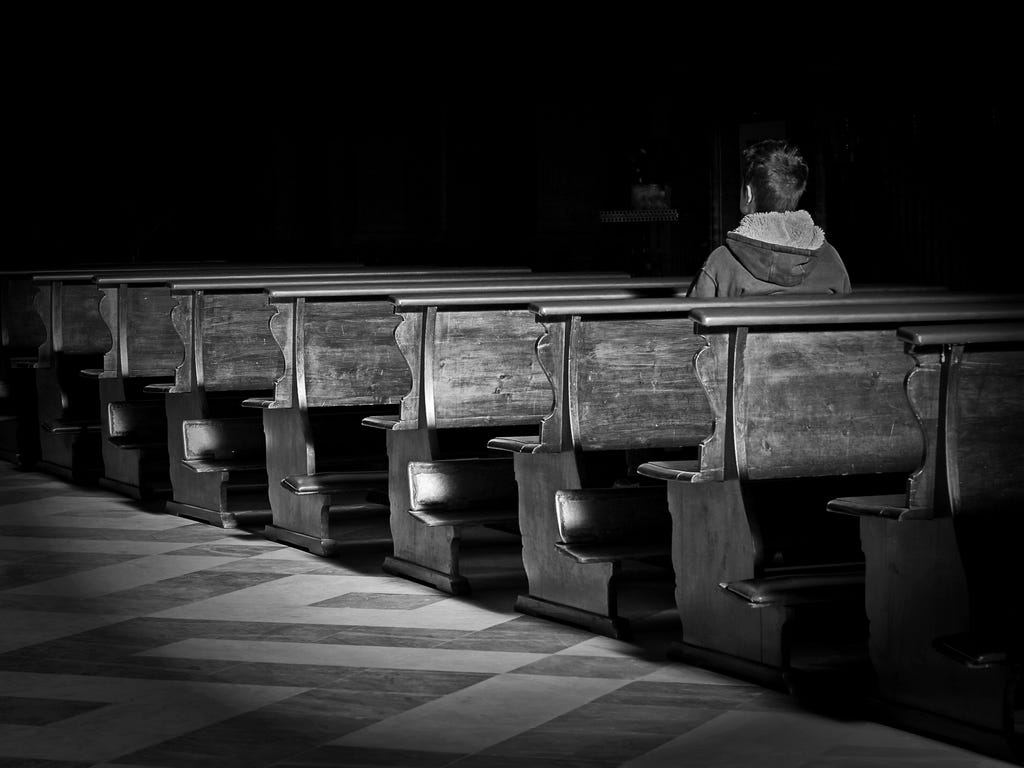
Mais uma igreja: bancos, panos, pedra, além dos
Livrinhos; as juncadas secas, que se cortam
Para o domingo; bronze e objetos a cobrir o
Altar; um órgão impecável e pequeno;
Silêncio tenso, de bolor, que salta à vista,
Há muito fermentado. Sem chapéu, retiro —
Genuflexão canhestra — os grampos de ciclista,

Ando e na pia de água benta esfrego a mão.
Vendo daqui, parece quase novo, o teto —
Foi limpo, restaurado? Um outro sabe: eu não.
Depois que subo até o atril, decifro certo
Versículo imperioso, numa letra grande,
E digo, sem querer, o “Aqui Termina” em tom
De voz mui to alto. O eco casquina um pouco. À entrada,
De novo, assino o livro, doo seis pence da Irlanda,
Concluo que não valia a pena essa parada.

Mas eu parei; e paro lá de vez em quando,
Depois, acabo por pegar-me assim, confuso,
Me perguntando o que buscar; me perguntando:
Quando igrejas caírem em total desuso,
Que vamos fazer delas? Pôr as catedrais
Perpetuamente abertas à visita, expondo
Pergaminho, pátena e píxide em vitrina,
Com o resto grátis para a chuva e os animais?
Vamos temê-las, como sítios de má sina?

À noite, umas mulheres de moral suspeita
Virão fazer os filhos pôr a mão em dada
Pedra, colher ervas prum câncer, ou, à espreita,
Já prevenidas, ver passar a alma penada?
Uma força qualquer continuará em vigor
Em jogos e em enigmas, como que fortuita;
Mas a superstição — e a crença — vão ter fim,
E o que restará quando a descrença se for?
Céu, sarça, erva, pilastras, lajes com capim,

Uma forma a cada semana menos clara,
Um fim mais obscuro. Fico me indagando
Quem será o último, o último, de fato, a andar a
Este local pelo que ele era; alguém do bando
Que fuce e tome nota e saiba o que era o jube?
O ébrio de ruínas, seco por antiqualha,
Ou o viciado em natais, um dependente
De baforadas de alva e estola, mirra e tubos
De órgão? Ou mesmo um tipo que me represente

Com tédio, inculto, vendo o lodo espiritual
Disperso, mas cruzando o arrabalde e o mato
Rumo a esta cruz de terra, que, de modo igual
E tanto tempo, soube conservar intato
O que, depois, só se separa — origem, morte
E matrimônio, idéias tais — em honra ao qual
Se ergueu tal concha? Pois, se ignoro por completo
Pra quê o celeiro ornado e com bolor, conforta e
Apraz deixar-me estar aqui, a sós e quieto;

É uma casa séria em terra séria, e ali, no
Seu ar mesclado, as nossas compulsões se cruzam,
Se reconhecem e disfarçam de destino.
E tudo isso não pode cair em desuso,
Visto que sempre vai haver alguém que um dia
Se pegue ansiando ser mais sério, e assim termine
Por gravitar para essa terra, que, conforme
Ensinam, contribui para a sabedoria,
Só pelo número de mortos que ali dormem.

Trad. Alípio Correia de Franca Neto

REPUBLICAÇÃO: poema publicado no blog originalmente em 06/04/2017

Church Going

Once I am sure there’s nothing going on
I step inside, letting the door thud shut.
Another church: matting, seats, and stone,
And little books; sprawl ings of flowers, cut
For Sunday, brownish now; some brass and stuff
Up at the holy end; the small neat organ;
And a tense, musty, unignorable silence,
Brewed God knows how long. Hatless, I take off
My cycle-cl ips in awkward reverence,

Move forward, run my hand around the font.
From where I stand, the roof looks almost new —
Cleaned, or restored? Someone would know: I don’ t.
Mounting the lec ter, I peruse a few
Hec toring large-scale verses, and pronounce
‘Here endeth’ much more loudly than I’d meant.
The echoes snigger briefly. Back at the door
I sign the book, donate an Irish sixpence,
Reflect the place was not worth stopping for.

Yet stop I did: in fact I of ten do,
And always end much at a loss l ike this,
Wondering what to look for; wondering, too,
When churches fall completely out of use
What we shall turn them into, if we shall keep
A few cathedrals chronically on show,
Their parchment, plate and pyx in locked cases,
And let the rest rent-f ree to rain and sheep.
Shall we avoid them as unlucky places?

Or, after dark, will dubious women come
To make their children touch a particular stone;
Pick simples for a cancer; or on some
Advised night see walking a dead one?
Power of some sort or other will go on
In games, in riddles, seemingly at random;
But superstition, l ike bel ief , must die,
And what remains when disbel ief has gone?
Grass, weedy pavement, brambles, buttress, sky,

A shape less recognisable each week,
A purpose more obscure. I wonder who
Will be the last, the very last, to seek
This place for what it was; one of the crew
That tap and jot and know what rood-lof ts were?
Some ruin-bibber, randy for antique,
Or Christmas-addict, counting on a whiff
Of gown-and-bands and organ-pipes and myrrh?
Or will he be my representative,

Bored, uninformed, knowing the ghostly sil t
Dispersed, yet tending to this c ross of ground
Through suburb scrub because it held unspil t
So long and equaly what since is found
Only in separation — marriage, and birth,
And death, and thoughts of these – for which was buil t
This spec ial shell? For, though I’ve no idea
What this accoutred f rowsty barn is worth,
It pleases me to stand in silence here;

A serious house on serious earth it is,
In whose blent air all our compulsions meet,
Are recognised, and robed as destinies.
And that much never can be obsolete,
Since someone will forever be surprising
A hunger in himself to be more serious,
And gravitating with it to this ground,
Which, he once heard, was proper to grow wise in,
If only that so many dead lie round.

Philip Larkin – Aubade

De dia, trabalho; à noite, eu meio que encho a cara.
Olho o negror sem som, me levantando às quatro.
Em tempo, a borda da cortina vai estar clara.
Até lá, vejo aquilo que está ali, de fato:
A morte infatigável, um dia mais perto,
Tornando inviável todo pensamento, exceto
O de onde, como e quando a minha vai chegar.
Uma pergunta estéril: mas o horror que eu sinto
Quanto a morrer e ser extinto
Luz outra vez, para se impor e apavorar.

A mente apaga-se ao clarão. Não é o remorso
O bem que não se faz, o amor que não se vive,
O tempo arrancado sem uso — , ou a dor de nossa
Única vida custar tanto a se erguer, livre
De origens torpes, ou jamais se erguer. É vermos
Esse vazio absoluto e sem um termo,
Aquela inevitável extinção final
Aonde vamos nos perder pra sempre. Não estar
Aqui, não estar noutro lugar,
E em breve: nada mais terrível e real.

Esse é um tipo especial de medo, a que trapaça
Nenhuma anula. A religião se empenhou nisto,
Vasto brocado musical roído de traça,
Criado pra fingir que não se morre, e ditos
Especiosos, como “nenhum ser consciente
Pode ter medo daquilo que não se sente”,
Sem ver que este é o medo: não ver, ouvir, tocar,
Cheirar, ter gosto, nada com que refletir,
Ou com que amar, ou a que se unir,
A anestesia da qual ninguém pode voltar.

E permanece assim, na fímbria da visão,
A mancha desfocada, o calafrio que só retrai,
Contínuo, cada impulso, e o torna indecisão.
Coisas talvez não vão se dar — mas esta vai,
E a nossa consciência entra em agonia, entregue a
Horror-fornalha, toda vez que ela nos pega
Sem bebida ou companhia. Coragem não conta:
Visa não assustar os outros. A bravura
Não vai poupar da sepultura.
A morte é a mesma, se você a teme ou afronta.

A luz aumenta aos poucos, toma forma o quarto.
Lá está, tão claro quanto o armário, o que se sabe
E soube sempre, aquilo a que ninguém é apto
A fugir, e não se aceita. A um dos lados cabe
Ceder. Em salas por abrir, nesse entremeio,
Vai soar, de cócoras, o telefone, e o alheio,
Complexo mundo de aluguel vai despertar.
Sem sol e branco como argila é o firmamento.
Há trabalho para ser feito.
Carteiros e médicos vão de lar em lar.

Trad.: Alípio Correia de Franca Neto

REPUBLICAÇÃO. Poema publicado originalmente no blog em 06/04/2016.

Aubade

I work all day, and get half-drunk at night.   
Waking at four to soundless dark, I stare.   
In time the curtain-edges will grow light.   
Till then I see what’s really always there:   
Unresting death, a whole day nearer now,   
Making all thought impossible but how   
And where and when I shall myself die.   
Arid interrogation: yet the dread
Of dying, and being dead,
Flashes afresh to hold and horrify.

The mind blanks at the glare. Not in remorse   
—The good not done, the love not given, time   
Torn off unused—nor wretchedly because   
An only life can take so long to climb
Clear of its wrong beginnings, and may never;   
But at the total emptiness for ever,
The sure extinction that we travel to
And shall be lost in always. Not to be here,   
Not to be anywhere,
And soon; nothing more terrible, nothing more true.

This is a special way of being afraid
No trick dispels. Religion used to try,
That vast moth-eaten musical brocade
Created to pretend we never die,
And specious stuff that says No rational being
Can fear a thing it will not feel, not seeing
That this is what we fear—no sight, no sound,   
No touch or taste or smell, nothing to think with,   
Nothing to love or link with,
The anaesthetic from which none come round.

And so it stays just on the edge of vision,   
A small unfocused blur, a standing chill   
That slows each impulse down to indecision.   
Most things may never happen: this one will,   
And realisation of it rages out
In furnace-fear when we are caught without   
People or drink. Courage is no good:
It means not scaring others. Being brave   
Lets no one off the grave.
Death is no different whined at than withstood.

Slowly light strengthens, and the room takes shape.   
It stands plain as a wardrobe, what we know,   
Have always known, know that we can’t escape,   
Yet can’t accept. One side will have to go.
Meanwhile telephones crouch, getting ready to ring   
In locked-up offices, and all the uncaring
Intricate rented world begins to rouse.
The sky is white as clay, with no sun.
Work has to be done.
Postmen like doctors go from house to house.

Philip Larkin – O cortador

O cortador parou, duas vezes; ajoelhado, descubro 
Um ouriço preso entre as lâminas,
Morto. Estava na grama crescida.

Já o havia visto antes, e até o alimentara uma vez.   
Agora eu havia maltratado seu discreto mundo de forma 
Irremediável. O enterro não ajudou:

Na manhã seguinte eu me levantei e ele não.
No primeiro dia após a morte, a nova ausência
É sempre a mesma; devemos ter cuidado

Uns com os outros, devemos ser gentis
Enquanto ainda há tempo.

Trad.: Nelson Santander

The mower

The mower stalled, twice; kneeling, I found
A hedgehog jammed up against the blades,
Killed. It had been in the long grass.

I had seen it before, and even fed it, once.
Now I had mauled its unobtrusive world
Unmendably. Burial was no help:

Next morning I got up and it did not.
The first day after a death, the new absence
Is always the same; we should be careful

Of each other, we should be kind
While there is still time.

Philip Larkin – Canções de amor na velhice

Ela guardou canções, tomavam pouco espaço
E as capas lhe eram belas:
Uma que apanhou sol e de matizes baços;
Uma cheia de círculos de jarra d´água;
Uma colada, num “acesso de ordem” dela,
E colorida, pela filha – aguar-
daram assim, até que em sua viuvez as
Achou, procurando algo, e pôs-se dessa vez a

Reaprender como cada acorde, obediente
E franco, introduziu
Palavras se espalhando com hífens, e o alento
Infalível da juventude, a tomar vulto
Como uma árvore na primavera – daí o
Frescor entoado, que jazia oculto,
E a certeza do tempo armazenado, igual
À vez em que as tocou primeiro – e o principal:

O clarão dessa tão falada luz, o amor,
Rompeu, mostrou enfim,
Vogando no alto, o seu nascente resplendor,
Sempre anunciando resolver e saciar,
Pôr as coisas em ordem todo o tempo. Assim,
Empilhá-las de volta ali, chorar,
Foi duro, sem admitir, de forma inglória,
Que nunca fora assim, e não seria agora.

Trad.: Alípio Correia de Franca Neto

Love song in age

She kept her songs, they took so little space,
The covers pleased her:
One bleached from lying in a sunny place,
One marked in circles by a vase of water,
One mended, when a tidy fit had seized her,
And coloured, by her daughter –
So they had waited, till in widowhood
She found them, looking for something else, and stood

Relearning how each frank submissive chord
Had ushered in
Word after sprawling hyphenated word,
And the unfailing sense of being young
Spread out like a spring-woken tree, wherein
That hidden freshness sung,
That certainty of time laid up in store
As when she played them first. But, even more,

The glare of that much-mentioned brilliance, love,
Broke out, to show
Its bright incipience sailing above,
Still promising to solve, and satisfy,
And set unchangeably in order. So
To pile them back, to cry,
Was hard, without lamely admitting how
It had not done so then, and could not now.

Aqui: https://alipiocorreia.wordpress.com/2013/07/16/alguns-poemas-de-philip-larkin-ingles-portugues/

Philip Larkin – Um túmulo Arundel

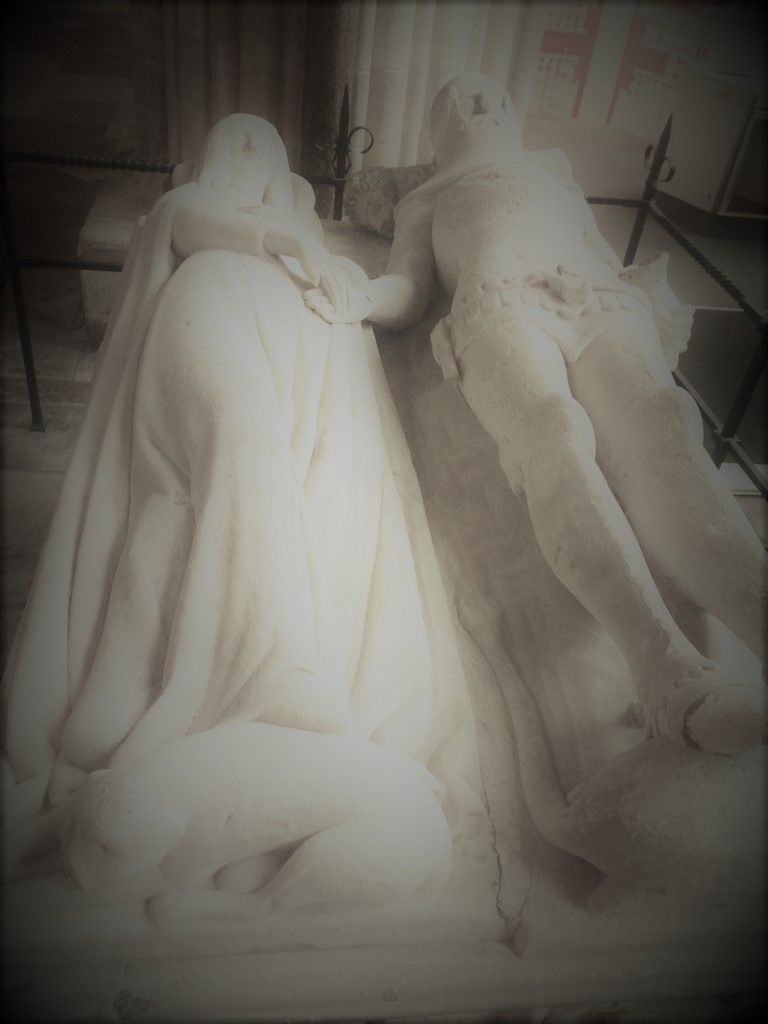
Lado a lado, o rosto indistinto em tudo,
Em pedra, jazem o conde e a condessa;
Seus usos se entreveem na prega espessa,
Numa cota de malha e através
Daquele leve toque do absurdo:
Os cachorrinhos que eles têm aos pés.

Essa simplicidade pré-barroca
Pouco chama a atenção, até à surpresa
Da luva esquerda dele, esta, presa,
Vazia, na outra mão, e até àquela
Terna visão que súbito nos toca:
A da mão nua segurando a dela.

Ninguém pensava em jazer tanto assim.
Tal fidelidade em efígie era um
Detalhe só para os amigos verem:
Requinte encomendado ao escultor
Pra prolongar os nomes em latim
No pedestal, gravados ao redor.

Ninguém imaginava quão veloz,
Na viagem fixa e inerte, o ar haveria
De se mudar nessa muda avaria,
Deixando longe os velhos suseranos,
E os olhos passariam, um após
O outro, a olhar sem ler. Firmes, por anos

Perseveraram, juntos, na extensão
Do tempo. Sem data, a neve caiu.
A luz encheu vitrais a cada estio.
Escória branca de ave foi lançada
No mesmo chão cheio de ossos. Veio, então,
A gente eternamente transformada,

Erodindo sua identidade. E agora,
Inermes, no vazio de um tempo infenso
Às armas, alguidar de fumo denso
Em cordões lentos, pensos, que flutua
Sobre seu mísero quinhão de história,
Somente uma atitude continua:

O tempo os transfigurou numa tal
Mentira. E essa fidelidade em pedra,
Que certamente não buscaram, queda
Como um brasão final, e atesta a voz
Do nosso quase-instinto quase real:
Amor é quanto ficará de nós.

Trad.: Alípio Correia de Franca Neto

An Arundel Tomb

Side by side, their faces blurred,
The earl and countess lie in stone,
Their proper habits vaguely shown
As jointed armour, stiffened pleat,
And that faint hint of the absurd –
The little dogs under their feet.

Such plainness of the pre-baroque
Hardly involves the eye, until
It meets his left-hand gauntlet, still
Clasped empty in the other; and
One sees, with a sharp tender shock,
His hand withdrawn, holding her hand.

They would not think to lie so long.
Such faithfulness in effigy
Was just a detail friends would see:
A sculptor’s sweet commissioned grace
Thrown off in helping to prolong
The Latin names around the base.

They would not guess how early in
Their supine stationary voyage
The air would change to soundless damage,
Turn the old tenantry away;
How soon succeeding eyes begin
To look, not read. Rigidly they

Persisted, linked, through lengths and breadths
Of time. Snow fell, undated. Light
Each summer thronged the glass. A bright
Litter of birdcalls strewed the same
Bone-riddled ground. And up the paths
The endless altered people came,

Washing at their identity.
Now, helpless in the hollow of
An unarmorial age, a trough
Of smoke in slow suspended skeins
Above their scrap of history,
Only an attitude remains:

Time has transfigured them into
Untruth. The stone fidelity
They hardly meant has come to be
Their final blazon, and to prove
Our almost-instinct almost true:
What will survive of us is love.

Philip Larkin – Conversar na Cama

Conversar na cama devia ser mais fácil
Dois deitados juntos — é desde há muito
Um símbolo de duas pessoas sendo francas.

Ainda que mais e mais tempo passe em silêncio.
Lá fora, a intérmina inquietação do vento
Amontoa e dispersa nuvens pelo céu.

E cidades escuras se empilham no horizonte.
Nada disso se importa conosco. Nada mostra por que
A essa distância única do isolamento

Se torna ainda mais difícil achar
As veras palavras certas e sinceras
Ou não incertas e nem insinceras.

   Trad.: Luiz Roberto Guedes

Talking In Bed

Talking in bed ought to be easiest
Lying together there goes back so far
An emblem of two people being honest.

Yet more and more time passes silently.
Outside the wind’s incomplete unrest
builds and disperses clouds about the sky.

And dark towns heap up on the horizon.
None of this cares for us. Nothing shows why
At this unique distance from isolation

It becomes still more difficult to find
Words at once true and kind
Or not untrue and not unkind.

Philip Larkin – A Primeira Coisa

A primeira coisa
Que entendi foi esta:
Tempo é o eco de um machado
Dentro da floresta.

   Trad.: Luiz Roberto Guedes