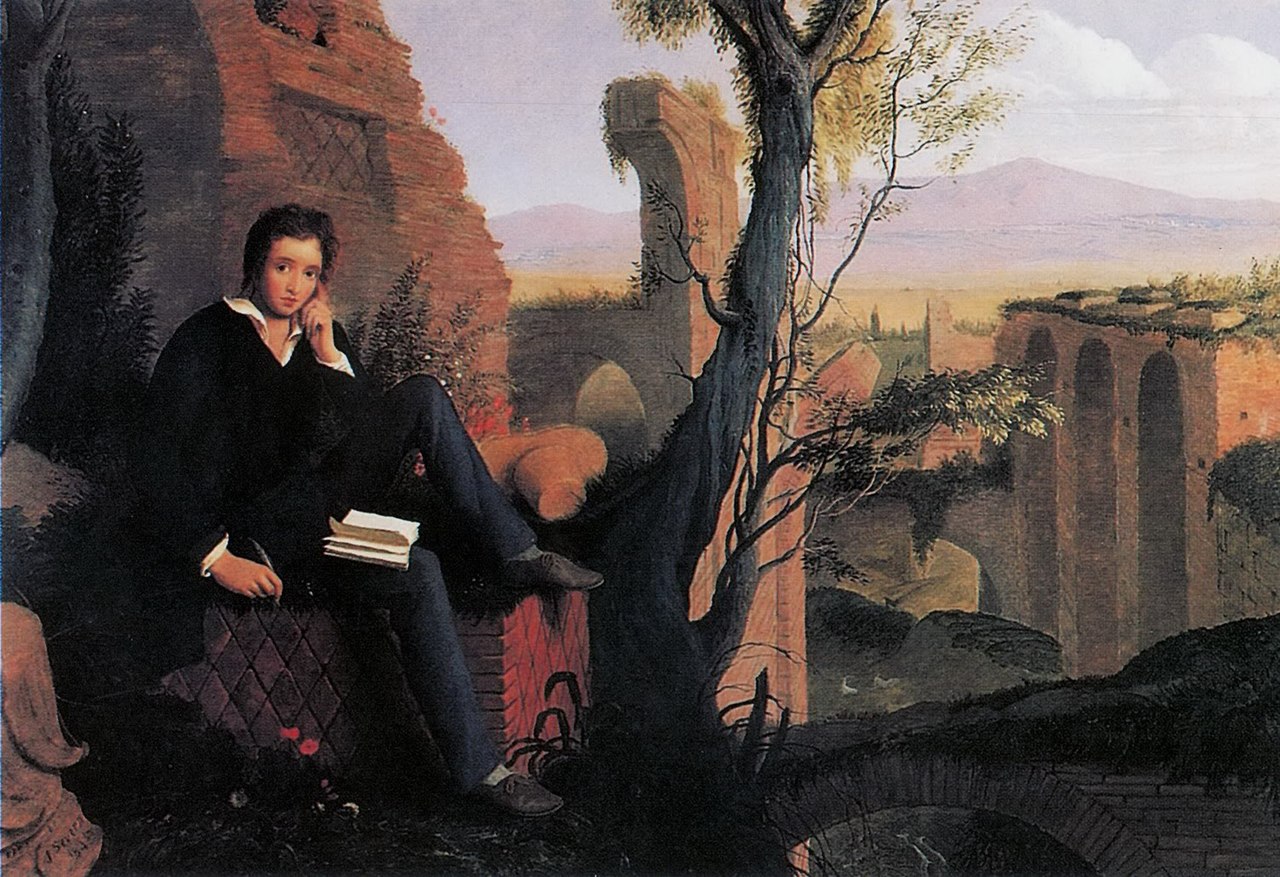
Poeta das folhas mortas, varridas como fantasmas,
Arrebanhadas como multidões ceifadas pela peste1,
Eu o li pela primeira vez
Em uma noite chuvosa em Nova York,
Com meu atroz sotaque eslavo,
Recitando os versos melífluos
De um volume surrado e manchado
Que havia comprado mais cedo naquele dia
Em um sebo na Quarta Avenida,
Gerido por um iniciado nas artes ocultas.
Com o pouco dinheiro que me restava,
Caminhei pelas ruas com o nariz enfiado no livro.
Sentei-me em uma cafeteria suja,
Com as moscas mortas do verão passado sobre a mesa.
O dono era um ex-marinheiro
Que desenvolvera uma enorme corcunda
De tanto observar a chuva e a rua vazia.
Ficou feliz em me ver ali, absorto na leitura.
Reabastecia minha xícara com um líquido escuro como as
[águas do Estige.
Shelley falava de um rei louco, cego e moribundo;
De governantes que não veem, não sentem, não sabem;
De túmulos dos quais um Fantasma glorioso pode
Irromper para iluminar nosso dia tempestuoso.2
Eu também me sentia como um fantasma glorioso
A caminho do jantar
Em um restaurante chinês que conhecia tão bem.
Havia um garçom de três dedos
Que trazia minha sopa e arroz todas as noites
Sem jamais dizer uma palavra.
Nunca vi mais ninguém lá.
A cozinha era separada por uma cortina
De contas de vidro que tilintavam suavemente
Sempre que a porta da frente se abria.
Naquela noite, a porta da frente se abriu
Para deixar entrar uma menina pálida de óculos.
O poeta falava do imperecível universo
Das coisas… de vislumbres de um mundo remoto
Que visitam a alma durante o sono…
De um deserto povoado apenas por tormentas…3
As ruas estavam repletas de guarda-chuvas quebrados,
Pareciam pipas fúnebres
Que aquela pequena menina chinesa poderia ter feito.
Os bares da MacDougal Street esvaziavam.
Tinha havido uma briga.
Um homem se apoiava em um poste, braços estendidos como um crucificado,
A chuva lavando o sangue de sua face.
Em uma viela mal iluminada,
Onde a calçada brilhava como um espelho de salão de baile
Na hora de fechar —
Um homem bem vestido e descalço
Me pediu dinheiro.
Seus olhos brilhavam, ele parecia triunfante
Como um mestre de esgrima
Que acabara de desferir um golpe mortal.
Que estranho era tudo aquilo… A loteria do mundo
Naquela noite escura de outubro…
O volume amarelado de poesia
Com seus Esplendores e Sombras
Que eu estudava à luz das vitrines:
Farmácias e barbearias,
Temendo meu pequeno quarto sem janelas,
Frio como o túmulo de um imperador infante.
Trad.: Nelson Santander
- Ao longo do poema, Simic faz várias referências a poemas de Shelley. Nesses versos, p.e., temos uma referência direta à “Ode to the West Wind” , onde Shelley descreve as folhas mortas sendo carregadas pelo vento do outono. ↩︎
- Referência ao famoso soneto “England in 1819“, em que Shelley critica o rei George III e a monarquia britânica. ↩︎
- Aqui, o poeta se refere ao poema “Mont Blanc: Lines Written in the Vale of Chamouni“, que começa com os versos “The everlasting universe of things / Flows through the mind”. ↩︎
Shelley
Poet of the dead leaves driven like ghosts,
Driven like pestilence-stricken multitudes,
I read you first
One rainy evening in New York City,
In my atrocious Slavic accent,
Saying the mellifluous verses
From a battered, much-stained volume
I had bought earlier that day
In a second-hand bookstore on Fourth Avenue
Run by an initiate of the occult masters.
The little money I had being almost spent,
I walked the streets my nose in the book.
I sat in a dingy coffee shop
With last summer’s dead flies on the table.
The owner was an ex-sailor
Who had grown a huge hump on his back
While watching the rain, the empty street.
He was glad to have me sit and read.
He’d refill my cup with a liquid dark as river Styx.
Shelley spoke of a mad, blind, dying king;
Of rulers who neither see, nor feel, nor know;
Of graves from which a glorious Phantom may
Burst to illumine our tempestuous day.
I too felt like a glorious phantom
Going to have my dinner
In a Chinese restaurant I knew so well.
It had a three-fingered waiter
Who’d bring my soup and rice each night
Without ever saying a word.
I never saw anyone else there.
The kitchen was separated by a curtain
Of glass beads which clicked faintly
Whenever the front door opened.
The front door opened that evening
To admit a pale little girl with glasses.
The poet spoke of the everlasting universe
Of things … of gleams of a remoter world
Which visit the soul in sleep …
Of a desert peopled by storms alone …
The streets were strewn with broken umbrellas
Which looked like funereal kites
This little Chinese girl might have made.
The bars on MacDougal Street were emptying.
There had been a fist fight.
A man leaned against a lamp post arms extended as if crucified,
The rain washing the blood off his face.
In a dimly lit side street,
Where the sidewalk shone like a ballroom mirror
At closing time—
A well-dressed man without any shoes
Asked me for money.
His eyes shone, he looked triumphant
Like a fencing master
Who had just struck a mortal blow.
How strange it all was … The world’s raffle
That dark October night …
The yellowed volume of poetry
With its Splendors and Glooms
Which I studied by the light of storefronts:
Drugstores and barbershops,
Afraid of my small windowless room
Cold as a tomb of an infant emperor.

 singularidade - poesia e etc.