Nunca contei isso a ninguém. Até agora, até você.
Dormi uma vez num campo além da ribeira,
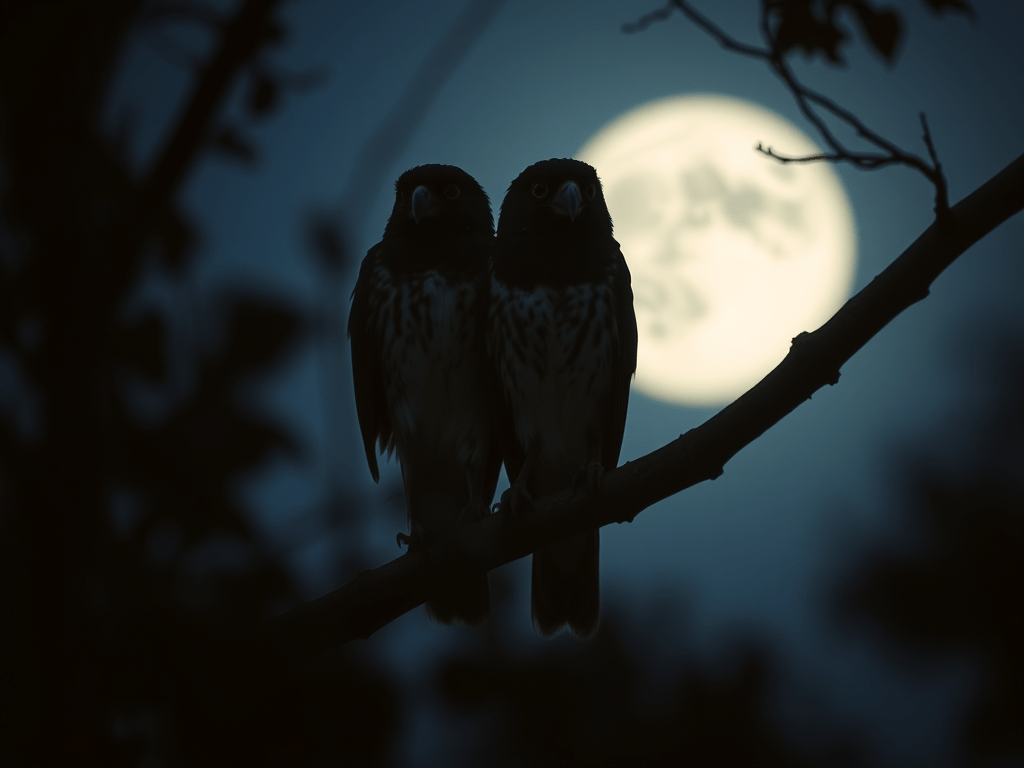
um bando de noitibós velando por mim.
Foi no verão em que um fazendeiro encontrou sua filha
pendurada no sótão do celeiro, e desejou, pela primeira vez,
não tê-la tocado daquela maneira.
Gostaria de dizer que éramos próximos — a menina e eu,
digo — mas eu só a conhecia de cumprimentar,
e uma vez a acompanhei até a metade do caminho
antes de finalmente entrar no quintal da minha avó.
Isso foi em Ontario, Califórnia. 1983.
O que quer dizer que não havia rio algum.
E eu não saberia reconhecer um noitibó nem se ele me bicasse.
Mas a menina era real. E o dia em que a encontraram foi real.
E o vestido que ela usava, o mesmo da nossa caminhada —
pervinca, ela o chamava; eu o chamava azul,
azul com flores amarelas brilhantes por toda parte
— o vestido e as flores, eles também eram reais.
E na nossa caminhada, lembro, cortamos caminho pelo pátio ferroviário,
e nos deparamos com um coiote morto perto dos trilhos.
Uma frágil e empoeirada pilha de remorso, ele não fazia companhia a ninguém.
Ficamos olhando para ele por algum tempo, nossas sombras se alongando, cobrindo o animal.
Ela disse algo que eu lembraria por anos, sobre solidão,
mas que há muito esqueci, do mesmo jeito que esqueci —
embora possa ver seu rosto como se ela estivesse aqui — seu próprio nome.
Vamos chamá-la Dolores, de dolor. Espanhol para angústia.
E qualquer que fosse o céu, por mais adorável que fosse aquela tarde,
lembro principalmente do vento,
de como uma brisa desfez o que restava de uma trança,
e de quando tentei afastar alguns fios soltos
da testa de Dolores, como ela se encolheu,
como correu o resto do caminho até sua casa,
e como nunca mais a vi depois disso,
exceto quando a carregaram do celeiro — seu vestido pervinca,
seus braços e pernas azuis, e os campos
em chamas com margaridas.
Passei o resto daquele verão no pátio ferroviário
com meu coiote morto, vendo os trens serem carregados e partirem.
O verão todo, eu o apedrejei.
O verão todo, usei as pedras para soletrar o nome da menina —
Dolores, talvez — no chão.
O verão todo, formigas lava-pés rastejaram entre as letras —
o nome dela, agora, sua própria cidadela.
Uma temporada de calor e chuvas fortes reduziram meu coiote a nada.
Só restaram dentes e alguns ossos resistentes
que se recusaram, por fim, a partir.
Semanas depois do outono, alguém encontrou o pai
pendurado nas mesmas vigas rangentes,
o sótão do celeiro preto de moscas varejeiras.
Mas isso foi em 1983. Ontario, Califórnia.
O que quer dizer que as moscas estão mortas. As formigas também.
E nem o campo nem o celeiro estão onde os deixei.
Nunca contei isso a ninguém. Até agora, até você.
Juntei um punhado de ossos e dentes do meu coiote,
e os atei todos com uma linha de pesca —
um talismã para espantar a angústia. Um talismã que estendo a você agora.
Por favor. Aproxime-se. Pegue-o da minha mão.
Trad.: Nelson Santander
Dolores, Maybe
I’ve never spoken to anyone about this. Until now, until you.
I slept once in a field beyond the riverbank,
a flock of nightjars watching over me.
That was the summer a farmer found his daughter
hanging in the hayloft, and wished, for the first time,
he had not touched her so.
I wish I could say we were close—the girl and I,
I mean—but I only knew her to wave hello,
and walked her, once, halfway up the road
before turning finally into my grandmother’s yard.
This was Ontario, California. 1983.
Which is to say, there was no river.
And I wouldn’t know a nightjar if it bit me.
But the girl was real. And the day they found her, that was real.
And the dress she wore, same as on our walk—
periwinkle, she called it; I called it blue,
blue with bright yellow flowers all over
—the dress and the flowers, they too were real.
And on our walk, I remember, we cut through the rail yard,
and came upon a dead coyote lying near the tracks.
A frail and dusty heap of regret, he was companion to no one.
We stared at him for some time, our shadows stretched long and covering the animal.
She said something I’d remember for years, about loneliness,
but have long forgotten, the way I’ve forgotten—
though I can see her face as if she were standing right here—her very name.
Let’s call her Dolores, from dolor. Spanish for anguish.
And whatever the sky, however lovely that afternoon,
I remember mostly the wind,
how a breeze unraveled what was left of a braid,
and when I tried to brush from Dolores’s brow
a few loose strands, how she flinched,
how she ran the rest of the way home,
how I never saw her after that,
except when they carried her from the barn—her periwinkle dress,
her blue legs and arms, and the fields
ablaze with daisies.
I spent the rest of that summer in the rail yard
with my dead coyote, watching trains loaded and leaving.
All summer long, I’d pelt him with stones.
All summer long, I’d use the stones to spell the girl’s name—
Dolores, maybe—in the dirt.
All summer long, fire ants crawled over and between each letter—
her name, now, its own small town.
A season of heat and heavy rains washed my coyote to nothing.
Only teeth and a few stubborn bones
that refused, finally, to go down.
Weeks into autumn, someone found the father
hanged from the same groaning tie-beams,
the hayloft black with bottle flies.
But that was 1983. Ontario, California.
Which is to say, the bottle flies are dead. So, too, the ants.
And neither field nor barn is where I left it.
I’ve never spoken to anyone about this. Until now, until you.
I gathered a handful of my coyote’s bones, his teeth,
and strung them all on fishing wire—
a talisman to ward off anguish. A talisman I hold out to you now.
Please. Come closer. Take this from my hand.


 singularidade - poesia e etc.