I
Sonho com viagens repetidamente:
Em voar como um morcego por um túnel estreito
Em dirigir sozinho, sem bagagem, por uma longa península
A estrada ladeada por uma vegetação rala carregada de neve,
Uma neve fina e seca atingindo o para-brisas,
Neve e granizo alternados, nenhum tráfego em sentido contrário,
E nenhuma luz atrás, no embaçado espelho lateral,
A estrada mudando de asfalto vitrificado para cascalho de pedras,
Terminando finalmente em um desolado sulco na areia,
Onde o carro se detém,
Preso em um monte de neve
Até os faróis se apagarem.
II
Na extremidade do campo, no canto não alcançado pela ceifeira,
Onde o terreno termina em uma vala coberta de grama,
Refúgio do Tordo-pintado, morada do rato-do-campo,
Não muito distante do cemitério de flores em perpétua mutação,
Entre latas, pneus, canos enferrujados, máquinas quebradas —
Aprende-se sobre o eterno;
E na cara encovada de um rato morto, devorado pela chuva e pelos besouros
(encontrei-o entre os escombros de um velho depósito de carvão)
E no gato malhado, pego perto do viveiro dos faisões,
suas entranhas espalhadas sobre flores semi-desabrochadas,
Abatido pelo vigia noturno.
Eu me afligia pelos pássaros e coelhos apanhados pelo cortador, mas
Minha dor não era excessiva.
Pois deparar-me com as toutinegras no início de maio
Era esquecer do tempo e da morte:
Como elas enchiam o olmo do papa-figo, um enxame inquieto e gorjeante, por toda uma manhã,
E eu observava e observava até meus olhos embaçarem com a forma dos pássaros —
Toutinegra-do-Cabo, Toutinegra-papo-de-fogo, Toutinegra-azul —
Movendo-se, esquivos como peixes, destemidos,
Pendurados, agrupados como fruta verde, dobrando os galhos das extremidades,
Momentaneamente imóveis,
E então lançando-se em meio voo,
Mais leves que os tentilhões,
Enquanto as carriças brigavam e cantavam nas sebes meio verdes,
E o pica-pau martelava em sua árvore morta no galinheiro.
– Ou em me deitar nu na areia,
Nas águas rasas e assoreadas de um rio lento,
Tocando uma concha,
Pensando:
Antigamente eu era assim, sem mente,
Ou talvez com outra mente, menos peculiar;
Ou em afundar até os quadris em um brejo musgoso;
Ou, com meus finos joelhos, sentar em um tronco molhado,
Crendo:
Eu voltarei novamente,
Como uma cobra ou uma ave estridente,
Ou, com sorte, como um leão.
Aprendi a não temer o infinito,
O campo distante, os tormentosos penhascos do para sempre,
A morte do tempo na luz branca do amanhã,
A roda se afastando de si mesma,
A expansão da onda,
A água que se aproxima.
III
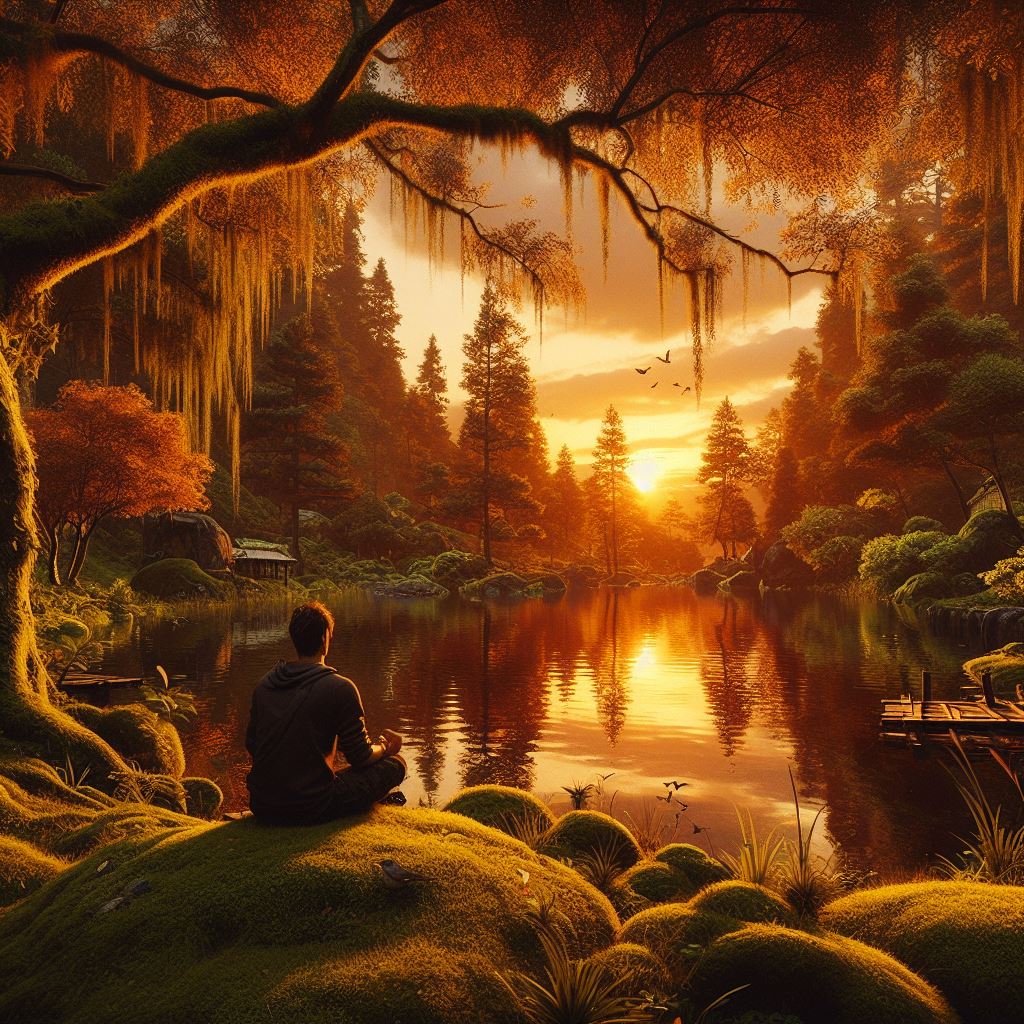
O rio se curva sobre si mesmo,
A árvore recua para a própria sombra.
Sinto uma sutil mudança, um avanço,
Como a água que acelera antes de um canal estreito
Quando as margens convergem e o largo rio clareia;
Ou quando dois rios se combinam, a torrente glacial azul
E o verde-amarelado do planalto montanhoso —
No início, um rápido movimento ondulante entre as rochas,
Depois, um longo curso sobre pedras lisas
Antes de descer para a planície aluvial,
Para os bancos de argila, e as uvas silvestres penduradas nos olmos.
A água levemente agitada
Solta um fino sedimento amarelo onde o sol permanece;
E os caranguejos se aquecem perto da margem,
A margem infestada de ervas daninhas, viva com pequenas serpentes e sanguessugas —
Cheguei a um centro calmo e raso,
Um ponto fora da cintilante corrente;
Meus olhos fitam o fundo de um rio,
As pedras irregulares, os iridescentes grãos de areia,
Minha mente se move para mais de um lugar,
Em um país meio terra, meio água.
Sou renovado pela morte, pelo pensamento de minha própria morte,
Pelo aroma seco de um jardim moribundo em setembro,
Pelo vento que sopra as cinzas de uma fogueira.
O que amo está sempre por perto,
Na terra e no ar.
IV
O eu perdido se transforma,
Voltando-se para o mar,
Uma forma marinha se virando —
Um velho com os pés diante do fogo,
Em vestes verdes, em vestes de despedida.
Um homem diante de sua própria imensidão
Desperta todas as ondas, toda sua chama livre e errante.
O murmúrio do absoluto, o porquê
De nascer cai em seus ouvidos nus.
Seu espírito se move como um vento monumental
Que se acalma em um platô azul e ensolarado.
Ele é o fim de todas as coisas, o último homem.
Todas as coisas finitas revelam a infinitude:
A montanha com sua singular tonalidade cintilante
Como o brilho azul da neve recém-congelada.
A luz residual nos pinheiros carregados de gelo;
Odor de tília em uma encosta de montanha,
Um perfume apreciado pelas abelhas;
Silêncio da água sobre uma árvore submersa:
A pura serenidade da memória em um homem —
Uma ondulação se expandindo a partir de uma única pedra
Serpenteando pelas águas do mundo.
Trad.: Nelson Santander
The Far Field
I
I dream of journeys repeatedly:
Of flying like a bat deep into a narrowing tunnel
Of driving alone, without luggage, out a long peninsula,
The road lined with snow-laden second growth,
A fine dry snow ticking the windshield,
Alternate snow and sleet, no on-coming traffic,
And no lights behind, in the blurred side-mirror,
The road changing from glazed tarface to a rubble of stone,
Ending at last in a hopeless sand-rut,
Where the car stalls,
Churning in a snowdrift
Until the headlights darken.
II
At the field’s end, in the corner missed by the mower,
Where the turf drops off into a grass-hidden culvert,
Haunt of the cat-bird, nesting-place of the field-mouse,
Not too far away from the ever-changing flower-dump,
Among the tin cans, tires, rusted pipes, broken machinery, —
One learned of the eternal;
And in the shrunken face of a dead rat, eaten by rain and ground-beetles
(I found in lying among the rubble of an old coal bin)
And the tom-cat, caught near the pheasant-run,
Its entrails strewn over the half-grown flowers,
Blasted to death by the night watchman.
I suffered for young birds, for young rabbits caught in the mower,
My grief was not excessive.
For to come upon warblers in early May
Was to forget time and death:
How they filled the oriole’s elm, a twittering restless cloud, all one morning,
And I watched and watched till my eyes blurred from the bird shapes, —
Cape May, Blackburnian, Cerulean, —
Moving, elusive as fish, fearless,
Hanging, bunched like young fruit, bending the end branches,
Still for a moment,
Then pitching away in half-flight,
Lighter than finches,
While the wrens bickered and sang in the half-green hedgerows,
And the flicker drummed from his dead tree in the chicken-yard.
– Or to lie naked in sand,
In the silted shallows of a slow river,
Fingering a shell,
Thinking:
Once I was something like this, mindless,
Or perhaps with another mind, less peculiar;
Or to sink down to the hips in a mossy quagmire;
Or, with skinny knees, to sit astride a wet log,
Believing:
I’ll return again,
As a snake or a raucous bird,
Or, with luck, as a lion.
I learned not to fear infinity,
The far field, the windy cliffs of forever,
The dying of time in the white light of tomorrow,
The wheel turning away from itself,
The sprawl of the wave,
The on-coming water.
III
The river turns on itself,
The tree retreats into its own shadow.
I feel a weightless change, a moving forward
As of water quickening before a narrowing channel
When banks converge, and the wide river whitens;
Or when two rivers combine, the blue glacial torrent
And the yellowish-green from the mountainy upland, —
At first a swift rippling between rocks,
Then a long running over flat stones
Before descending to the alluvial plane,
To the clay banks, and the wild grapes hanging from the elmtrees.
The slightly trembling water
Dropping a fine yellow silt where the sun stays;
And the crabs bask near the edge,
The weedy edge, alive with small snakes and bloodsuckers, —
I have come to a still, but not a deep center,
A point outside the glittering current;
My eyes stare at the bottom of a river,
At the irregular stones, iridescent sandgrains,
My mind moves in more than one place,
In a country half-land, half-water.
I am renewed by death, thought of my death,
The dry scent of a dying garden in September,
The wind fanning the ash of a low fire.
What I love is near at hand,
Always, in earth and air.
IV
The lost self changes,
Turning toward the sea,
A sea-shape turning around, —
An old man with his feet before the fire,
In robes of green, in garments of adieu.
A man faced with his own immensity
Wakes all the waves, all their loose wandering fire.
The murmur of the absolute, the why
Of being born falls on his naked ears.
His spirit moves like monumental wind
That gentles on a sunny blue plateau.
He is the end of things, the final man.
All finite things reveal infinitude:
The mountain with its singular bright shade
Like the blue shine on freshly frozen snow,
The after-light upon ice-burdened pines;
Odor of basswood on a mountain-slope,
A scent beloved of bees;
Silence of water above a sunken tree :
The pure serene of memory in one man, —
A ripple widening from a single stone
Winding around the waters of the world.

 singularidade - poesia e etc.
1 Comentário