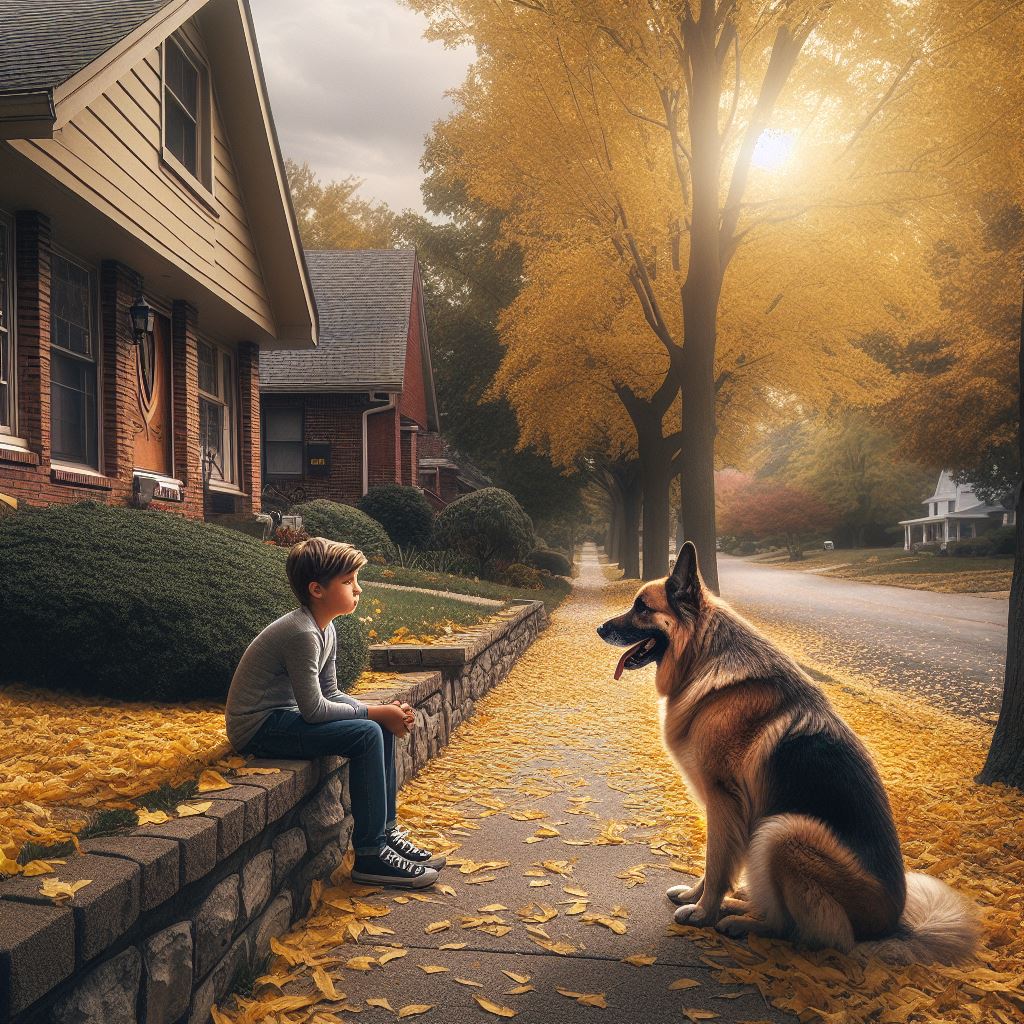
Quando a cadela finalmente morreu, o pai cavou um buraco ao lado da cerca e a enterrou em uma caixa de sapatos.
Ela se foi, mas teve uma vida boa, disse a mãe. Não há problema em ficar triste.
________
No dia seguinte, o menino entrou na cozinha carregando a caixa. Ela não se foi. Ela ainda está aqui, ele disse. Olhem.
A mãe levantou a tampa. Querido, quando as coisas morrem, nós as devolvemos à terra.
E então as esquecemos lá?
Sim — e não, respondeu o pai, colocando a caixa de volta no buraco e cobrindo-a novamente. Juntos, eles voltaram para casa.
________
Na manhã seguinte, a caixa estava sobre a bancada da cozinha. Eu não conseguia dormir, disse o menino. Ela estava sozinha lá fora.
Talvez seja assim que ela queira que seja, o pai respondeu.
Não. Ela não quer nada, disse o menino. Ela está morta. Mas a caixa dela estava cheia de ar dentro da terra. Isso não estava certo.
Eles encheram a caixa com terra e a colocaram novamente no buraco.
________
O que significa morrer? perguntou o menino.
O pai pensou em seu próprio pai, que havia morrido um ano antes de o menino nascer. Um longo sofrimento — até que, finalmente, seu corpo se encheu de neve.
Ninguém sabe o que é a morte, disse o pai. Gostaria de ter uma resposta melhor para você.
________
Quatro dias se passaram antes que a caixa, agora pesada de terra e podridão, reaparecesse dentro de casa. Por que isso está aqui? perguntou o pai.
Ninguém sabe o que é a morte, disse o menino. Eu queria descobrir.
Jesus, disse o pai, saindo para a garagem.
A mãe disse gentilmente: Não. Quando as coisas morrem, elas se vão. Então, nós as devolvemos à terra.
________
A cadela havia partido — isso era evidente.
Mas a cadela também estava ali, logo abaixo da superfície, mergulhada na escuridão. O menino sabia que poderia trazê-la de volta para dentro de casa sempre que quisesse —
não importando o que seus pais dissessem.
Trad.: Nelson Santander
Parable of Childhood
When the dog finally died, dad dug a hole beside the fence and buried her in a boot box.
She’s gone, but she had a good life, mom said. It’s OK to be sad.
________
Next day, the boy came into the kitchen holding the box in front of him. She’s not gone. She’s still in there, he said. Look.
Mom lifted the lid. Sweetie, when things die, we give them back to the earth.
And then we forget them there?
Yes—and no, dad replied. He put the box in the hole and covered it over. Together, they walked back to the house.
________
In the morning, the box was on the kitchen counter. I couldn’t sleep, the boy said. She was all alone out there.
Maybe that’s how she wants it to be, dad replied.
No. She doesn’t want anything, the boy said. She’s dead. But her box was full of air inside the earth. That wasn’t right.
They filled the box with dirt and placed it inside the hole.
________
What does it mean to die? the boy asked.
Dad thought of his own father, who’d died a year before the boy was born. A long suffering—until at last his body had filled with snow.
No one knows what death is, dad said. I wish I had a better answer for you.
________
Four days passed before the box, heavy with dirt and rot, arrived again inside the house. Why is this here? dad asked.
No one knows what death is, the boy said. I wanted to find out.
Jesus, dad said and went out to the garage.
Mom said gently, No. When things die, they’re gone. So we return them to the earth.
________
The dog was gone—that was clear.
But the dog was also right there, just below the surface, packed in darkness. The boy could bring her back inside whenever he wanted—
no matter what his parents said.

 singularidade - poesia e etc.