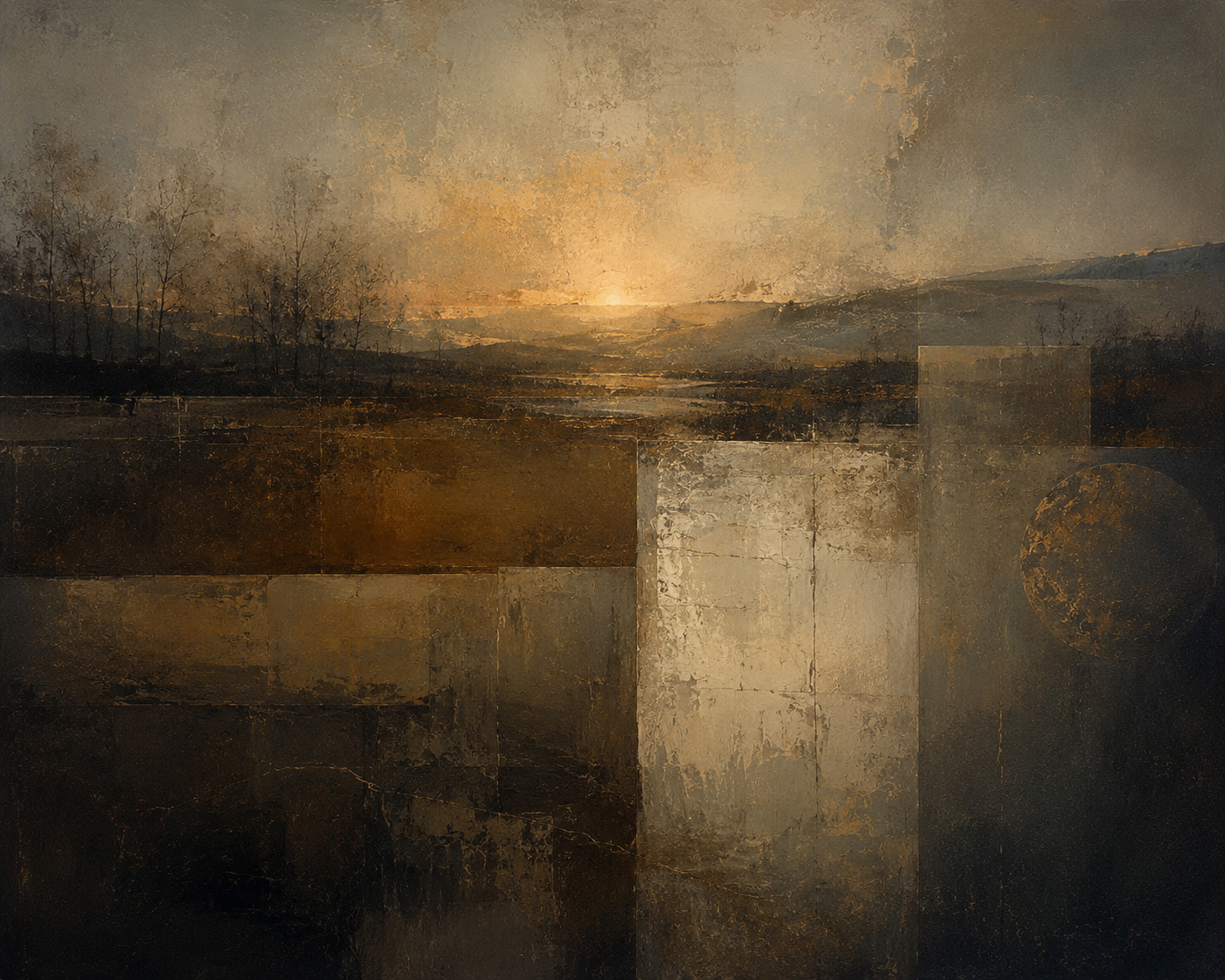
Três poemas elegíacos
I.
Deixe-o escapar do hospital e do médico,
dos hábitos e odores dos lugares estranhos,
da perícia impassível dos especialistas.
Deixe-o livrar-se de sondas e agulhas,
de corredores públicos, do branco cirúrgico
que reduz a vida a uma dor miserável.
Ante a perspectiva de uma vida sem nenhuma
possibilidade de alegria, deixe-o renunciar a ela.
Deixe-o morrer em um dos velhos aposentos
onde viveu, sem estranhos ao seu lado.
Deixe-o partir em paz dos corpos
de sua vida –
a carne, o casamento, a casa.
Da ampla paisagem de suas próprias janelas,
deixe-o desaparecer de vista; e que o tempo
e a luz derradeiros do lugar onde viveu sejam
a última visão antes que seus olhos lentamente
se abram para a terra.
Deixe-o partir como quem conhece bem o caminho,
para dentro da colina arborizada, marcada por
trilhas e sulcos — o seu corpo.
II.
Estou junto à cisterna, diante do velho celeiro,
na escuridão, em pleno inverno;
a noite, estranhamente quente, o vento sopra,
fazendo chacoalhar uma porta destrancada.
Tiro da terra a água fria, e bebo.
Na casa, a luz ainda espera.
Um velho, a quem amei a vida toda, está morrendo
ali, em sua cama. Ele vai descendo,
lentamente, para longe de si mesmo.
Num último ato de obediência à sua vida, ele segue
seu corpo para além do que ainda podemos conhecer.
Só as mãos, quietas sobre o lençol, guardam
uma dolorosa semelhança com aquilo que já deixaram de ser.
III.
Ele se liberta da terra.
O sol de seu último dia se põe
límpido na doçura de sua liberdade.
A terra se recupera de sua morte,
e a graça sagrada de sua vida permanece
em tudo o que sua morte deixou.
Os esplendores o conhecem. Mais leve
que o próprio fôlego, ele é libertado
na memória que dele guardamos. Mais luminoso
que a visão, ele escurece
na vida da colina
que guarda sua paz.
Oculto entre tudo o que existe,
ele já não pode se perder.
Trad.: Nelson Santander
Three Elegiac Poems
I.
Let him escape hospital and doctor,
the manners and odors of strange places,
the dispassionate skills of experts.
Let him go free of tubes and needles,
public corridors, the surgical white
of life dwindled to poor pain.
Foreseeing the possibility of life without
possibility of joy, let him give it up.
Let him die in one of the old rooms
of his living, no stranger near him.
Let him go in peace out of the bodies
of his life –
flesh and marriage and household.
From the wide vision of his own windows
let him go out of sight; and the final
time and light of his life’s place be
last seen before his eyes’ slow
opening in the earth.
Let him go like one familiar with the way
into the wooded and tracked and
furrowed hill, his body.
II.
I stand at the cistern in front of the old barn
in the darkness, in the dead of winter,
the night strangely warm, the wind blowing,
rattling an unlatched door.
I draw the cold water up out of the ground, and drink.
At the house the light is still waiting.
An old man I’ve loved all my life is dying
in his bed there. He is going
slowly down from himself.
In final obedience to his life, he follows
his body out of our knowing.
Only his hands, quiet on the sheet, keep
a painful resemblance to what they no longer are.
III.
He goes free of the earth.
The sun of his last day sets
clear in the sweetness of his liberty.
The earth recovers from his dying,
the hallow of his life remaining
in all his death leaves.
Radiances know him. Grown lighter
than breath, he is set free
in our remembering. Grown brighter
than vision, he goes dark
into the life of the hill
that holds his peace.
He’s hidden among all that is,
and cannot be lost.
Deixe um comentário